
A Middle Kind of View: What Makes a “Flintstone?”
Columnist Amina Smith reflects on the questions: What is Flint culture? And what makes a real Flintstone?
Editor’s Note: “A Middle Kind of View” is a new Flintside bi-weekly column series by University of Michigan–Flint student and Flint native, Amina Smith.
FLINT, Michigan — If I asked you what makes Flint culture, what would you say? Or better yet, what makes a “Flintstone,” as we’ve affectionately named ourselves, a real Flintstone?
What experiences define us? What do we believe makes our identities unique? More simply—what is Flint?
These were the questions a close friend asked me while visiting from Salt Lake City, Utah. She wanted a Flint “bucket list” of knowledge, places, and experiences to discover during her time in town. As I tried to put it all together, I found myself overwhelmed, realizing how many things materialized to explain to and offer her.
I started with the obvious. Flint is Vehicle City, the birthplace of General Motors. I talked about the historic bricks downtown that draw car cruisers from around the world every summer. I mentioned the lasting impact of the Mott family and how their influence still shows up across the city. When we passed joggers in a nearby neighborhood, I explained how seriously many residents train for the Crim Festival of Races—an event that brings runners from as far as Russia and Taiwan.
I started digging into the smaller things—the details that may seem niche or even silly, but I felt deserved recognition.
I proudly explained that while Little Caesars exists in nearly every state, Flint is and will forever be the only place where you can walk in and order a stromboli. I told her about Koegel’s hot dogs, which, on occasion, have been overnighted to Atlanta for an aunt of mine.
That led to the variety of restaurants special to the city: a steak and onion from Big John’s, a Flint-style coney from Papa’s, or birria tacos paired with ice-cold horchata from Soriano’s. But just as important were the places we’ve lost. Driving around, I pointed out fallen angels like Rizzo’s Pizza, Wizeguy’s, Angelo’s, Old Country Buffet, and the recently closed Charlie’s Barbecue at the Farmers’ Market. Even in their absence, they remain part of Flint’s food culture and memory. And of course, I had to note that our Farmers’ Market is considered one of the top ten public markets in the country.
As we drove through the city, passing buildings that still felt bright with memory even without lights, the conversation shifted from food to things I believe everyone should do at least once in Flint.
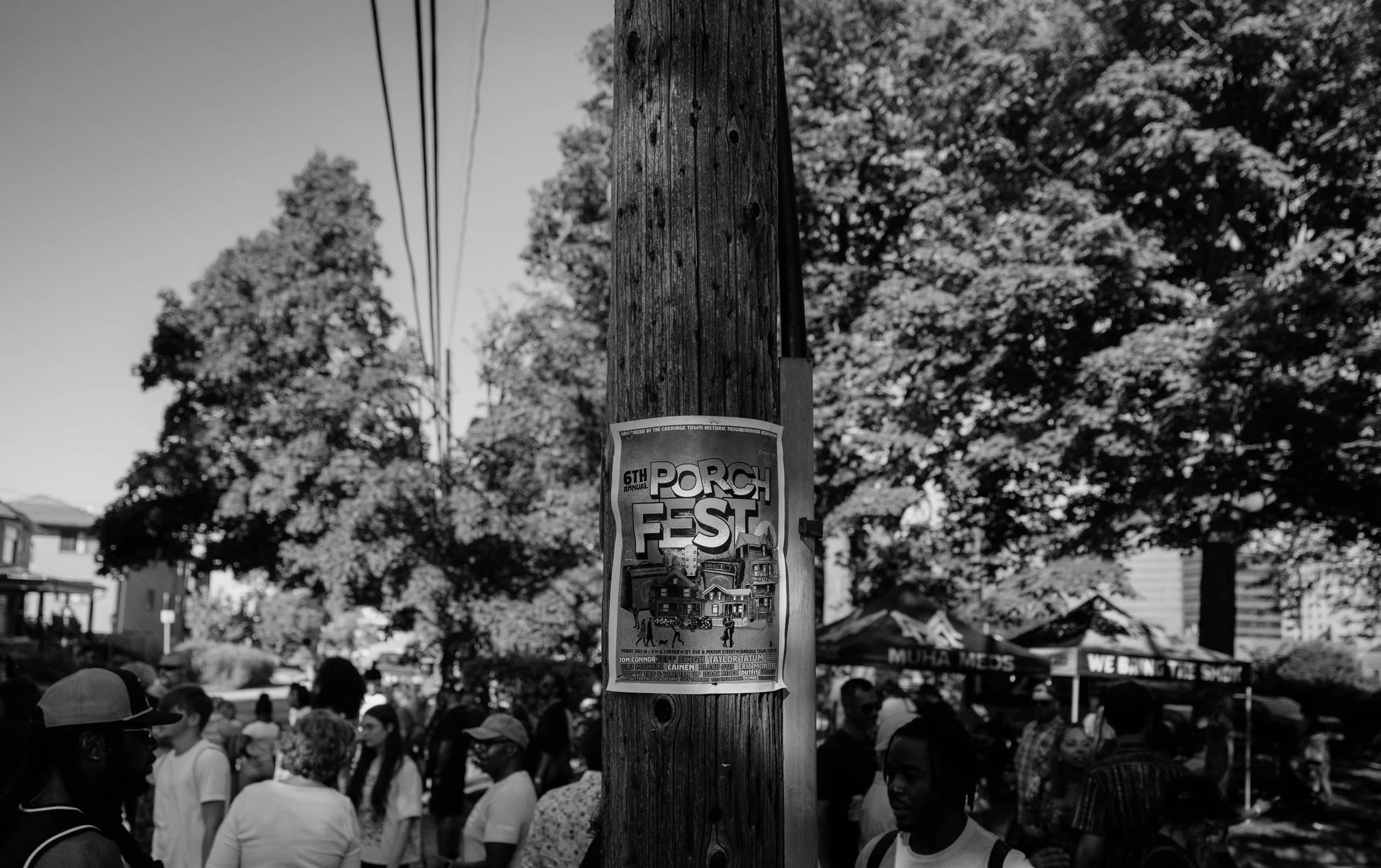
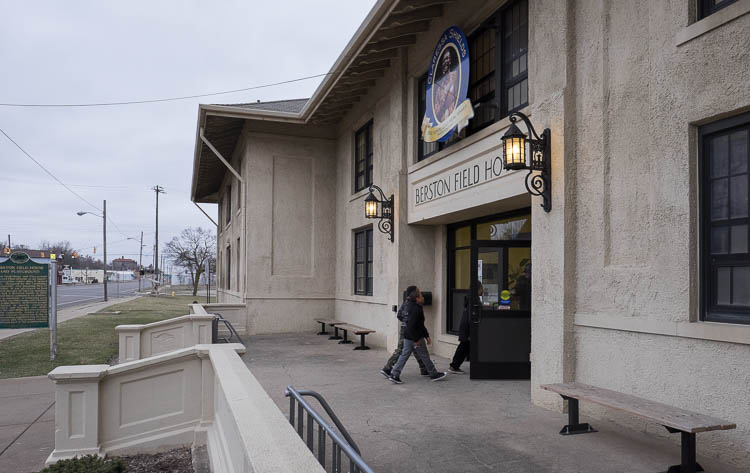
I dived into Flint staples like Berston Fieldhouse, where everyone should see a summer baseball game. We talked about Art Walk and Porch Fest downtown, where creativity flows throughout the air. I mentioned Stepping Stone Falls and, with a laugh, Bluebell Beach—complete with the long-standing discussion about the risks that come with swimming there on a hot day.
I made sure to include the Jazz Festival, fall walks through Applewood Estate, shows at the Capitol Theatre, nights at the Machine Shop listening to local bands, and game nights at Soggy Bottoms, where good drinks and lively crowds are part of the experience.
One of the moments I emphasized most was the annual Northwestern High School tailgate—an event they say “brings the city out.” People mark their spots days in advance, setting up tents and placing markers for their graduating class. Even as someone who didn’t attend Northwestern, I’ve always felt welcomed there.
When the topic of local language came up, though, I found myself stumped. In this era, I couldn’t think of many sayings that couldn’t be heard in the next town over or in Salt Lake. Still, I remembered my aunts and uncles using words like “wet” to describe a good meal, or “chatty”—a word I never fully understood but accepted as part of our shared vocabulary. Maybe that’s the point. Some things don’t need explaining to belong.
As we hit the main part of Saginaw Street, watching cars zip past, I joked about the unspoken agreement Flint seems to have made about the speed limit. Officially, it’s 35, but it seems we collectively decided that the limit is 45. Then again, what city hasn’t done that with some part of its roads?
By the end of her visit, my friend told me she was leaving Flint with a completely different perspective than when she arrived. The images she’d seen through the media created a persona of Flint that didn’t match the city she experienced. Instead, she left with memories and a taste of what it means to have Vehicle City pride.
And maybe that’s what makes a Flintstone after all—not just where we’re from, but the way we carry the city with us, sharing it piece by piece with anyone willing to listen.
Author

Related Articles

A Middle Kind of View: What Happened to Our Relationship With Libraries?
One child’s love of books sparks reflection on reading habits and our relationship with libraries.
First, they came for independent journalists
Flint native, author, and former journalist, Bob Campbell, explains why the media should stand in defense of their own and the 1st Amendment.
A Middle Kind of View: Michigan Winter Roads
In the latest, A Middle Kind of View, Amina reflects on the harsh conditions and turbulent times of living through Michigan winters.