
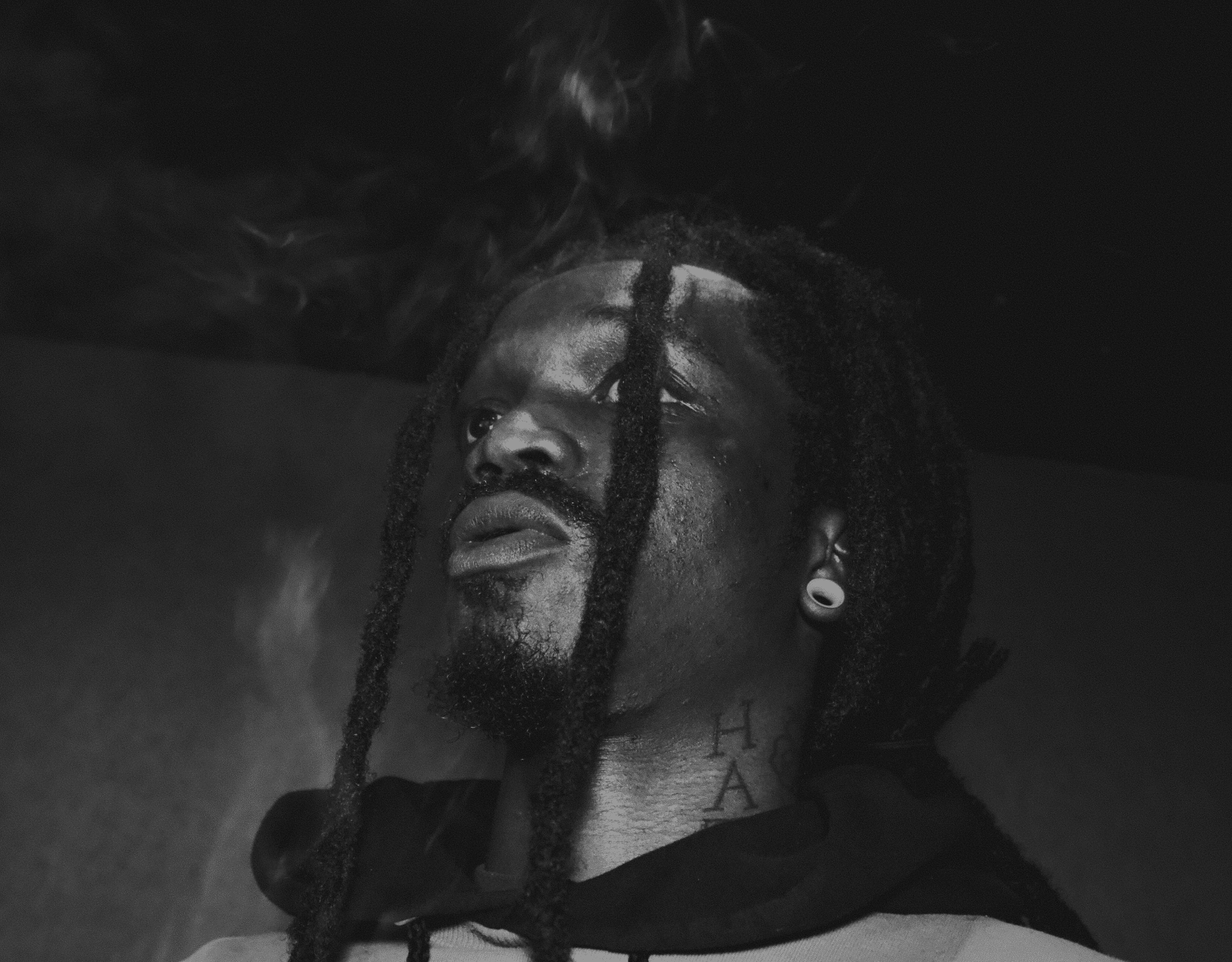
FLINT, Michigan — Cities like Detroit move in headlines and deadlines—traffic lights changing, notifications buzzing, people measuring progress in weeks, releases, and momentum. Everything feels immediate, urgent, in motion.
Music studios are different. Inside, time stretches, and everything unfolds more deliberately.
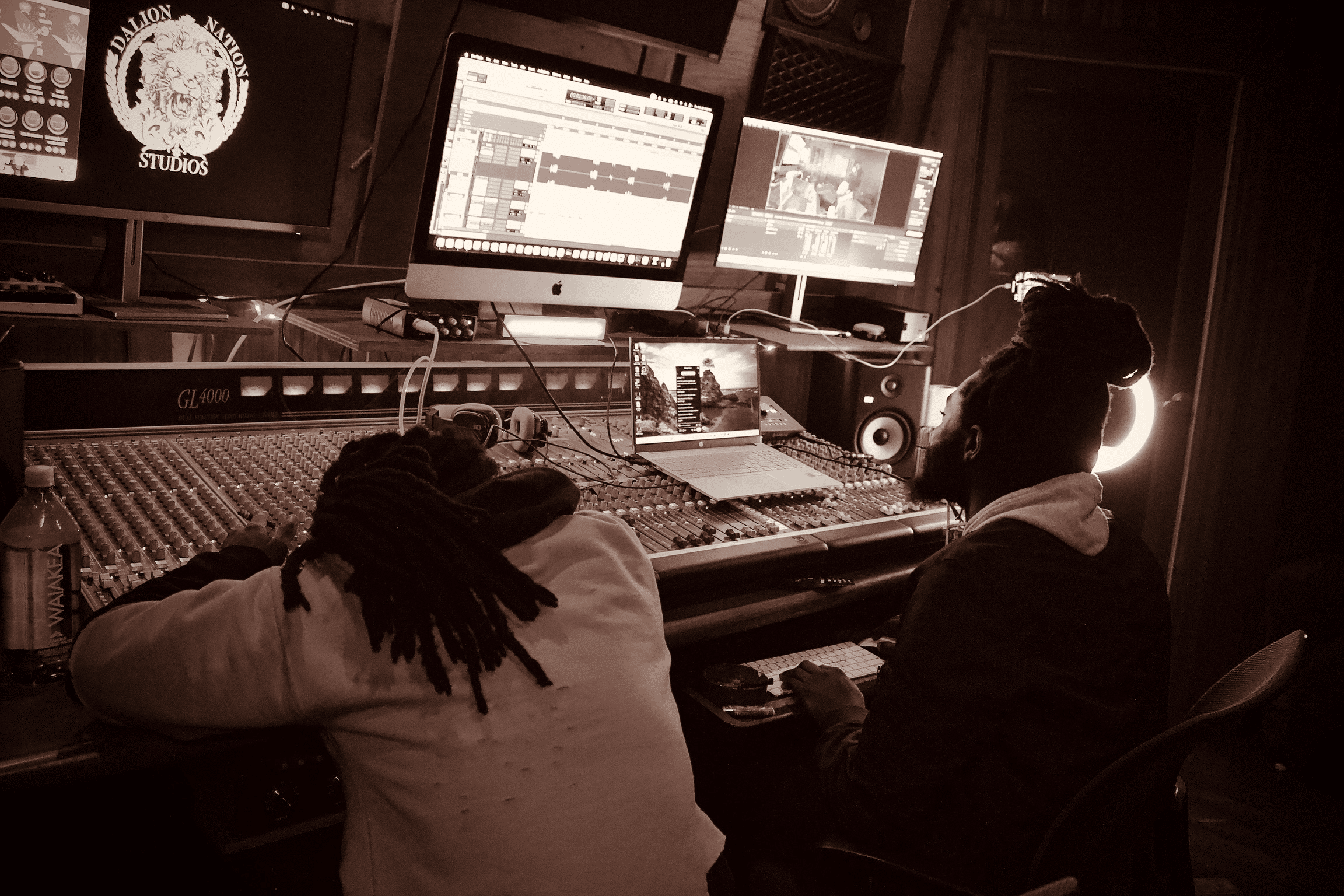
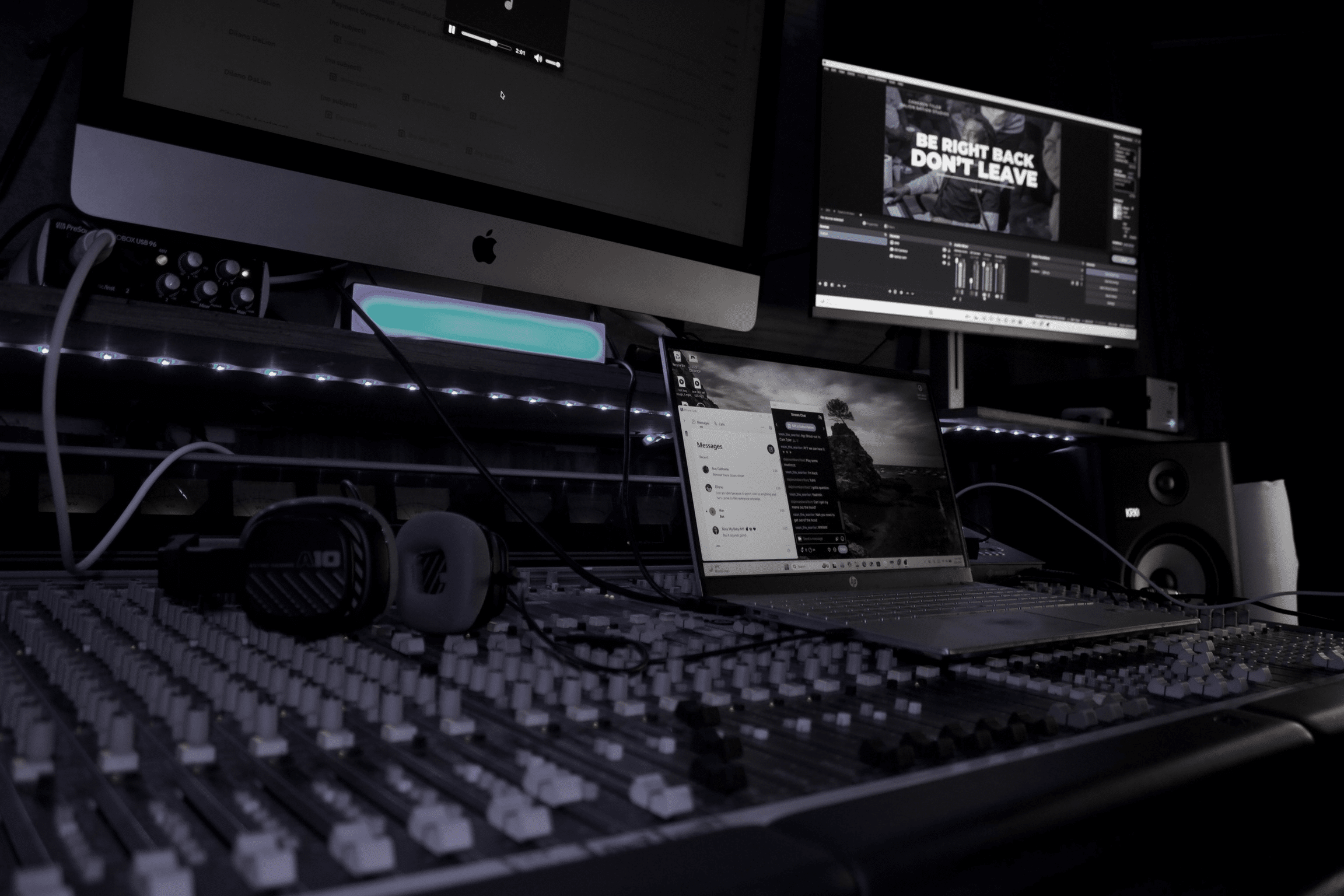
Dalion Nation Studios, with the room glowing softly from computer screens, the low hum of equipment filling the space, and a mixer that stretches across the desk like the dashboard of a spacecraft, carries that kind of weight. Nothing here feels rushed.
Sitting across from me is Ace Gabbana, shifting occasionally to cue up the next song on his 21-track LP, King Mondo T.V.—an homage to his father, known affectionately as King Mondo. His right-hand man, Cameron Tyler, is here too, half-locked into a quick game of Madden, the casualness of it all balancing the weight of what’s playing through the speakers.
“I don’t think I ever really explored that part of me. Just explaining what it was like being raised by my dad… I just really wanted to tap into that.”
Tonight isn’t about recording. It’s about listening.
The album plays straight through—from the opening skit to the final track—without interruption.
With the intention of capturing everything, I jot down notes in my notebook as K.M.T.V. unfolds like a tape pulled from an archive. It lives in the skits and voices between tracks—older men telling stories that blur the line between memory and mythology. Within it, Gabbana reflects on his past, his father, his music—and, perhaps most importantly, himself.
“I don’t think I ever really explored that part of me,” he says, reflecting on the emotional core of the project. “Just explaining what it was like being raised by my dad… I just really wanted to tap into that.”
That decision—to tap in—becomes the foundation of everything that follows.
His father was rarely without a camera. He documented everything: Conversations inside tattoo shops. Exaggerated stories from elders. Debates about faith, masculinity, and survival.
At one point, Gabbana recalls a man from the neighborhood who used to walk around claiming he was Jesus Christ. At the time, it felt absurd. But that shift in perspective—seeing childhood figures through the lens of adulthood—becomes one of the album’s emotional anchors.
“It’s my dad’s camera,” he explains. “So whatever he had on there, I seen it… it was always rolling, too. I know how I feel [picking] the camera up and [seeing] what’s on it.”
And what emerges is layered: childhood memories, complicated relationships, neighborhood figures, and fragments of Black cultural life that feel both hyper-specific and widely recognizable.
“My favorite album is Good Kid, M.A.A.D City. You can hear a Black person telling a story, and you don’t really need to see a video of it. All you need is the audio, and you can imagine where they at.”
However, at the center of the record—and, arguably, at the center of Gabbana’s evolution—is his relationship with his father. For years, he avoided the subject, claiming it carried too much frustration to unpack publicly. But sitting in the studio as the album plays, that emotional distance feels different.
“I don’t hate my dad. I love my dad,” he says plainly. “He did what he did for me… it ain’t like all bad. I just had to learn how to grow up and understand what it’s like being a n**** in this crazy country… I can’t just blame him for a lot of shit.”
That shift—from blame to understanding—marks a turning point. It reshapes not only his personal narrative but also broadens the album’s depth. Subjects that were once avoided now sit at the center of the work, especially in contrast to his previous project, MoonWater.
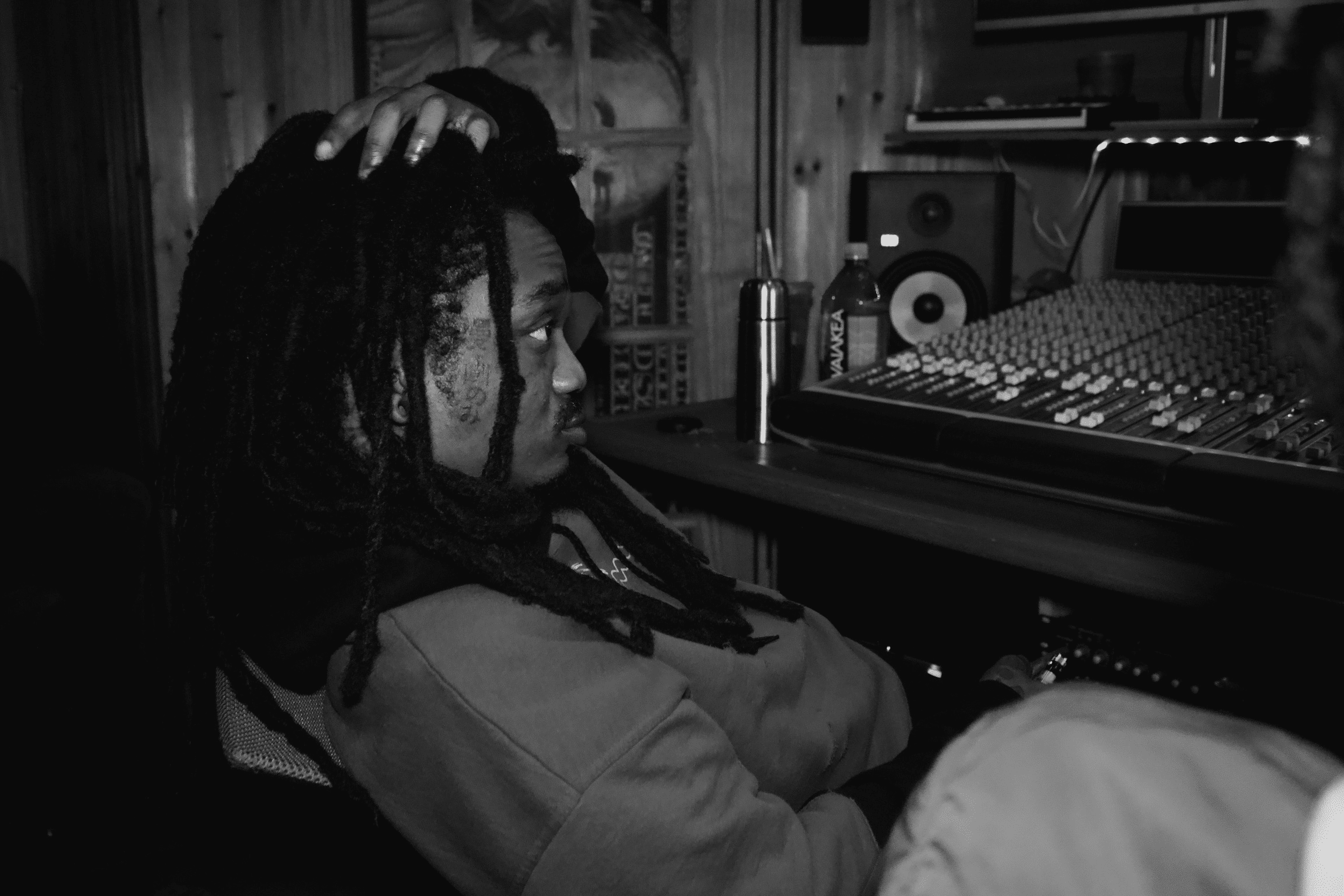
“MoonWater was engineered to a point of perfection,” he explains. “It wasn’t like freedom necessarily. I ain’t get to tap into what I wanted to.”
The result is an album that moves between moods without apology.
Some tracks feel almost cinematic. Others lean into playful nostalgia, echoing early-2000s hip-hop and R&B—the kind that once filled car stereos and basement parties. But what holds it all together is the sequencing. Songs bleed into skits. Skits bleed into conversations. Each moment feels intentional, even when it’s loose.
“I grew up on Outkast,” Gabbana says, when the conversation turns to storytelling in hip-hop. “My favorite album is Good Kid, M.A.A.D City. You can hear a Black person telling a story, and you don’t really need to see a video of it. All you need is the audio, and you can imagine where they at.”
“I don’t hate my dad. I love my dad.”
That audio storytelling, reflective of African griots, shifts the conversation to the urgency that once defined Gabbana’s approach to music and to life. It has softened into something quieter, more measured, more intentional, and connects to how he describes Black culture itself: “a double-edged sword” that’s “so destructive, but it’s so pleasing.”
That tension runs through the album as church references sit beside club records. Humor interrupts heavier reflections. Nostalgia collides with self-examination. And rather than resolve these contradictions, the project simply allows them to exist.
“I’m just really coasting,” he says.
It’s a simple statement, but it carries weight—especially when placed against the pressure he once carried.
“I used to say shit like, I gotta become a millionaire at 18… I’m like, what the f*** going on?”
Now, success looks different. It’s no longer tied to timelines or external validation. Instead, it’s grounded in stability—mental, emotional, personal.
“I just want to be in a space where I’m mentally growing at a constant pace,” he says, adding that therapy is something he hasn’t stepped fully into yet, but thinks about more often now. “I gotta get in therapy though. ASAP.”
It’s a small moment, but it reflects something larger—a broader shift in how artists, and Black men in particular, are beginning to speak about mental health. Making K.M.T.V. wasn’t about chasing a sound. It was about rediscovery.
“I had to fall in love with making music again,” he says. “For a while, I didn’t really know what I wanted to do. I had to relearn how to not care when I record… that’s when I’m at my best.”
“I’m not making music for nobody but [me].”
While the album is deeply personal, it was not created in isolation. Relationships—especially his bond with Cam—anchor both his life and his work. Their relationship has evolved beyond collaboration into something more enduring, offering both creative partnership and accountability.
Perhaps the most significant shift, though, lies in his relationship with time. Where there was once urgency, there is now patience.
“I’m not in a rush no more,” he says. “I just enjoy the journey more… cherish it more.”
Yet, in the end, the question of identity remains—but Gabbana resists defining himself in fixed terms.
“I don’t really care about what they feel like I am now,” he says. “It’s whatever they take from me. I’m not making music for nobody but [me]. I just want them to relate to it however they can.”
And that, perhaps, is the clearest way to understand King Mondo T.V.
It is not a performance. It is not a reinvention. It is documentation.
A story still unfolding. Just the record button pressed—and everything that comes with it.
Author

Related Articles
Kane’s House of Comedy Brings a Packed Night of Laughs to Flint
A packed night of laughs at Kane’s House of Comedy showcased Flint’s vibrant comedy scene.

Step Afrika! Brings Rhythm, Heritage, and History to Flint
Step Afrika! brings the cultural rhythm of stepping and African American heritage to Flint.

Tyler Farr brings ‘Quit Bein’ Country’ tour back to Flint’s Machine Shop
Country star Tyler Farr returns to Flint’s Machine Shop while promoting his new EP.


