
Black Violin Brings Strings, Beats, and Belonging Back to Flint
Black Violin returns to Flint, blending hip-hop and classical music while uplifting community and youth.

FLINT, Michigan — It’s a Thursday afternoon, and not even the nineteen-degree weather of Kentucky or its present threat of sleet and icy parking lots was enough to stop Wil Baptise, the Grammy-nominated, renowned violist, from getting to his venue for a soundcheck and rehearsal for that night’s stop on Black Violin’s tour.
And as he walked through, taking notes and inspecting the space he’d be curating for the evening’s experience, he began talking to me about his journey into music as if I were an old friend and not someone who was trying to keep her screaming inner child at bay from the opportunity to be talking to one of her childhood heroes—a sentiment he understood and appreciated.
We dove straight into a conversation about him and his counterpart, Kev Marcus, and their beginnings together, not just as creatives, but as two peers whose friendship dates back to high school orchestra.
“We met as stand partners and viola players. Classical music was what we did, and we listened to hip-hop on the side on the way to school, outside of school. It was just us being regular kids. We didn’t think anything of it.”
Yet even without the idea of their future genius in how they blend the violin’s introspective, sensuous strings with the melodic beats and harmonies of hip-hop, there was always the belief that the premise was there beneath the surface.
“We were very much products of our environment and the culture at the time, which was hip-hop heavy. You know, we’re big 90s kids.”
Wil emphasized that their love of hip-hop and what it represents laid the groundwork for their musical style.

“Hip-hop is really about being who you are and being unapologetic about it. So we took that energy and applied it to what we knew: classical music. So it was very natural to blend the two.”
Since Black Violin’s debut in 2004, the group has shared this inimitable, dynamic fusion of music through multiple albums, including Ringtones, Classically Trained, Stereotypes, and their latest 2025 release, Full Circle. Collaborations with music-industry names such as Alicia Keys, Nas, Lil Wayne, and even the Queen of Soul herself, Aretha Franklin, are just a few.
Though one of the more transformative and intentional ways Black Violin brings their music to the world is through touring, where they are said to “[merge] string instruments with modern beats and vocals to bridge communities.”
“Our music really merges communities. One of the things we do is tell the audience to look to your left, then to your right. Because you guys are experiencing this here at the same time, but in different ways. So, we encourage people to actually not just look, but actually see each other.”
Wil believes that by doing this, communities are really brought together by “taking ’em all to church really quick,” something Flint residents who attend their show at the Capitol Theatre on February 13th at 8 pm will soon have.
However, this isn’t the first time Black Violin has set foot here in Vehicle City. They make a point of stopping here every two years or so. It prompted the question: why here? Why consistently have tour stops in Flint rather than in other cities where other artists commonly visit, such as Detroit, Auburn Hills, or Sterling Heights?
“There’s a huge history of us coming to Flint. We have such a huge fanbase there. And the crowd always comes and shows out. So it’s always fun. The people are fun! And we enjoy our stop here,” Baptise supplies.

He’s also quick to note that the group has built personal connections here over the years, noting that he has friends who always show up with homemade cookies to welcome them, or who go to vegan restaurants downtown to share a meal.
It wasn’t long before we shifted to the topic of Flint’s creative youth: the Flint School of Performing Arts, which will perform an encore at Friday’s show, and Carman-Ainsworth’s music students, who will attend the soundcheck and concert through a partnership with FIM Community Programs.
When asked about the impact Black Violin intends to have on creative youth, Wil practically burst with pride, a feeling that could be felt a state away.
“Well, for us, it’s all about representation. The way we look and the way we present ourselves just opens up so many people’s minds to think, ‘What am I capable of?’ And I think that’s important. Especially in this genre. And with our foundation, this is one of the things we focus on.”
The foundation is the Black Violin Foundation, a non-profit that provides grants, instruments, and support to underserved youth to promote diversity in classical music.
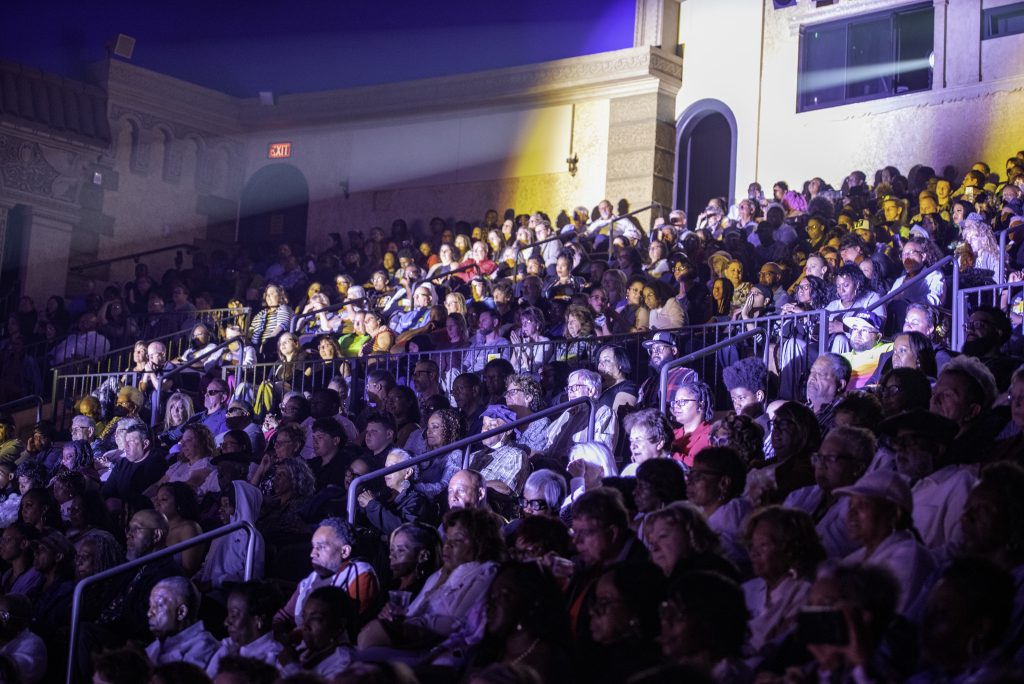
“We wanted to be able to provide that for kids who have a dream or an aspiration. So it’s one of the biggest things we focus on, honestly.”
When asked what advice he would give to the same youth coming up in today’s music and creativity, Wil was quick to insist that the key was to accept yourself first.
“It’s okay to be influenced by others. We have this need to be validated and accepted. But I think it’s important for artists to understand that you have to accept yourself first. And they may feel uncomfortable at first, but that’s a part of it. That’s the part of growth.”
Wil also added that, over time, this practice can become less uncomfortable and more “infectious,” something you’ll continue to build upon.
A word of advice that is obviously not just spoken, but lived by both Wil and Kevin. And one they hope inspires a generation of young artists sitting in bandstands and front rows, ready to discover who they are through the arts.
“You gotta sit in your personal glory. The thing in you is you. It doesn’t look like the next person. It looks like you. You gotta understand that. And you gotta discover that as an artist.”
To purchase tickets to see Black Violin, visit FIM’s website. To learn more about Black Violin, visit their website.
Author

Related Articles

Step Afrika! Brings Rhythm, Heritage, and History to Flint
Step Afrika! brings the cultural rhythm of stepping and African American heritage to Flint.

Tyler Farr brings ‘Quit Bein’ Country’ tour back to Flint’s Machine Shop
Country star Tyler Farr returns to Flint’s Machine Shop while promoting his new EP.
Flint Local 432 launches “Amplify Her” to celebrate women in the arts
Flint Local 432 launches Amplify Her, celebrating women performers, artists, and creatives.


