
Federal SNAP changes threaten little Michiganders’ food access and future
Good nutrition lays the foundation for physical growth, brain development, and school readiness.
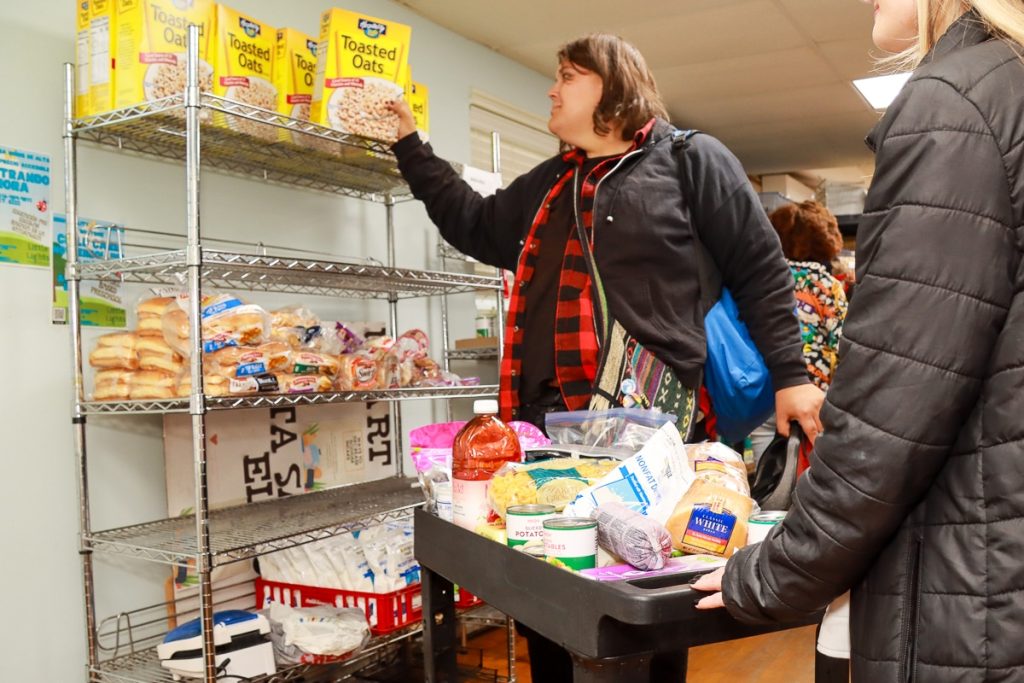
Good nutrition lays the foundation for physical growth, brain development, and school readiness. The first 1,000 days of a child’s life — from conception to age two — are critical. Fifteen percent of Michigan’s families with infants, toddlers, and preschoolers rely on the Supplemental Nutrition Assistance Program (SNAP) to make ends meet. Recent federal changes are expected to impact families’ purchasing power.
The 2025 Annie E. Casey Foundation’s KIDS COUNT Data Book reports that 16% of U.S. children were living in poverty in 2023 — more than 11 million. And nearly one in three children live in households burdened by high housing costs, leaving less money for food. Michigan ranks 33rd in overall child well-being, behind many of its Midwest peers.
Policy shifts and shrinking support
A 2024 Urban Institute analysis found that the maximum SNAP benefit does not cover the cost of a modestly priced meal in 99% of U.S. counties— and nearly all counties in Michigan.
Julie Cassidy, senior policy analyst at the Michigan League for Public Policy, says SNAP benefits already fall short of meeting families’ needs. While providing critical support, benefit levels do not keep pace with the actual food costs. This gap is widening fastest in Michigan, where food prices have climbed nearly 25% since 2020.

“SNAP benefits do not cover families’ full food costs anywhere in the state, and these changes are making that gap even wider,” she says.
Those pressures are likely to intensify under new federal rules. One reason, the recent passage of HR 1 changes how SNAP benefits are calculated. Normally, SNAP benefits are adjusted annually for inflation and every five years through a more comprehensive review based on the latest nutrition science. Those five-year updates often raise benefit amounts because healthier foods like fresh produce tend to cost more.
HR 1 now requires that five-year reviews be “cost neutral,” meaning updates cannot result in any increase to overall program spending. This provision essentially locks benefit levels in place. Advocates say tying future benefit updates to outdated cost assumptions undercuts SNAP’s intent of ensuring families can afford a nutritionally adequate diet.
“Over time, this inevitably leads to an erosion in purchasing power for families that use SNAP,” says Cassidy.

The U.S. Department of Agriculture reports that Michigan’s average monthly SNAP benefit was $146 per person in 2022 — an amount that falls short of what families typically spend to keep food on the table.
Nutrition experts worry state budgets may not be able to absorb the fallout of these policy shifts. Kate Bauer, associate professor of nutritional sciences at the University of Michigan’s School of Public Health, says another looming challenge is the shift of financial responsibility from the federal government to the states.
“Here in Michigan, we’re going to have to cover half of the SNAP benefits,” says Bauer. “The state doesn’t have that money. What will undoubtedly happen is that people are going to lose benefits, even families with young children.”
Direct impact on families
At the local level, that reality plays out in grocery aisles and food pantries. Eleanor Moreno, strategy manager at the Kent County Food Policy Council, says families throughout Michigan are already feeling the strain.
“We’ve been seeing a trend where SNAP cuts have already been arising,” Moreno says. “Families are making impossible choices between paying rent and putting food on the table.”

Moreno’s concern echoes broader data trends showing that families are spending a growing share of their income on basic necessities like food and rent — leaving little flexibility when benefits shrink. Rising food costs and inflation compound the problem.
“Across the board, processed food is cheaper than food that isn’t nutrient dense. Folks are filling up their carts with that because it’s the bang for your buck,” Moreno says. “When you have limited resources like SNAP dollars, parents are forced to decide between perishable produce and boxed meals that can last for months.”
These trade-offs can have lasting effects on children’s development, school readiness, and lifelong eating habits. Families may restrict variety during mealtimes and avoid fruits and vegetables that children might reject. And early nutrition shapes long-term preferences.
“Moms cut their meals, skip meals, even go days without eating to make sure their little ones are fed,” Bauer says. “When budgets grow tighter, families purchase cheaper, more filling options that are not always healthy. If young children are getting fewer flavors, more processed food, and less exposure to new foods, it changes their palettes and their dietary preferences as they continue through childhood.”
When food access becomes that limited, even infant nutrition can be compromised. In extreme situations, families may water down infant formula to make it last longer. Health experts warn that doing so can harm hydration and nutrition resulting in long-term consequences for brain development and immunity for babies.
Moreno confirms this is happening throughout Kent County — parents have asked pantries for single-use formula packs so they can ration carefully.
“At the end of the day, this is survival mode for a lot of our families,” Moreno says. “Infancy is the stage when babies most need nutrient intake, but families are having to stretch every ounce.”
Where children are most at risk
Urban counties downstate and rural northern counties in Michigan face high rates of child poverty and food insecurity. For example, both Wayne County in southeast Michigan and Roscommon County in the northern part of the state report child food insecurity rates of 22%.
State reports also indicate that Michigan’s rural and northern counties show some of the highest food insecurity rates in the state, even as urban centers struggle with poverty and food access.
“Anytime we’re talking about cutting SNAP or restricting access to it, we have to worry about the impact in these communities,” Cassidy says.
Families with disabilities also face challenges. Although people with disabilities can qualify for exemptions from SNAP work requirements, the cumbersome determination process is extremely time consuming, putting some families at risk of losing benefits. Those bureaucratic hurdles often mean the most vulnerable families fall through the cracks.
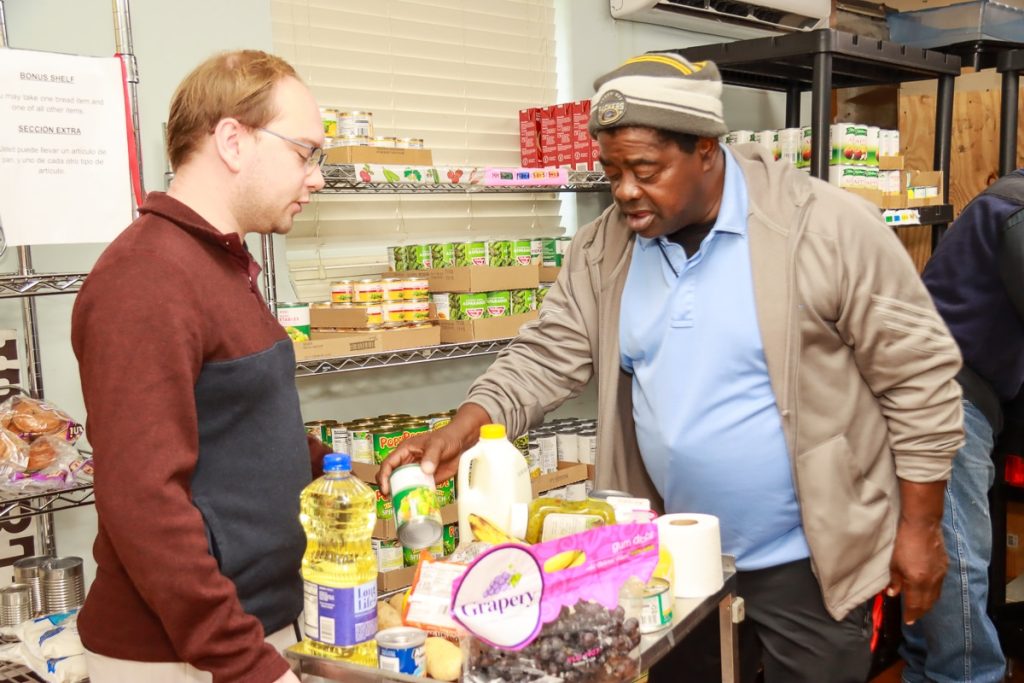
Community organizations cannot fully replace federal programs. Local food banks and pantries are already overextended.
“There are more families coming than ever to the food pantries, and they’re scrambling,” Bauer says. “We can’t food bank our way out of hunger … we need SNAP. We need WIC. We need all these other nutrition programs working together.”
State and local responses
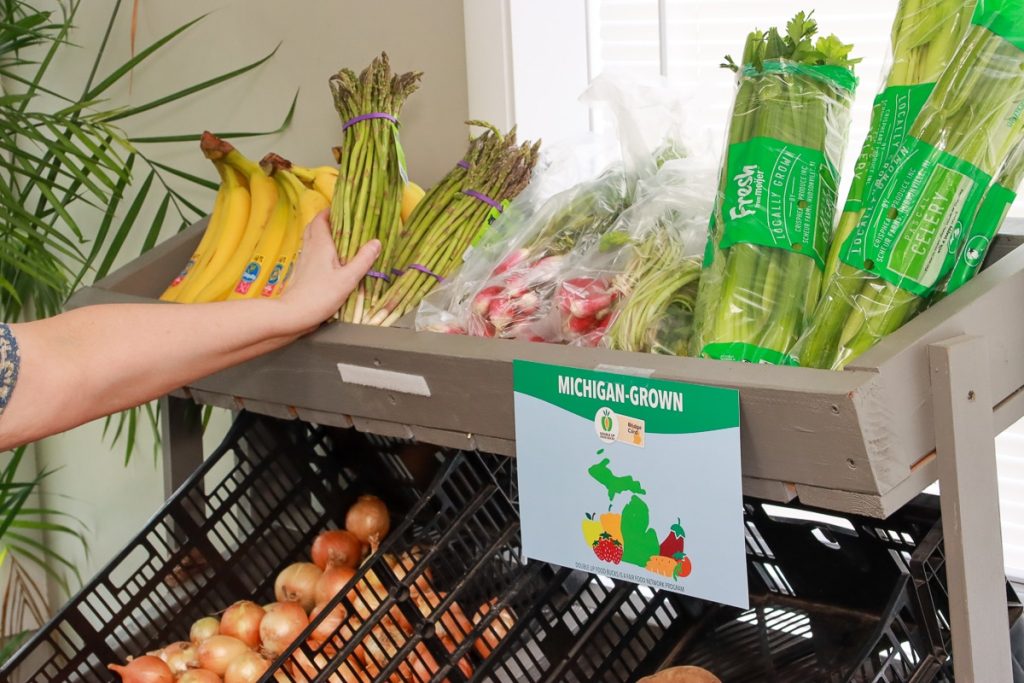
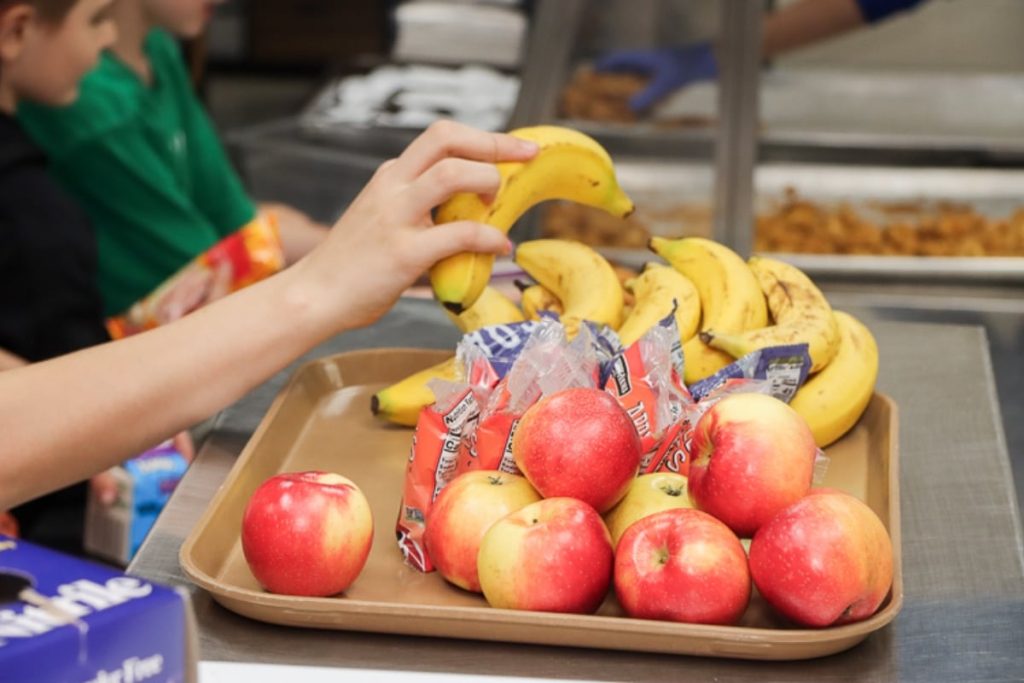
Several state-level programs like 10 Cents a Meal, which funds Michigan-grown produce for schools and child care centers, can help fill gaps as well as universal free school meals and Double Up Food Bucks, which double the value of SNAP benefits for purchasing Michigan fruits and vegetables.
But Bauer and Cassidy stress that state-level programs can only do so much if federal support continues to weaken. Bauer stresses the importance of maintaining federal funding for the Women, Infants, and Children (WIC) program, which provides specific food packages to mothers and young children.
“Fifty percent of children in the U.S. are eligible to receive WIC benefits,” she says. “How could they not support nutrition for moms and babies?”
In Kent County, Moreno sees firsthand how these policy decisions ripple through households and stresses the importance of school meal programs.
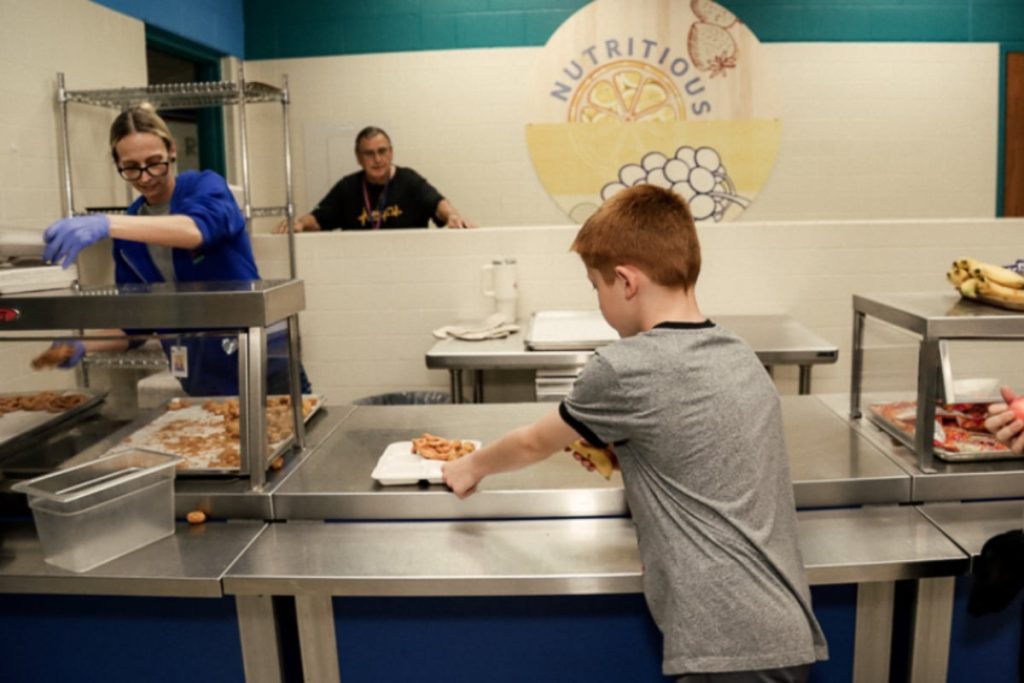
“Access to free meals for our students is huge,” she says. “If that resource disappeared, we would see even more children going hungry during the school day.”
Moreno adds that local policies could also help address waste and access.
“So much good food gets thrown away by grocery stores and farms,” Moreno says. “We need to explore ways to divert that food into our communities instead.”
Without strengthened support for nutrition programs, Michigan’s young children face greater risks of food insecurity and its long-term effects.
“Nutrition in early childhood can affect a child’s entire life trajectory, and SNAP is a load-bearing wall in the nutrition space,” Cassidy says. “With grocery prices continuing to climb, we should be increasing access … not creating more red tape.”
Ultimately, the issue goes beyond policy — it’s about humanity.
“We have to center care in our systems,” Moreno says. “Every parent I talk to wants to do what’s best for their kids. They just need the stability and resources to do it.”
Photos by Tommy Allen
Julie Cassidy, Kate Bauer, and Eleanor Moreno photos courtesy subjects.
Early Education Matters shares how Michigan parents, child care providers, and early childhood educators are working together to create more early education opportunities for all little Michiganders. It is made possible with funding from the W.K. Kellogg Foundation.
Author

Related Articles
PreK for All expands early learning access for Flint families
Michigan’s PreK for All expansion has given Genesee County families access to high-quality preschool education.

Dinosaurs Take Over the Flint Cultural Center This January
Beginning January 20, ICE DINOSAURS: The Lost World of the Alaskan Arctic opens at Sloan Museum of Discovery.

How one school system bridges the care gap with innovative Health Hubs
Detroit’s Health Hubs embed medical, behavioral, and dental care inside schools, ensuring students receive essential services and thrive in class.


