
Loving Leroy: Post-Incarceration Syndrome and how it kills access to love
In her essay, Crystallee Crain reveals how post-incarceration trauma can turn love into survival, and how freedom becomes the ultimate act of healing.
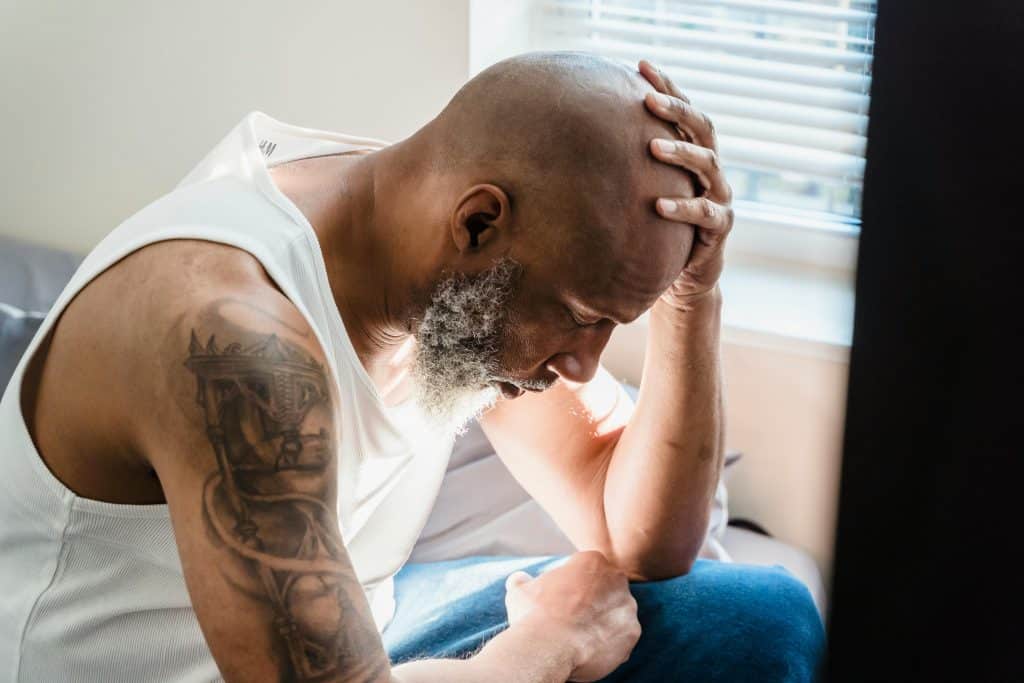
The following is a Flintside opinion piece by Flint native Crystallee Crain. Have an idea for an essay or opinion piece you’d like to write for Flintside about life in Flint? Email editor@flintside.com.
I met Leroy through a mutual acquaintance that let me know someone from my hometown was being exonerated. I was proud. I believed his freedom deserved celebration.
Something about his quiet intensity caught my attention. He was different from others I met post-incarceration (even those in my own family) — initially I believed him to be more observant and careful with his words. When he spoke about his plans for the future, there was a deliberation in his voice that suggested he had spent decades thinking about this moment. It made me trust him.
I was drawn to his experience – seeing some of his in mine – feeling a connection of shared loss but stronger motivation.
Perhaps naively believing that my own freedom could somehow help bridge the gap between his old world and this new one.
As a survivor of violence I know pain and I know what healing can look like. I also know it isn’t linear, I wanted to share that patient understanding. I did not know what I know now. I’ve learned a lot about love and freedom. I forgot that all pain is not the same and the strength to heal ourselves is crafted within.
Leroy and I began spending time together after the event. I watched him navigate the world with a hypervigilance that both fascinated and unsettled me. He would study menus for long minutes, overwhelmed by choices that seemed simple to me.
Technology baffled him—cell phones and computers had evolved dramatically during his incarceration, and I found myself explaining apps and social media with the patience of a teacher, because I was a professor for 18 years.
I chose to support him, and I told myself this choice reflected my values—my belief in redemption, in second chances, in the power of love to transform.
But as the months turned into a year, then two and so on, I began to notice the weight he carried as he made it mine and used it as a weapon. It wasn’t just the obvious adjustments—the way he startled at sudden noises, or how he hoarded food in his refrigerator. It was something deeper, more corrosive. It was the way he used his pain to shame me for being hurt the same way he was.
The verbal assaults began subtly, then escalated into a relentless campaign to diminish me.
He called me a “glorified self-employee” when I talked about my consulting work, dismissing my entrepreneurial efforts as fake independence. When I shared my spiritual practices—meditation, journaling, my connection to nature—he sneered and called me “fake spiritual,” as if my search for meaning was somehow performative.
The biblical names came next: “wh*re,” “Jezebel,” “Delilah.” These weren’t only spoken in moments of anger but also delivered with cold calculation, designed to shame me into silence.
He wielded scripture like a weapon, using my own beliefs against me. I had been raised in an agnostic household that celebrated women and our ability to lead. This threatened him.
The first real crack appeared when I was offered a new contract that required some travel. I was excited, seeing it as recognition of my hard work and an opportunity for professional growth. Leroy’s reaction was immediate and visceral. “Must be nice,” he said, “to have choices.”
The word ‘choices’ became weaponized in our relationship. He never saw the massive efforts I did to give him access to more choices. To give him options and time to find his way without having the same barriers others may face. “You don’t do sh*t for me,” he said. Constantly belittling my love and time I shared to ease his transition.
I couldn’t do anything right and eventually neither could my family as he yelled at my mother, and my step father had to intervene.
My choice to make friends became an abandonment. My choice to visit my family became a reminder of the family relationships he had lost. I travel for work so that meant I had lovers in other cities.
Thriving in my career became evidence of my selfishness.
I tried to understand his pain, which sometimes looked like me not fully holding him accountable to the harm he was causing me. I have trained and been trained in many modalities on trauma and healing justice. Some parts of me knew about a year in, I was in a situation that needed more care, but he wouldn’t partner with me on that. For the longest, I truly believed he would take the reins and lead in his own healing process alongside me while I continue to do the same. He did not.
I made excuses for his increasingly cruel behavior, rationalizing it as pain rather than recognizing it as systematic emotional abuse.
I found myself shrinking to accommodate his pain and to prevent myself from being emotionally “kicked” anymore. I stopped talking about my accomplishments, stopped sharing my excitement about opportunities, stopped mentioning experiences from the years he had been away. I told myself this was compassion, but it was actually a form of self-erasure. I was trying to make myself smaller so that his world wouldn’t feel so diminished by comparison.
The jealousy and resentment metastasized slowly. He resented my friendships, particularly with other men, but also with women who had never experienced his kind of loss. The biblical names became more frequent, the accusations more vicious.
He would dissect my character with surgical precision, using my own compassion against me. How could I complain about his treatment of me when I had never been truly powerless? How could I claim to understand struggle when I had always been free to leave, to choose, to build a life on my own terms?
Every day I existed as myself, with my history and my freedom and my choices, I was a reminder of everything that was taken from him.
I understood then what I had failed to grasp in my eagerness to be supportive: you cannot love someone out of their trauma. You cannot fill the void left by lost time with your own presence. And you cannot build a healthy relationship with someone who sees your freedom as a personal affront to their suffering.
The decision to leave was mine to make—another choice in a life full of them. But it was also an acknowledgment of a hard truth: that some wounds run so deep they poison everything around them. Leroy’s pain was real and justified, but it had curdled into something toxic.
His jealousy wasn’t about love; it was about a fundamental inability to see others’ joy without measuring it against his own loss. Even still I know it’s a process that he has to choose to understand, he won’t listen to others.
Removing myself from the relationship was a gift I had to give myself. I learned something important about my own healing journey. I suffered from abandonment as a child and I never wanted to make someone feel that way. I never wanted to abandon him.
Supporting someone’s reentry into society didn’t require me to sacrifice my own agency or diminish my own experiences – he gave me few choices and took no responsibility for the consequences of his actions.
True justice—in any relationship—requires that both people be able to celebrate the other’s freedom, not resent it.
Love cannot flourish in the soil of envy, and growth is impossible when one person’s gain is always seen as another’s loss.
Leroy taught me that trauma can become a prison of its own making, one with bars forged from dissonance and envy. Some people emerge from their literal cages only to construct new ones from their sorrow. And while I could empathize with that pain, I could not—and should not—make myself smaller to fit inside it.
What I didn’t understand then—what I couldn’t have understood without living it—is that Leroy wasn’t just dealing with the typical challenges of reentry. He was exhibiting classic symptoms of Post-Incarceration Syndrome (PIS), a condition that affects individuals who have spent extended periods in correctional facilities. Twenty-five years of institutional living had rewired his brain in ways that made genuine intimacy nearly impossible.
PIS manifests in several ways that I witnessed firsthand: chronic apathy alternating with explosive anger, difficulty trusting others while simultaneously being hypervigilant about betrayal, and an inability to engage in reciprocal relationships. He never once asked me how I was doing without it being a part of a calculated effort to ask for something.
He never once said, “is there anything I can do for you today?” Not because he didn’t care but because he doesn’t even think those thoughts.
The prison environment had taught Leroy that vulnerability was weakness, that emotional connection was dangerous, and that other people’s gains inevitably meant his loss.
In prison, Leroy had learned to survive by reading threats in every interaction, by never showing softness, by hoarding resources—both material and emotional. These survival mechanisms, necessary for twenty-five years, became the tools he used to navigate our relationship. My success wasn’t something to celebrate; it was a resource being withheld from him.
My independence wasn’t attractive; it was a reminder of his perceived dependence.
My joy wasn’t infectious; it was insulting.
What I mistook for love was actually a trauma bond—an unhealthy attachment formed through cycles of abuse and intermittent reinforcement. Leroy would tear me down systematically, then offer moments of tenderness that felt like relief from the emotional assaults.
These brief respites from his cruelty created a psychological dependency. I found myself grateful for basic human decency, mistaking the absence of abuse for the presence of love.
This manipulation was sophisticated because it was unconscious. Leroy didn’t sit down and plan to psychologically torture me. Instead, his damaged psyche automatically identified my strengths as a threat to him and he attacked them. My entrepreneurial spirit became “glorified self-employment.” My spiritual practice became “fake spirituality.” My honesty became simultaneously “too much” and then “lies.”
Every quality that made me who I was became a target for his projections of inadequacy and rage. Like I was constantly reminded, “I’m a walking trigger.”
The criminal justice system’s failure to adequately prepare people for reentry creates a secondary population of victims—the partners, family members, and friends who try to love someone whose capacity for healthy relationships has been systematically destroyed. We become collateral damage in a system that prioritizes punishment over rehabilitation, that releases people without addressing the psychological devastation of long-term incarceration.
Walking away from Leroy was an act of self-preservation, but it was also an act of rebellion against a culture that tells women our highest calling is to sacrifice ourselves for men.
It was a rejection of the idea that understanding someone’s pain obligates you to accept their abuse. It was an assertion that my freedom, my joy, my very existence were not crimes requiring punishment.
My freedom—to choose, to grow, to exist fully in the world—is not a weapon against anyone else’s suffering.
Freedom is a birthright, one that I have every right to exercise without shame, without apology, and without making myself smaller to accommodate someone else’s insecurities.
Related Articles

A Middle Kind of View: What Happened to Our Relationship With Libraries?
One child’s love of books sparks reflection on reading habits and our relationship with libraries.
First, they came for independent journalists
Flint native, author, and former journalist, Bob Campbell, explains why the media should stand in defense of their own and the 1st Amendment.
A Middle Kind of View: Michigan Winter Roads
In the latest, A Middle Kind of View, Amina reflects on the harsh conditions and turbulent times of living through Michigan winters.


