

Supporting Global Voices in Flint: How the International Center of Greater Flint Is Rebuilding What Was Lost
The International Center of Greater Flint rebuilds support for Flint’s growing global community.
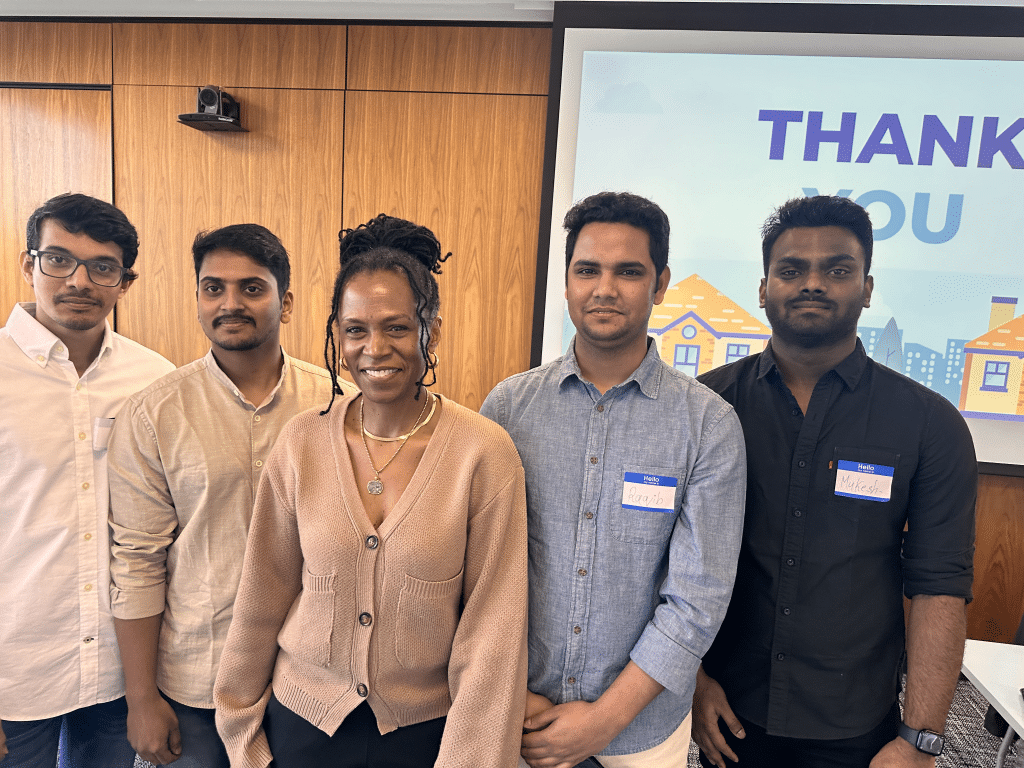
FLINT, Michigan — When the International Institute of Flint, once a cornerstone for immigrant services, English classes, and community connection, closed in 2007 and was later renovated for other uses, it left more than an empty building behind. It left a gap.
For many international residents and newcomers, the Institute has been a central place to learn, connect, and navigate life in a new country. Nearly a decade later, community leaders moved to restore that spirit of welcome and coordination. In 2015, the International Center of Greater Flint was formed to rebuild what had been lost by reimagining how Flint could celebrate and support its growing global community.
Today, as Flint’s international population expands and federal immigration developments create new uncertainty, the Center’s work has taken on renewed urgency.
According to 2023 data, over 13,000 Flint residents are foreign-born. This demographic share has grown modestly over the past decade, even as the county’s overall population has declined. Amid that shift, local colleges such as the University of Michigan-Flint and Mott Community College have seen increased enrollment from international students, further contributing to the area’s diversity.
RELATED LINK: Rooted in Culture, Driven by Justice: Inside the Arab American Heritage Council
“The International Center of Greater Flint was officially formed in 2015 to promote and celebrate the diversity of people that live in the Flint area,” co-founder Phyllis Sykes said.
Sykes and co-founder Adil Mohammed created the organization after recognizing that Flint — while smaller than many metropolitan hubs — has long been home to residents from across the globe. They envisioned a place where newcomers could connect not only with each other, but with the broader Flint community.
“We felt it was valuable to have a place where people could come and connect with the community at large, and for the community at large to outreach to the newcomers that have chosen to make Flint their home,” Sykes said.
In its early years, the International Center of Greater Flint focused primarily on cultural celebration and connection. The organization has hosted international food festivals, International Women’s Day events, welcome receptions for international students, and social gatherings like international coffee hours.
But in 2024, the Center expanded its focus with the launch of the Global Flint Initiative, a yearlong research collaboration with three University of Michigan-Flint professors. Through surveys and focus groups, the initiative sought to better understand the experiences of international residents living in Flint and Genesee County.
RELATED LINK: International Center of Greater Flint launches its ‘Global Flint Initiative’
The effort included surveys and focus groups with more than 60 residents representing more than a dozen countries. Among participants, transportation emerged as one of the most frequently cited barriers, with many saying they found Flint’s limited public transit system was difficult to navigate. A lack of centralized information about services and opportunities in the community was another recurring concern.
“Our research found that the international community needed a place where they could go and find out what’s available in the community,” Sykes said.
According to Sykes, there are people from over 30 countries in Flint, with the largest recent increases in residents having migrated from Cuba, Mexico, and India over the past five years, a change reflected in the Global Flint Initiative findings.
While the International Center of Greater Flint currently operates out of the Northbank Center, Sykes said the organization hopes to eventually secure a standalone, centrally located building that could serve as a visible hub for assistance and connection.
Why Flint?
Sykes says one of the most surprising findings from the Global Flint Initiative research was how positively many international residents described their experience in the city.
“They really liked Flint, and shared so much about how much they really like the people in Flint,” Sykes said.
Survey participants described Flint as friendly and easier to navigate than larger cities. Many participants cited affordable housing as a major advantage — with Flint’s median home value significantly lower than the Michigan average, homeownership feels within reach for many families who moved here from countries where buying a home might be out of reach.
“When you have someone who comes from another country where home ownership is not a possibility… they’re just so grateful to have that opportunity to own a home,” Sykes said.
As a lifelong Flint resident, Sykes said hearing those testimonials reshaped her own perspective.
Fear in the Current Climate
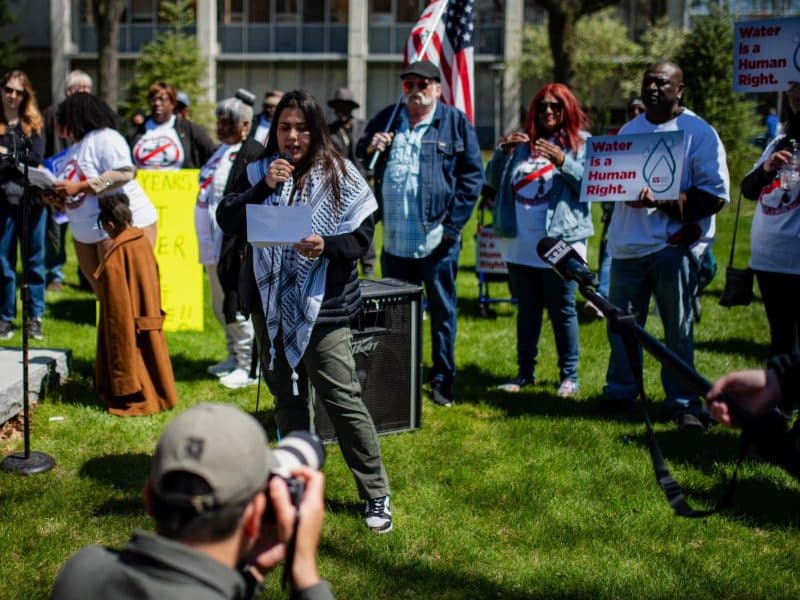
At the same time, recent federal immigration policy developments have heightened anxiety within parts of Flint’s immigrant community.
“People are scared,” Sykes said.
She described families who are afraid to leave their homes, hesitant to send children to school, attend medical appointments, or even go to the grocery store.
“You can imagine, if you have kids, what that’s doing to your household,” she said.
Sykes pointed to Flint Area Immigrant Rights (FAIR), an organization formed in response to immigration enforcement concerns and of which the International Center of Greater Flint is a part, as another key resource for families navigating the current moment.
RELATED LINK: Flint Alliance for Immigrant Rights rallies Flint to oppose ICE partnership
Still, Sykes emphasized that informal networks alone cannot meet the scale of need emerging as Flint’s international population continues to grow. Findings from the Global Flint Initiative suggest that while many newcomers are choosing to build their lives in Flint, long-term retention may depend on the city’s ability to create more coordinated systems of support.
According to Sykes, that includes expanding access to transportation, legal services, healthcare navigation, and employment pathways, as well as ensuring that international residents know where to go when they need help. For many survey participants, the lack of a centralized, visible hub for services made it difficult to access opportunities already available across the community.
Sykes says that’s where the International Center of Greater Flint hopes to grow — not just as a cultural gathering space, but as a connective bridge between international residents and the institutions that shape daily life in the city.
“We want people to know they belong here,” she said. “That Flint is a place where they can live, work, raise a family, and feel safe doing so.”
As Flint looks toward its future, community leaders say welcoming infrastructure may play a critical role in determining whether newcomers remain in the city long-term, continuing to add to the city’s cultural richness, workforce stability, school experience, and neighborhoods in the years ahead.
Author

Related Articles
Rooted in Culture, Driven by Justice: Inside the Arab American Heritage Council
For more than 40 years, the Arab American Heritage Council has preserved culture, supported immigrant families, and built community power in Flint.

Hip Hop Caucus brings culture, community, and political power together this weekend as its “Barz & Ballots” event arrives in Flint
Hip Hop Caucus aims to turn artistic expression into grassroots action as its “Barz & Ballots” event.
Michigan Health Council: Collaborations urgently needed to strengthen Michigan’s health care workforce
The Michigan Health Council facilitates collaborations and shares solutions that build the state’s health care workforce.


