
‘Threads of Time’ exhibit at the FIA is a threaded patchwork of past and present memories
Detroit artist Carole Harris explores how the present is made of patchwork textile scraps of our past in “Threads of Time” exhibit at the FIA.
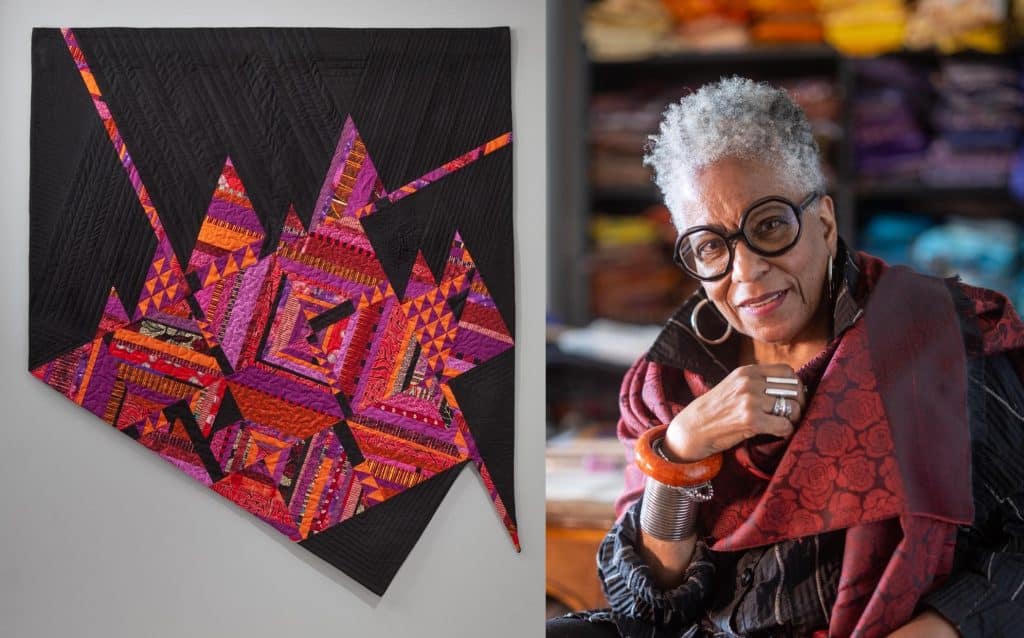
FLINT, Michigan — Textiles are tactile — you can physically feel them, but when used in powerful artwork, they can also make the viewer feel something. Detroit artist Carole Harris was introduced to stitchery by her mother, and started sewing classes before receiving a Bachelor of Fine Arts in art from Wayne State University. Her latest exhibition of textiles includes artwork spanning four decades, featuring traditional quiltmaking techniques and experimentation with colors, shapes, textures, and stories.
“Threads of Time” is on exhibit from Nov. 1 through April 12, 2026, in the Harris-Burger Gallery. Sarah Kohn, director and curator of collections and exhibitions at the Flint Institute of Arts Museum + School, says this exhibit was especially collaborative because of the living artist.
“We were very fortunate to work closely with Carole right from the start,” Kohn says. “We worked together to create a checklist of works that would be fantastic for the exhibition and began reaching out to collectors. I visited her studio to learn a little more about her process and see some of her new work in person. Having the opportunity to step into the place where artists create is always inspiring.”
It’s not always that the FIA gets to work with an artist who is still alive, given that the museum often showcases historic work and artifacts dating back centuries.
“The main difference with working with a living artist is that you have the opportunity to collaborate in a way that’s really meaningful,” says Kohn. “I was able to talk with Carole about the importance of some of the works, minute details about her process, and stories from her life. Sometimes this level of information is not available when you are working with historic pieces. It is also great to include the artists’ ideas into the show, we can talk about where something should be hung, what type of information to share on labels, and so much more that I can’t do when I’m working with historical artworks.”
That same element of time — both past and present — is a theme within the featured exhibit, too. Layers of cloth overlapping, changing, and aging can symbolize layers of memories, blurring moments, and fresh, new ideas.
“The exhibition explores the passage of time; not only do the artworks reflect different moments in her career, the objects themselves are a study in memory and moments in time,” Kohn says.
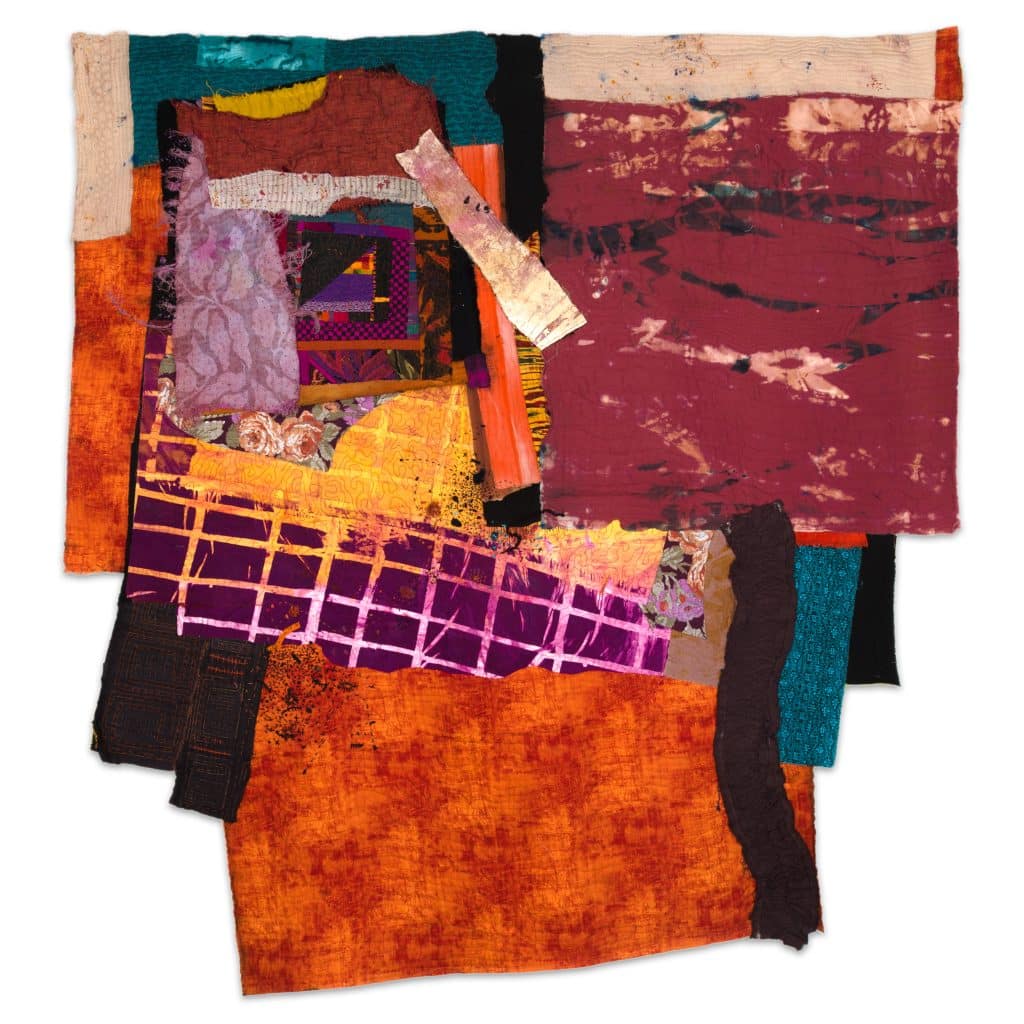
Even the pieces of fabric weave their own unique stories, having found their way into Harris’ artwork.
“Some of the cloth used in the exhibition is used fresh from the bolt, but some has been repurposed from other items and had a life of their own before they became part of her artwork,” Kohn says.
That extra connection and relation to literal and figurative feelings is something that makes textiles a unique art form.
“While not everyone may own a sculpture or an oil painting, everyone has an item of fabric that has meaning to them,” Kohn says. “Artworks like Harris’ remind us that a material that we often take for granted can have incredible power.”
It might be a baby blanket, a generations-old family heirloom quilt, or a favorite cotton t-shirt that’s finally ‘broken in.’
“I think the colors, patterns, and visible textures of these artworks can evoke feelings,” Kohn says. “Some of the work has been intentionally altered to create a specific effect that may resonate with viewers. For example, in some of Harris’s work, you will see rust spots. Those are created by the artist but can be huge signifiers of meaning — both to Harris and the viewers.”
Visitors are invited to connect, reflect, and introspectively interact with this exhibit, sewing through a passage of time, exploring how the past is carried into the present. Future programming is in the works to accompany this exhibit and featured artist, planned for 2026. Updates will be shared on the website.
The Flint Institute of Arts is open Monday through Thursday from 10 a.m. to 5 p.m., Friday from 10 a.m. to 8 p.m., Saturday from 10 a.m. to 5 p.m., and Sunday from 1 to 5 p.m. Admission is free for FIA members and Genesee County residents, $10 for adults, free for children 12 and under, $8 for students with ID and for seniors. Admission is free for everyone on Saturday, courtesy of Huntington Bank.
Author

Related Articles
“We Bend, We Don’t Break:” Comma Bookstore Closes its Doors, Beginning its Next Chapter Online
Comma Bookstore founder, Egypt Otis, details new plans for their digital storefront.

Forgive them and Parent Better: An interview with Jordyn Mickens
Jordyn Mickens invites readers into a vulnerable and honest conversation about growth and forgiveness with her upcoming book.
Introducing “A Middle Kind of View” Column Series by Amina Smith
A Middle Kind of View” is a bi-weekly column series by University of Michigan–Flint student and Flint native, Amina Smith.