

Violence in the City: Church shootings, bomb threats, and fear across Genesee County
Violence shattered a Sunday service in Grand Blanc, leaving grief, fear, and urgent questions about safety and unity in its wake.
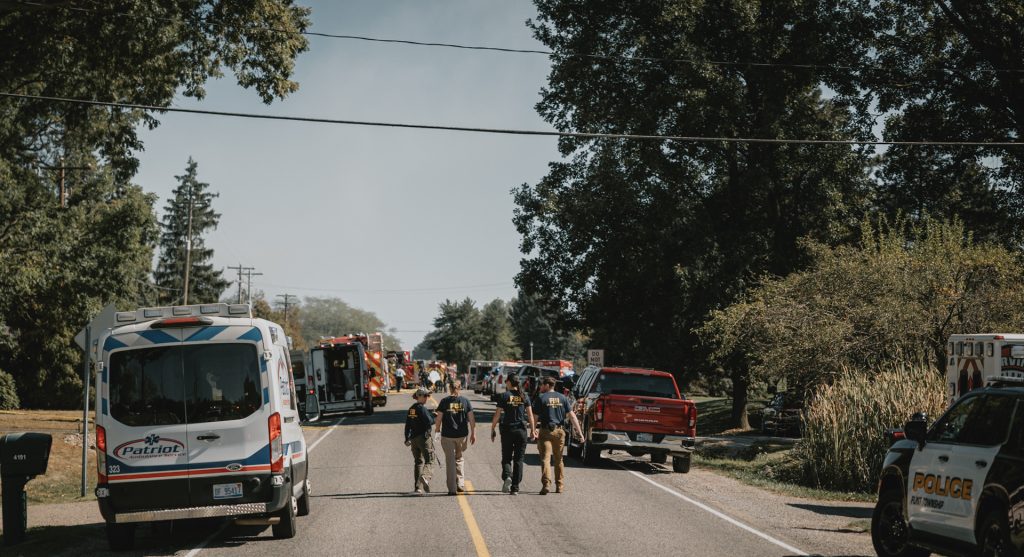
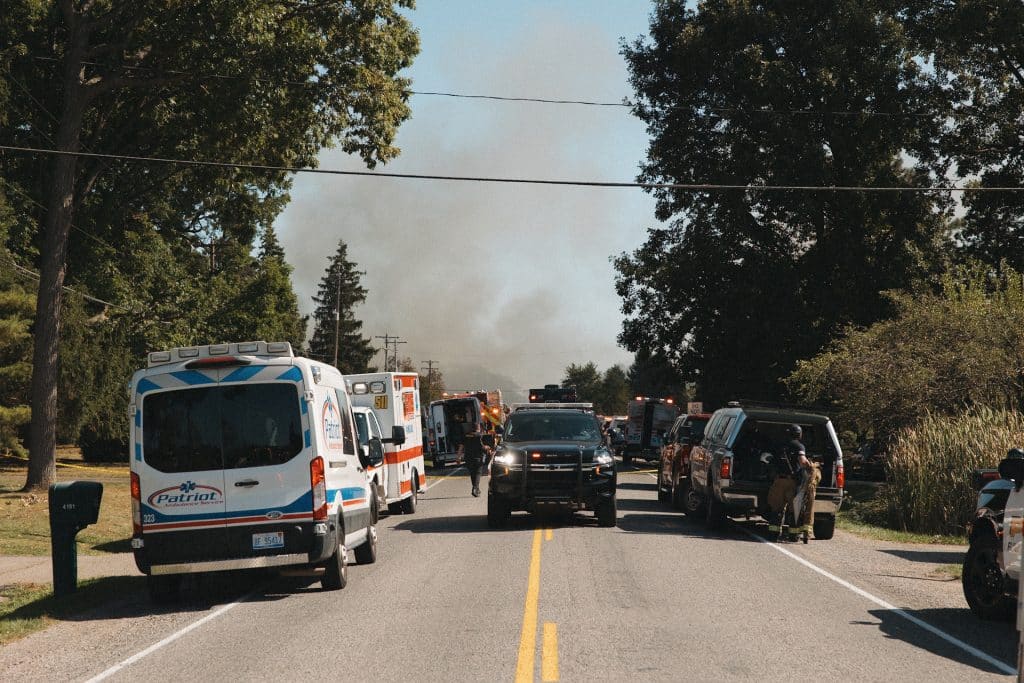
FLINT, Michigan — On Sunday, Sept. 28, a quiet Sunday morning in Grand Blanc Township was shattered by one of the most harrowing acts of violence the region has ever seen. Worshippers inside the Church of Jesus Christ of Latter-day Saints were in service when a shooter, identified as 40-year-old Thomas Jacob Sanford of Burton, Michigan, a former U.S. Marine and Iraq War veteran, proceeded on a shooting rampage, set the church ablaze, and was fatally shot in the crossfire with police, just minutes after the first 911 calls came in.
“I’m f***ing pissed,” expressed a nurse on the scene, who, through her tears, was visibly and audibly distressed that she and several other nurses weren’t authorized to help the victims. “We were supposed to have a prayer service and I [seen] they’re shooting here, so I jumped up and got my scrubs on because this is what we do—we help people. Our community needs us!”
In the hours that followed, the region braced under the weight of mounting fear. Bomb squads deployed. Church buildings near and far were evacuated in response to secondary threats, and schools canceled classes in the aftermath. Investigators combed through Sanford’s digital footprint, home, and vehicle for clues about the motive.
However, chaos has been brewing across the city for some time. Before this, law enforcement agencies across Genesee County reported a separate but eerie development: a threat had been phoned into the Meijer store on Center Road in Burton. Authorities evacuated the premises and sent a squad to assess the situation. Local social media lit up with images of police vehicles fanning out around entrances.
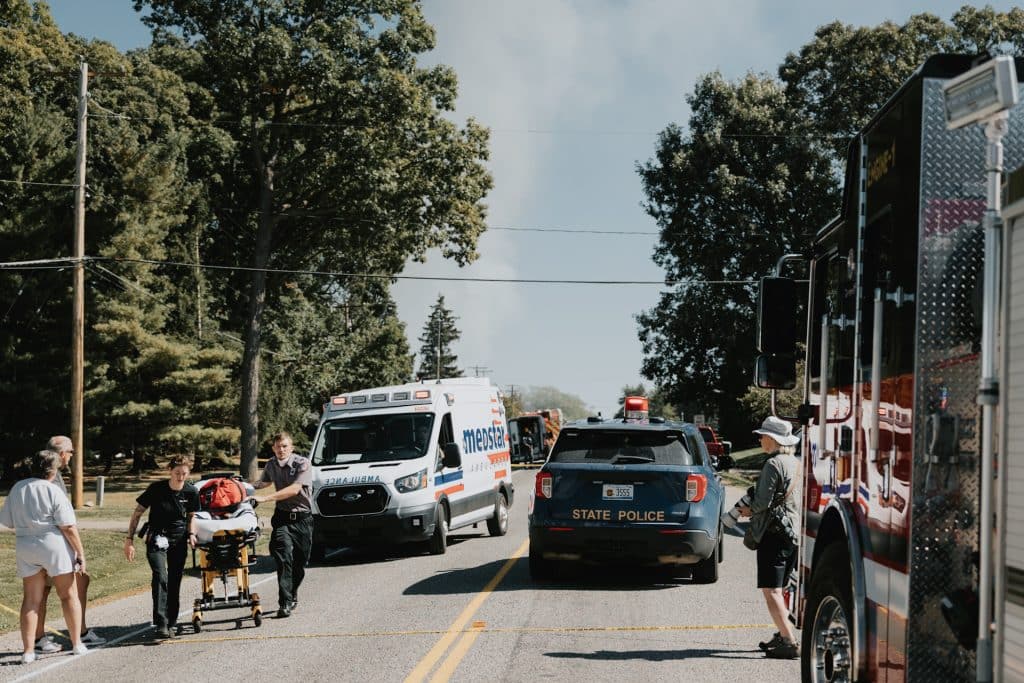
Julie Hugunin, shopping inside the Meijer, stated, “I was at the Center Road Meijer Saturday evening when it was evacuated for a ‘threat.’ None of the police on site seemed all that worried, more irritated, really. Then the attack in Grand Blanc happened on Sunday, which affected several of my student families as well as my son’s friends. There are just too many things to be legitimately wary of in our society right now.”
Meanwhile, in Genesee County, rallies and protests against ICE have taken root. The Flint Alliance for Immigrant Rights (FAIR) has been hosting meetings and events, continuing its efforts to keep the community informed about new developments and ways residents can protect themselves and one another. Reports from them and other advocacy groups and community organizations showed that these raids have left communities on edge, with fear rippling through immigrant neighborhoods.
St. Mark Missionary Baptist Church in Flint, pastored by Pastor Kevin Thompson, was recently set on fire, and the People’s Church of Flint, a designated safe space for Flint’s LGBTQ+ community, helmed by Matthew Hogue-Smith, in downtown Flint, has been the target of multiple gun violence threats.
That a brutal mass shooting in a place of worship, a bomb threat at a local grocery store, church fires and threats, and escalating ICE activity should all coincide may be more than mere coincidence. For many in the region, the unspoken connections form a pattern: a sense that violence is no longer random or isolated, but deeply entwined with political fractures, social polarization, and institutional distrust.
The arc of this violence stretches beyond Grand Blanc, Flint, and Genesee County. In 2025 alone, the U.S. has witnessed a staggering number of mass shootings. These attacks — some framed as terror, some as the work of lone deranged actors —reflect a deeper sickness in national life: one where guns, detrimental rhetoric, and paranoia swirl into acts of horror.
In parallel, ICE raids and aggressive immigration enforcement under the current federal administration have inflamed social tensions, especially in communities where law enforcement and federal authorities collaborate closely. For many in Genesee County, Sunday’s events reinforced the idea that no one is fully safe, whether in a place of worship, in a retail parking lot, or in a neighbor’s kitchen.
Politicians across the spectrum responded swiftly. Governor Whitmer called the attack “unacceptable” and expressed heartbreak for Grand Blanc. President Trump, in a statement, described the shooting as a “targeted attack on Christians” and condemned the broader violence gripping the nation. Some have decried that political leaders only respond after headlines have been made. In contrast, others said the deeper issue is not just rhetoric but policy — gun control, mental health funding, community policing, immigration enforcement, and cracks in social cohesion.
Samantha Siebert of Indivisible of Flint & Genesee County sees it a little differently. She remarks that “we need to come together and not be so easily divided. We need to stop pointing fingers at each other and say, ‘We let that person down, and look what happened.’ We need to be united and hold our elected leaders accountable. Why can we not agree that children need to be safe, fed, and educated? When did that become controversial?”
In Flint, Genesee County, and for those in Grand Blanc — survivors, survivors’ families, neighbors — their questions are more immediate: Who died? Who will live? How did this happen in a sanctuary of prayer? As the smoke clears and debris is cleared, investigators will sift through shards of glass, prayer books, and scorched wood to try to reconstruct what the shooter meant, whether he had help, and whether his violence was part of something larger.
But rebuilding trust, healing grief, preventing the subsequent massacre — those will be far harder tasks. Sunday’s blood and flame left Grand Blanc changed irrevocably. As days turn to weeks, and as investigators close in on motive, the region is left to wrestle with a central, stark truth: violence on that scale does not emerge from a vacuum. It bubbles up in fissures of misinformation, fear-mongering, and distrust in the systems and laws meant to protect, and it widens the gap of trust in policies that exclude people.
And unless those fractures are addressed, the next tragedy may already be in the making.
Author

Related Articles

In Pictures: Downtown Flint
Photographer Ryan Hobson journey’s to downtown Flint to capture one of the heartbeats of the city.
In Pictures: Sarvis Park
Photographer Ryan Hobson shares his perspective on Sarvis Park.
In Pictures: A Winter Look at Flint’s Eastside
Photojournalist Anthony Summers gives a closer look at Flint’s eastside during the winter season.


