
Kettering Student Creates Spoon Wrap, Inspired by Partner’s Chronic Illness
Kettering student Alex Nichols built SpoonWrap for partner Mahalia Thompson’s invisible illness.
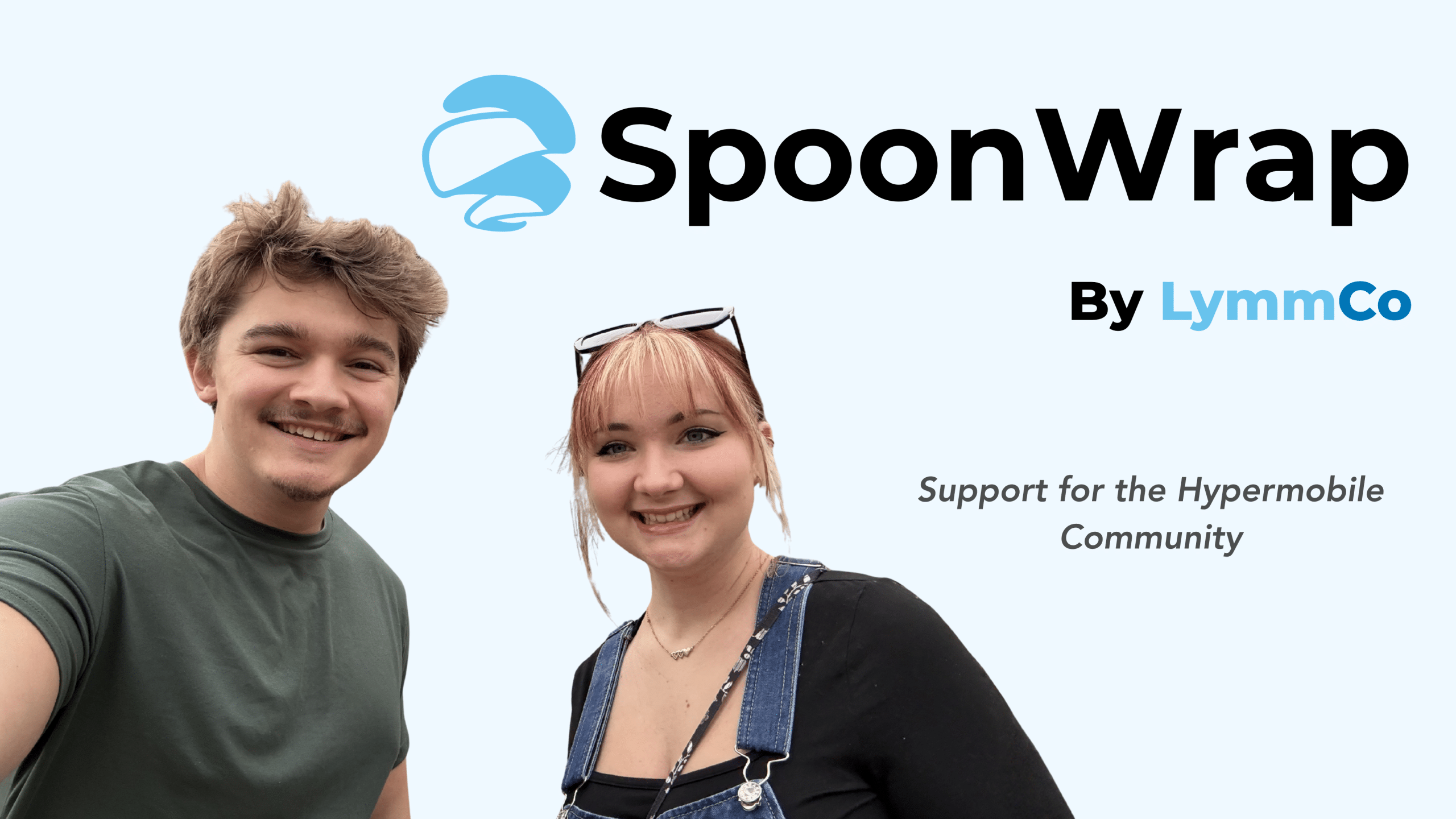
FLINT, Michigan — On a good day, Mahalia Thompson balances work and pre-med studies at Wayne State University with her chronic pain at a managed level. Her journey of living with what she calls an “invisible illness” has been an uphill battle.
In just fifth grade, she was diagnosed with hypermobile Ehlers-Danlos Syndrome (hEDS), a genetic condition causing loose joints and long-lasting pain. What started as symptoms of discomfort and subluxation grew into co-occurring conditions causing issues with her cardiovascular system, pelvic floor, and colon.
She was also diagnosed with Mast Cell Activation Syndrome (MCAS) and Postural Orthostatic Tachycardia Syndrome (POTS).
For a while, Thompson felt like a pain-free day would be something she would never experience. She used soft braces and KT tape but needed support for multiple joints. Finding reinforcement for her knees, elbows, wrists, and ankles was difficult with the limited hypermobility market. She was allergic to adhesive, and other products were inaccessible due to cost.
Alex Nichols, a mechanical engineering student at Kettering University, founder of LymmCo and Thompson’s partner of three years, wanted to find a realistic and accessible wrap that helped her and others living with similar conditions. Nichols created SpoonWrap, full-body compression wear designed for those with hypermobility conditions in hopes of making pain and difficult days more manageable.
“I felt a mix of excitement and pure love for Alex when I found out about SpoonWrap, and that there would be a better and cheaper option for me,” shared Thompson as the couple spoke about their journey.
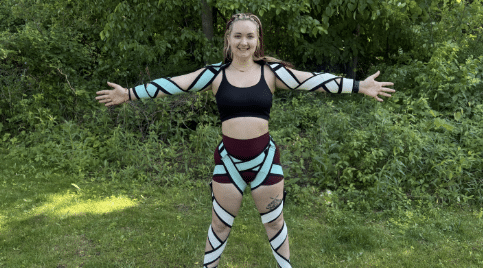
The wrap uses compression to comfort or calm joint pains. Its design is based on surveys Nichols hosts on his website. The surveys allow customers to share preferences and suggestions.
Feedback has shown that inaccessibility and limited support continue to be a common barrier this community experiences. SpoonWrap is intended to be affordable and accessible to overlooked populations.
“The system fails people like Mahalia on the bad days. When a flare-up hits, she can’t walk, and I have to hold her up, so she doesn’t fall in the grocery store. But because her bad days aren’t every day, she doesn’t qualify for a disability pass,” Nichols reflects. “Even when she needs a wheelchair, she still can’t park somewhere that would be helpful or use an elevator when stairs are too much. There is no category for her.”
Each SpoonWrap currently takes about eight hours to develop and will be sold for around $200 once it is available for purchase. Other wraps for hypermobility cost anywhere from $300 to $600+.
There is no known cure for conditions like hEDS, POTS, or MCAS. Those living with these diagnoses must take medications and use supportive wraps and braces to manage chronic symptoms.
Now, Nichols is asking for help raising money for patent costs, materials, development, and testing. In late May, he began asking for donations on GoFundMe. Fundraising would allow the couple to continue product development while managing the needs of Thompson’s condition.
Inspired by Thompson’s story and wanting to build community, Nichols took to TikTok to share their story and get direct feedback for his product. The response was overwhelming. More than 1.7 million viewers watched Nichols and Thompson showcase Spoon Wraps while explaining how they can support those with hypermobility diagnoses.
Nichols plans to continue documenting the development process on his TikTok, Instagram, and YouTube page and to keep customers involved in the creation process. Over 4,400 people have already joined the waitlist.
“The biggest thing I’ve learned was how underserved this community really is. I see Mahalia struggle, but I didn’t realize how many people actually had conditions like these and couldn’t find options. That’s why it’s so important for this product to be based on the surveys,” Nichols said.
Customers can share their input on social media or take the survey posted on the LymmCo website. As their following grows, Thompson hopes her story inspires others who also live with invisible illnesses.
“There are so many unseen challenges in the day-to-day life. I want anyone reading this to know that their struggles are valid. Having an invisible illness can be so tough,” Thompson shares as the conversation comes to a close.
“It’s years of fighting with doctors, and tests coming back normal. Feeling like you should not use a mobility aid because you look fine, or people tell you that you’re too young. But it does not matter if no one can see your struggles. They are real, and you have to take care of yourself.”
What began as a Kettering Engineering student’s idea to help his partner live more comfortably has grown into a product that will change the lives of so many people living with hypermobility illnesses.
SpoonWrap will increase access to low-cost compression garments, making chronic pain manageable for those who may never have imagined they would experience it.
Author

Related Articles

Suggs SweetTreats and Eats Serves Up Big Flavor from a Small Kitchen
Chef Iesha Suggs on cooking big flavor from a tiny trailer at Suggs SweetTreats and Eats.
Flint & Genesee Small Business Support Hub to Help Entrepreneurs Harness the Power of Storytelling
Selling a Story that Wins aims to help Flint entrepreneurs craft their business narratives.
Michigan Women Forward expands access to loans in Flint with investment from Ruth Mott Foundation
Michigan Women Forward brings new loan access and hands-on business support to Flint entrepreneurs.