
Meet the Candidates: Mott Community College Board of Trustees — Quentin Groce
Quentin Groce is one of eight candidates vying for two open seats on Mott Community College Board of Trustees.
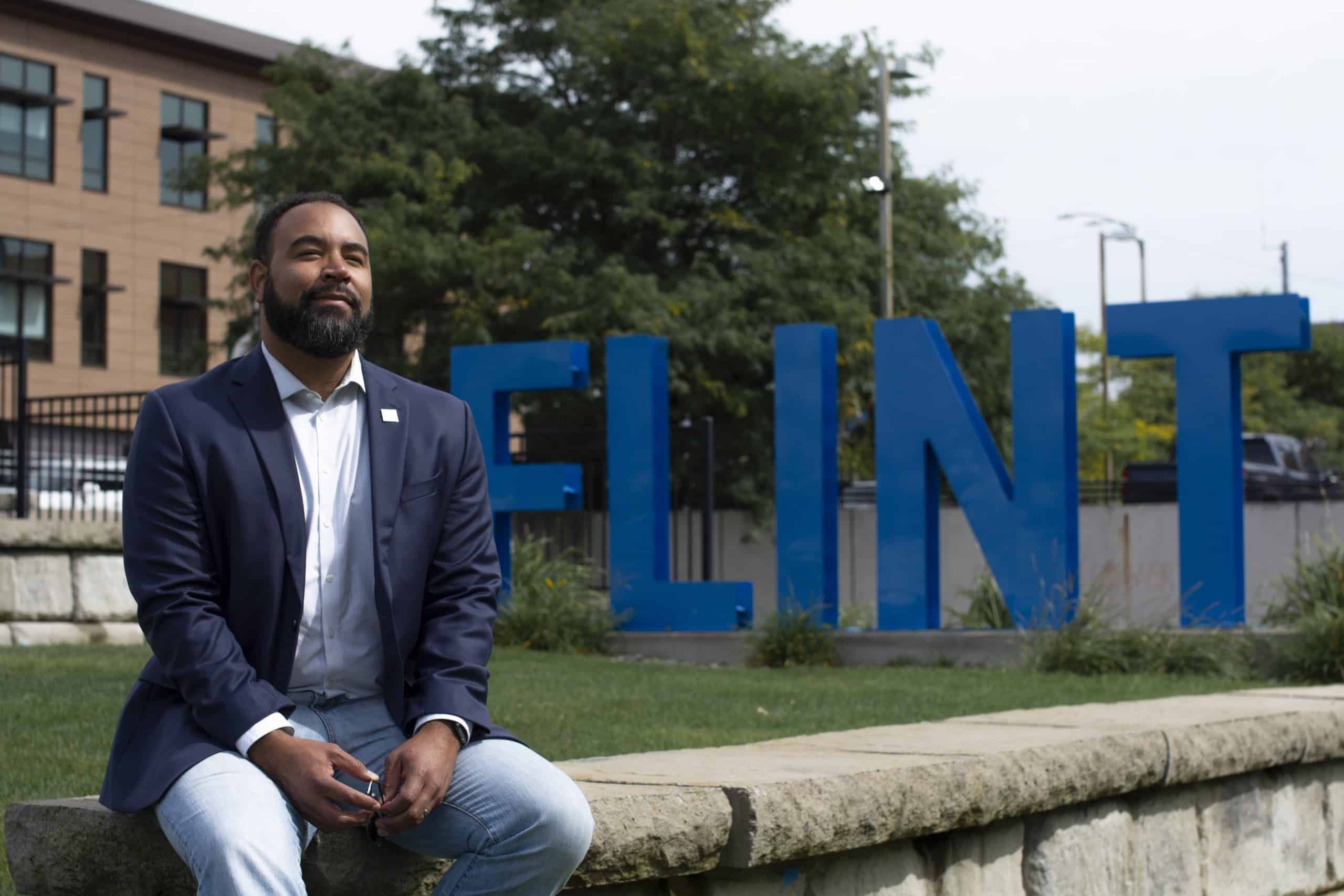
FLINT, Michigan – “The library will be closing in thirty minutes. Please make your final selections,” a voice announced over the intercom at the Gloria Coles Flint Public Library, cutting off Quentin Groce mid-sentence. Yet Groce wasn’t bothered — he picked up right where he’d left off, unhurried and determined to finish what he’d started.
Groce is one of eight candidates running for two open seats on the Mott Community College Board of Trustees this November — a race that shares the ballot with the college’s operating millage renewal, and one most voters don’t know is coming. He’s also stepping onto a board that’s spent the last two years working through very public turbulence. That kind of history makes trust more than a campaign buzzword.
His own path was full of changed plans, which is partly why he keeps circling back to the word completion. As a self-described “nerdy kid” from Kentwood, outside Grand Rapids, Groce went to Grand Valley State University certain he’d become an engineer until a rough encounter with a chemistry class sent him into business instead.
There, he found what he calls his real education: board service, from VP of PR for the Residence Housing Association to joining Sigma Pi in 2006, being “on the board for Sergeant-at-Arms, then [serving] as president in 2008.”
He first came to Flint in 2013, dating long-distance for a year and a half before moving in 2015 to be with his now-husband. The two of them spent a few years moving around Genesee County before settling into a home in Flint in 2017 that “felt like ours.”
The city felt like home even earlier, when, at a Young Professionals event, a stranger thanked him for moving and bringing his talent here instead of somewhere bigger. “I don’t think I ever had anybody say thank you for bringing your talents and putting that to work here, locally,” he said.
So, when he talks about what he’d do as a trustee, and what moves the needle for a Mott student, it isn’t guesswork to him — he’s done the research. He expounds upon the college’s fall-to-fall retention numbers: 61% for full-time students, 45% for part-time. Then he catches himself and doubles back to make sure the distinction lands. “I want to be very clear,” he says. “That’s not completion.”
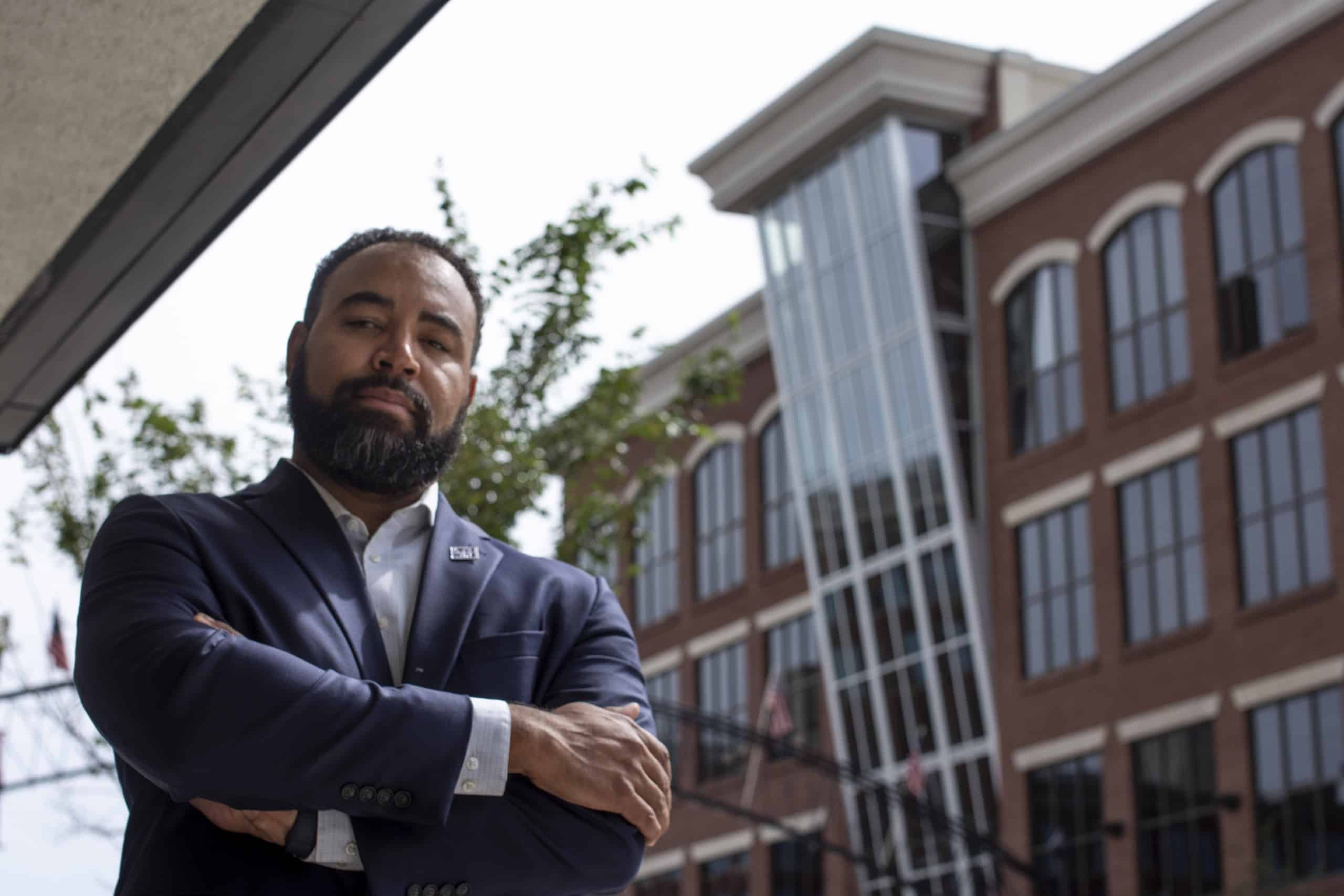
The overall graduation rate sits at 29%. “If you’re not completing your degree or credential, that’s money and time you’ve thrown in [that isn’t] leading to something that’s going to better your life.” He points to Mott Community College’s Workforce Promise as evidence: if a trained worker needs additional support and training, their employer can refer them back to Mott at no charge.
But what matters to him is what happens before a student sits down in a classroom — the childcare that falls through, the myriad transportation issues students and parents face, and dual-enrollment for high schoolers. He points to the Lenore Croudy Family Life Center as evidence that the college already knows this, and wants to “continue to find ways to support” the work they do.
When I ask about transparency and the potential hurdles that could arise from campaign donors who might later have business before the board, he doesn’t pretend the overlap is rare: “In a voting district this size, the people that support your campaign are generally the same people who do business here. Pretending that’s not true isn’t integrity — it’s theater.”
His fix is a policy, not a personal promise to say it out loud before the vote, and put the recusal rule in writing.
“I would be the first to [say], ‘I need to recuse myself from this situation,’” he explains. “If somebody came to me and said, ‘I donated to your campaign, you need to vote this way,’ that’s not how I play.”
The other number on his mind is the operating millage renewal sharing this year’s ballot, worth roughly $8.9 million a year — close to 9% of Mott’s operating budget. To him, renewal isn’t a rubber stamp. It’s understanding that “stable funding and visible governance are the same argument. We want the college funded, but we also want every dollar traceable.”
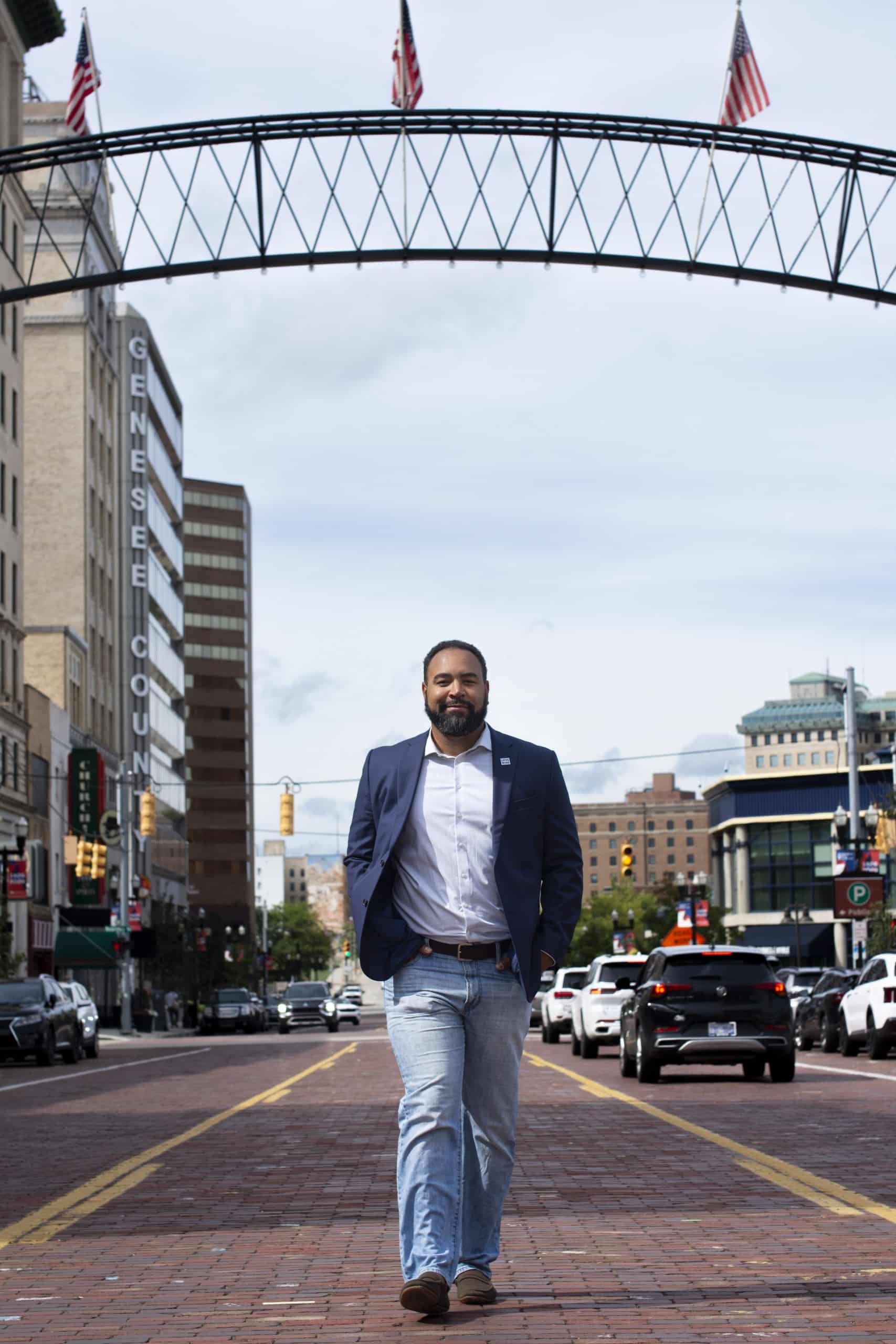
What that money buys, though, isn’t a budget line so much as investment in the students and community Mott Community College produces and serves.
“You go downtown and go to the Applewood Cafe. The number of individuals that I have met in Flint that said that they got their start in food service while working at Mott … have gone on to build their own business here.”
The program numbers back him up — a 99% licensure rate in nursing, a perfect pass rate in dental hygiene. If a program ever lands on the chopping block, “I’m going to be forthcoming,” he says confidently.
“I’m going to ask the difficult questions that need to be asked,” whether that’s how many students, what the success rate is, or whether anything has been tried to save it.
Pressed on where he disagrees with other candidates, he redirects back to himself, expressing, “What I can tell people is what I would do — governing in the open, accounting for the dollars, rebuilding the bridges and the relationships.”
That restraint says something about what he wants from six years on this board.
“I want people to say he was thoughtful. That he was considerate of all different parties from a 360-degree view, and that he made the best decision he could with what he was given.”
Now near the end of our conversation and without feeling the need to rush for a closing library, the idea of changed plans comes back around — except this time, it’s not his own story.
Groce has been open about being queer for years; he was featured in the Modern Queer Magazine before he ever filed to run, and he doesn’t manage the subject so much as refuse to complicate it.
At a campaign event this fall, someone noticed the Love Wins pin on his lapel and asked whether that might be a problem in this race.
What followed was a life lesson found between his father’s — a kid who wanted to be an artist until a community college advisor asked him a different question, and who became a draftsman, then an engineer because of it — and his own.
“You can’t change who you are and who you love,” he says, “but you can figure out how do you navigate a space and what value you bring to [it] or a community.”
Author

Related Articles
Meet the Candidates: Genesee County Probate Court Judge — Ashley Prew
Meet Ashley Prew, a candidate running for Genesee County Probate Court Judge on the Nov. 3 ballot.
Flint City Council: September Roundup
A summary of the most important resolutions and decisions from Flint City Council in September, plus a look at what’s coming in October.
Never Have Expectations: How Domonique Clemons Became Genesee County’s Clerk
Genesee County Clerk Domonique Clemons reflects on his journey to join a historic series of firsts.