
Flint residents say they never cast absentee ballots that were counted in previous elections
Flint residents say absentee ballots were cast in their name without their knowledge.
Editor’s note, 9/16/26: Flintside is looking into an open question about whether Michigan’s early in-person voting — available since 2024 — is recorded as “absentee” on voters’ history records.
Editor’s note, 9/24/26: After speaking with Genesee County Clerk Domonique Clemons, Flintside learned that prior to 2024, in-person voting at a city clerk’s office before Election Day — without requesting a mail ballot — was classified as “absentee” under Michigan law.
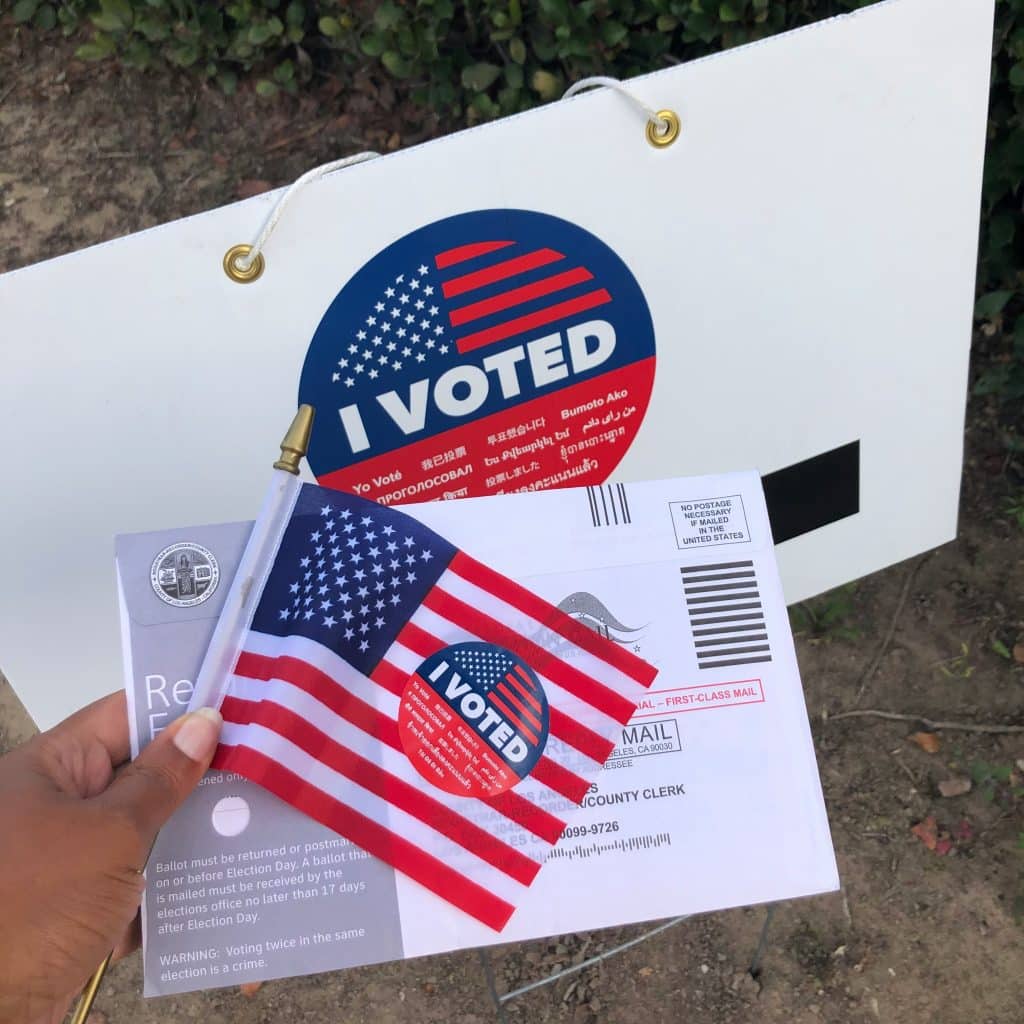
FLINT, Michigan — Flint residents are demanding answers after learning their absentee ballots were cast in previous elections without their knowledge.
“I only voted one time in my life,” said Flint resident Kevin Palmer. “I already knew I could go down there [city clerk office] and get my voter history [last week]. They print my stuff out. I got absentee ballots under me. I never voted absentee.”
Palmer’s voting record says he voted absentee in the 2020 state primary and in the 2022 state general election, according to a copy of his record obtained by Flintside News.
Palmer says he voted in-person on Election Day in 2019, and it was his first and only time voting. He has hired a lawyer and filed complaints with the state and the Federal Bureau of Investigation.
Palmer is one of five Flint residents who told Flintside News that someone cast absentee ballots for them in error in elections from 2020 to 2026. Candidates in the primary, state, and general elections during this time include Mayor Sheldon Neeley, Governor Gretchen Whitmer, and President Donald Trump.
The group of residents says more voters are experiencing this problem. They blame city officials for mismanaging the ballots. It is not immediately clear how many residents have been affected.
Neither the city clerk nor City Hall responded to Flintside’s requests for comment.
RELATED: How does your vote actually get counted? A guide to Flint’s elections
Mail-in voting has been hotly contested, particularly since the 2020 presidential election. In March, President Trump signed an executive order to restrict mail ballots ahead of the 2026 midterms, including a U.S. Postal Service rule that would require states to share voter registration data with the federal government or risk having their mail ballots go undelivered.
Federal courts have since blocked the rule. On Sept. 14, the U.S. Supreme Court rejected the Trump administration’s request to let the restrictions take effect in time for November’s election, leaving the rule on hold for this election cycle.
Separately, the Supreme Court ruled in June that states can continue to count mail-in ballots postmarked by Election Day even if they arrive afterward, upholding a Mississippi law in a 5-4 decision. Michigan does not have a similar grace period; absentee ballots here must be received by the clerk’s office by 8 p.m. on Election Day to be counted, regardless of when they were mailed.
The Trump administration has also mounted dozens of legal cases claiming absentee ballots are fraudulent because unintended recipients can intercept and cast them as their own. The cases have not been successful as there are no confirmed instances of this problem occurring. But Flint residents say they did not request absentee ballots, so external interception is not possible here.
Jeanne Brown said she was nearly turned away when she went to vote in person on the day of the August 4th primary because a completed absentee ballot was already on file for her.
“I told them no. I had to sign a paper stating that I never sent one or asked for one. First time they’ve ever had me do that,” Brown said. “I said, ‘How come we had to do this all of a sudden?’ She says, ‘Oh, a whole bunch of people had to do it.’”
Brown said she has never voted absentee. But her voting record shows that she did in the 2020 general and primary elections, and in the 2024 general election, according to a copy of her record obtained by Flintside News.
“They need to stop,” Brown said of city officials. “They need to do something better.”
Palmer blamed city officials for improperly handling absentee ballots.
Under Michigan law, the city clerk orders ballots from the county clerk at least 45 days before a regular election. The city clerk provides the county clerk with a receipt detailing how many ballots were delivered.
The law requires the city clerk to order 25% more ballots than the number of registered voters for general elections and set aside a portion for absentee voters. Both used and unused ballots are stored for at least 22 months before they can legally be destroyed.
“Cities are ordering more ballots than they usually do because it’s such a contested election that they are going to be needing more ballots,” said Kimberly Saks, a voting security expert and political science professor at the University of Michigan – Flint.
She did not rule out inaccuracies in voting record histories. “It’s possible that they got put on the absentee roll, but didn’t vote absentee,” she said. “But [someone else] actually voting the ballot is not likely. Each city, township, and county has control over things.”
RELATED: A summary of City Council’s most important resolutions and decisions in August
Ebony Star Coleman-Palmer’s voting record shows the same inconsistency for the 2022 state election, according to a copy of her record obtained by Flintside News.
“That is absolutely wrong,” she said. “I have never voted absentee in my life.”
Coleman-Palmer added that poll workers seemed to stall her when she went to vote in person for the Aug. 4 primary, saying her polling site was a different location but insisting she vote at the current site for their candidate of choice.
“I already kind of told them whose side, or where I stood, as far as sides and everything. The opposite opponent…They just kept trying to force the information on me and force the pamphlets and stuff in my face. That was really kind of rude. Quite disrespectful. It was for Neeley, and I had already let them know that’s not whose side I was on… By the time I did try to make it to the site they said I was at, it was closed,” she said.
Coleman-Palmer said she’s going to plan ahead for November’s election to make sure she can cast her ballot this time. She encouraged others to look up their polling location, and Palmer recommended that voters request their voting record.
We want to hear from you. If you are experiencing this issue, please email your inaccurate voting record history to editor@flintside.com.
You can find your polling location here, and you can request your voting record history from the city clerk’s office.
Key dates for the Nov. 3 general election
Sept. 24: The city clerk’s office begins mailing absentee ballots to voters who requested them, and in-person absentee voting opens at the clerk’s office.
Oct. 19: Last day to register to vote online or by mail. After this date, voters must register in person at their city or township clerk’s office — including up until 8 p.m. on Election Day.
Oct. 24 – Nov. 1: Statewide in-person early voting period. Flint’s clerk’s office will also be open additional weekend hours: Oct. 24–25 and Oct. 31–Nov. 1 for in-person absentee voting.
Oct. 20: Recommended last day to mail an absentee ballot to avoid postal delays. After this date, hand-deliver the ballot to the clerk’s office or a secure drop box.
Oct. 30 by 5 p.m.: Deadline for the clerk’s office to receive absentee ballot requests submitted online or by mail.
Nov. 2 by 4 p.m.: Deadline to request an absentee ballot in person at the clerk’s office. Nov. 3, 8 p.m.: Absentee ballots must be received by the clerk’s office by this time to be counted — not just postmarked.
Author

Related Articles

Meet the Candidates: Genesee County Probate Court Judge — Ashley Prew
Meet Ashley Prew, a candidate running for Genesee County Probate Court Judge on the Nov. 3 ballot.
Flint City Council: September Roundup
A summary of the most important resolutions and decisions from Flint City Council in September, plus a look at what’s coming in October.

Never Have Expectations: How Domonique Clemons Became Genesee County’s Clerk
Genesee County Clerk Domonique Clemons reflects on his journey to join a historic series of firsts.