
Never Have Expectations: How Domonique Clemons Became Genesee County’s Clerk
Genesee County Clerk Domonique Clemons reflects on his journey to join a historic series of firsts.
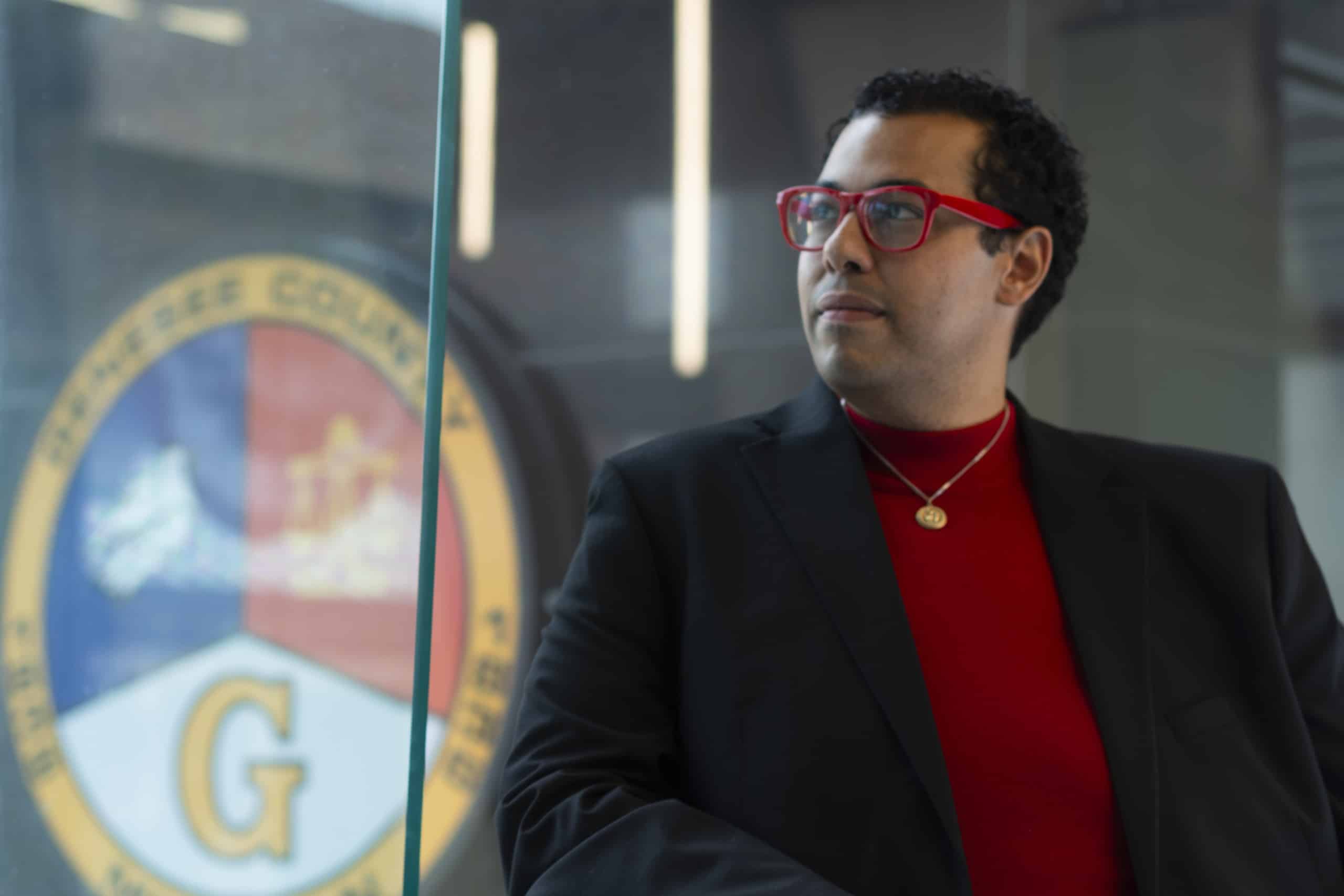
FLINT, Michigan — Never have expectations. That’s the first thing Domonique Clemons tells me, and it’s a central theme throughout our conversation.
Sitting across his office desk in the newly renovated Genesee County Administration Building, Clemons is cheerful and upbeat as he explains the assortment of items that my photographer, Janvier Snead III, and I find ourselves gawking at. The assortment of photos, books, and lighting, down to the position of his desk in the center of the room, illustrates Clemons’ journey.
“My path is not a linear path,” he says, “and I don’t think many people’s paths are.”
He is the first openly LGBTQ+ person to serve as Genesee County Clerk and Register of Deeds in Michigan history, and by his own telling, he never once expected to be here — not on this side of the desk, not in this building, not with this title.
I believe him. Across the eighty-some minutes we spend together, Clemons details a career in Genesee County that went from county commissioner to vice-chair, board chair to county clerk. He tells it like he’s still in disbelief. Fully focused, so are we.
None of it was planned, as the Flint Southwestern Classical Academy alum says. Yet, his mother embodied giving back and helping the community. That belief outlasted five different majors at Michigan State, a Hillary Clinton campaign that ended in heartbreak, a stretch at the Michigan College Access Network, and a rejected county commission bid near Lansing that he now calls one of the best things to ever happen to him. Had he won, he would’ve stayed in Lansing for good.
Instead, he came home, took a legislative staffer job commuting from Flint, and turned his own complaints about unpaid internships into the Michigan House’s first-ever Director of Staff Development, Diversity, Equity and Inclusion position.
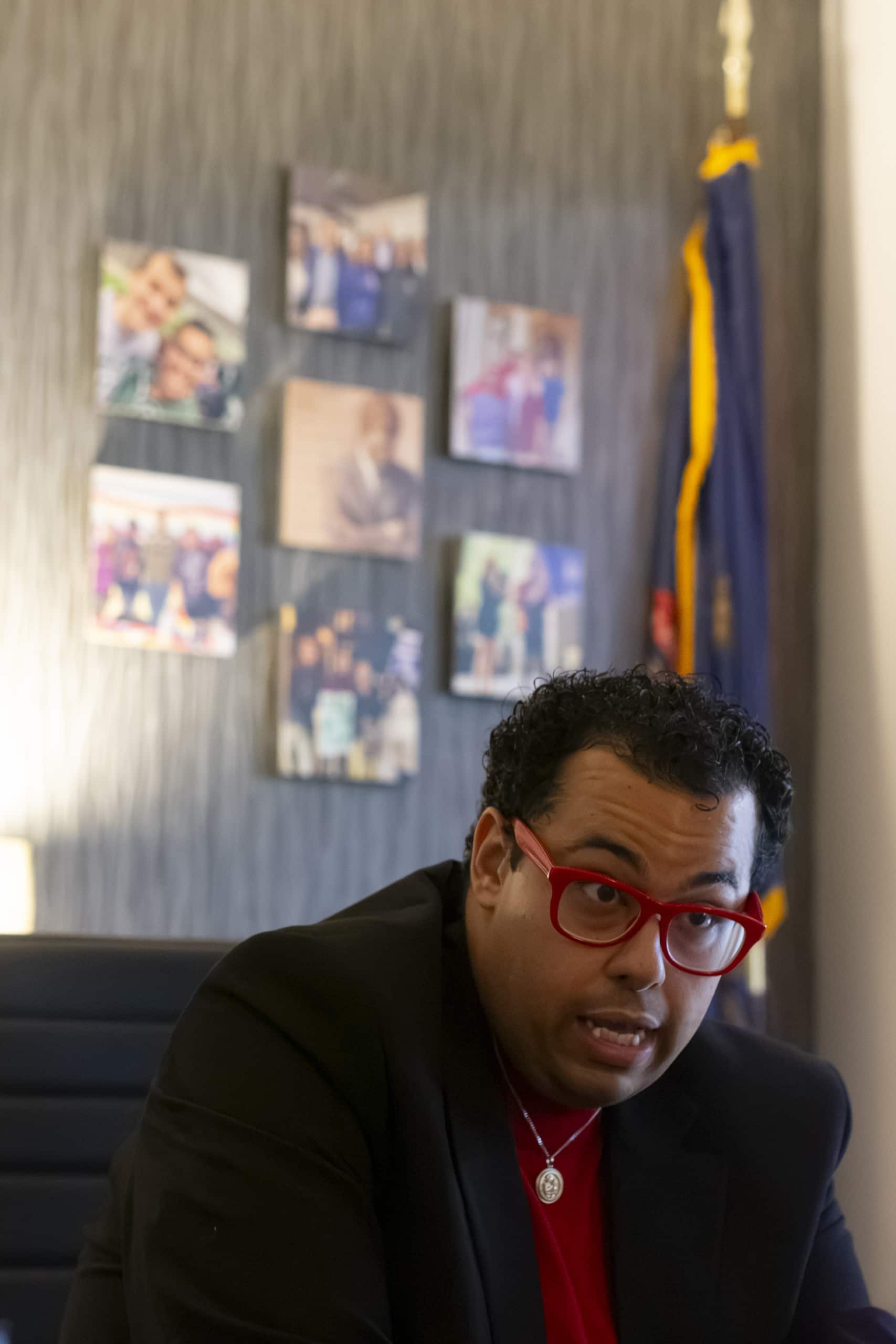
Running for office himself was never the plan, and he joked that he was “a little too Flint to be elected,” until a single county commissioners’ meeting changed his mind: a board meant to represent one of Michigan’s most diverse counties, sitting in a room that reflected very little of it.
Yet, he ran against an opponent three times his age, and won. In an unexpected twist, Clemons became vice chair at his first meeting before he even knew “where the bathroom [was],” he says. It wasn’t long before he became the board chair outright before he turned 30.
Then, in 2022, a harassment complaint against the sitting county clerk landed on his desk. Rather than handle it quietly, Clemons pushed for an outside investigation — one that ended with the clerk charged, convicted of misconduct in office, and forced to resign.
It came at the cost of a peaceful re-election as Clemons’ own district got redrawn into a competitive seat while the investigation was still open. He won anyway, staying locked in on two years of results rather than engaging the attacks against him directly.
Nothing could prepare him for the part of his story that feels less like chance and more like fate. Genesee County’s ten circuit court judges appoint a new clerk. Clemons put his name in, despite believing he “[didn’t] know how to be a clerk,” at the behest of mentors who encouraged him, saying, “nobody knows how to do the job until they’re in the job that they’re doing.”
He went through the interview, walked out assuming he’d lost, and then — days later while boarding a flight to the LGBT Victory Fund’s international leadership conference — got a call asking him to come back and meet with the judges again. With nobody explaining why, he spent the entire conference weekend anxious.
On Monday, the job was his, effective that January. By Tuesday, the timeline had collapsed entirely — the Michigan statutory limit meant Clemons had to resign his commissioner seat, call an emergency board meeting as its own sitting chair, tender his resignation, and be sworn in as county clerk.
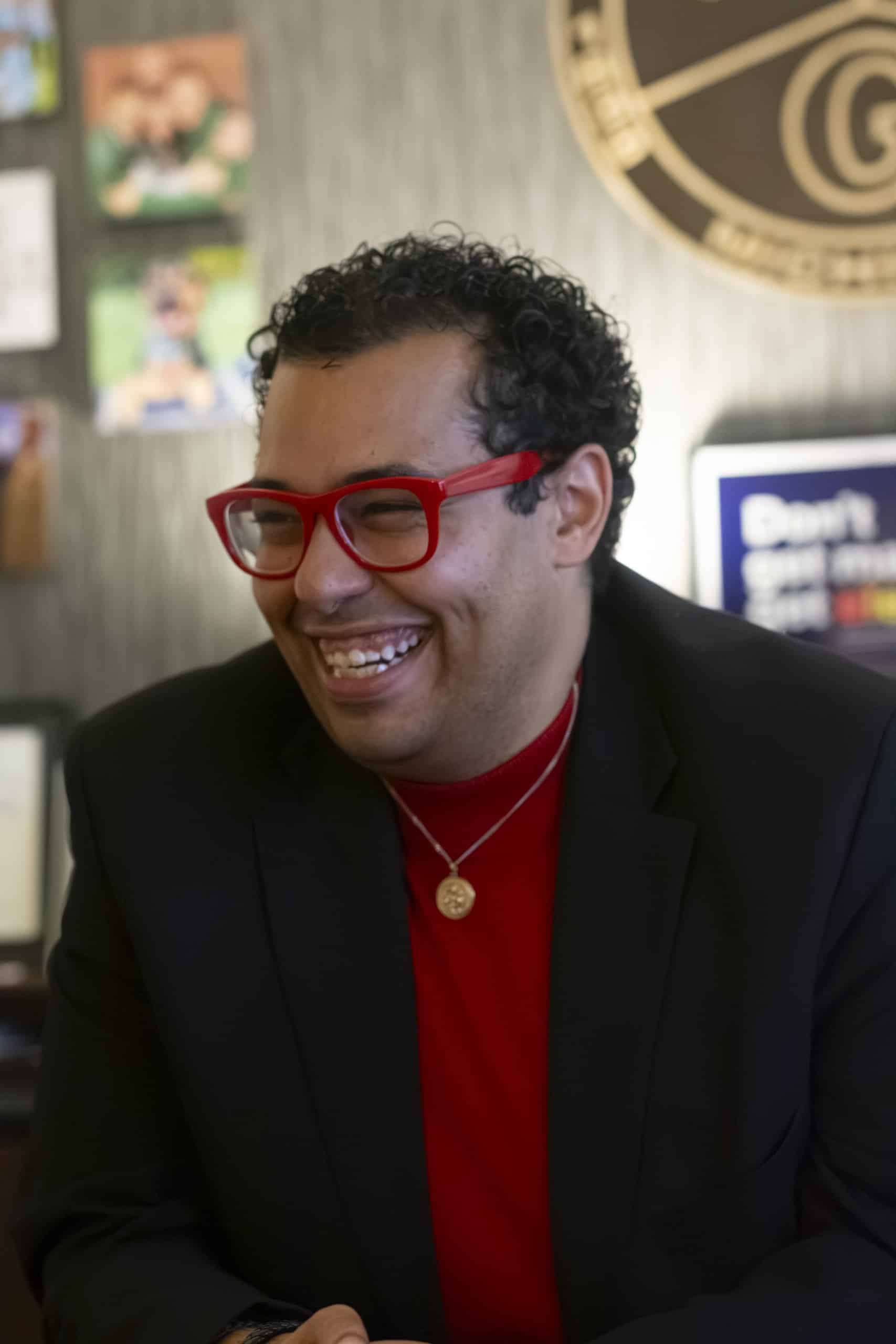
On his first day in office, two things happened at once: his closest mentors passed away, and the state called to tell him he’d be overseeing a statewide recount of Proposal 2 — the 2022 abortion rights measure — starting that week.
On the third day, Clemons was running a recount. He calls it trial by fire. Building the plane while flying it, yet “I have absolutely fallen in love with this position,” he explains with a grin.
However, it’s not the election work that he keeps circling back to when I ask about the day-to-day. It’s a mother he met in his first year in office, standing at the front counter, telling his deputy clerks she’d finally saved enough for her kid’s birth certificates.
Clemons, expecting something about a skipped vacation, asked how. She told him she’d gone months without filling her prescription medication.
“Nobody should have to make that kind of decision about medication or sending a kid to school,” he says. “What kind of society are we that we’re making those sorts of decisions?”
He built a fee waiver program in response, designed deliberately to ask for as little as possible — a Bridge Card, proof of Medicaid, a letter from a shelter, nothing more invasive than that — and has spent every year since taking it further: mobile birth certificate drives at churches and schools, a partnership with the Sheriff’s Office so nobody leaves county jail without an ID in hand.
He traces some of that back to his own family. His mother spent time on public assistance when he was young, then earned a master’s degree, became a social worker, and now serves as an HR director for an organization that helps underprivileged children.

It’s given him a vantage point many elected officials never get: the cost of obtaining vital records, and the practical barriers underneath it, like a county building open only weekdays from eight to four for someone working multiple jobs and riding the bus to get there.
By the time we’re wrapping up, I have to make comment on how Clemons gets introduced as a lot of firsts these days.
“I am the first openly LGBT clerk in the state’s history. I’m the youngest county clerk currently serving in the state of Michigan. I am the first African American county clerk in Genesee County’s history,” he says.
“Representation matters, and it matters that we see people that look like us in marginalized communities [who] can hold positions of power. Somebody who is African American can win a countywide seat — something that people have said couldn’t be done.”
He says the applause that follows his list of firsts still doesn’t quite sit right with him.
“We shouldn’t be clapping about this in 2026, that we’re still accomplishing these firsts. That just means we’ve got more work to do,” he explains. “But for me, being in this position is hopefully making it easier for the next generation to do it.
I don’t think anyone would be surprised if a woman got elected. Similarly, it shouldn’t be a surprise that people of any identity make it to any other level of office. We’ve got to normalize it. That’s why I talk about my identity: it’s an important part of who I am. And while it doesn’t dictate how I administer a birth certificate or how I print a ballot, it comes back to the core values of who I am and the community I was raised in. That’s why I think it’s really important.”
Author

Related Articles
Meet the Candidates: Ramie Yelle
Meet Ramie Yelle, a Navy veteran and acupuncturist running for Flint’s 4th Ward council seat.

League of Women Voters to Host “Elections From Start to Finish” Workshop
League of Women Voters hosts a free election workshop Sept. 29 at Flint Public Library.
Meet the Candidates: Mott Community College Board of Trustees — Quentin Groce
Quentin Groce is one of eight candidates vying for two open seats on Mott Community College Board of Trustees.