
Black Pride: Reflections From The Sankofa Project’s Panel Discussion
What it looked like when Flint’s Black queer community spoke its whole truth — and the people who showed up to hold space for it.
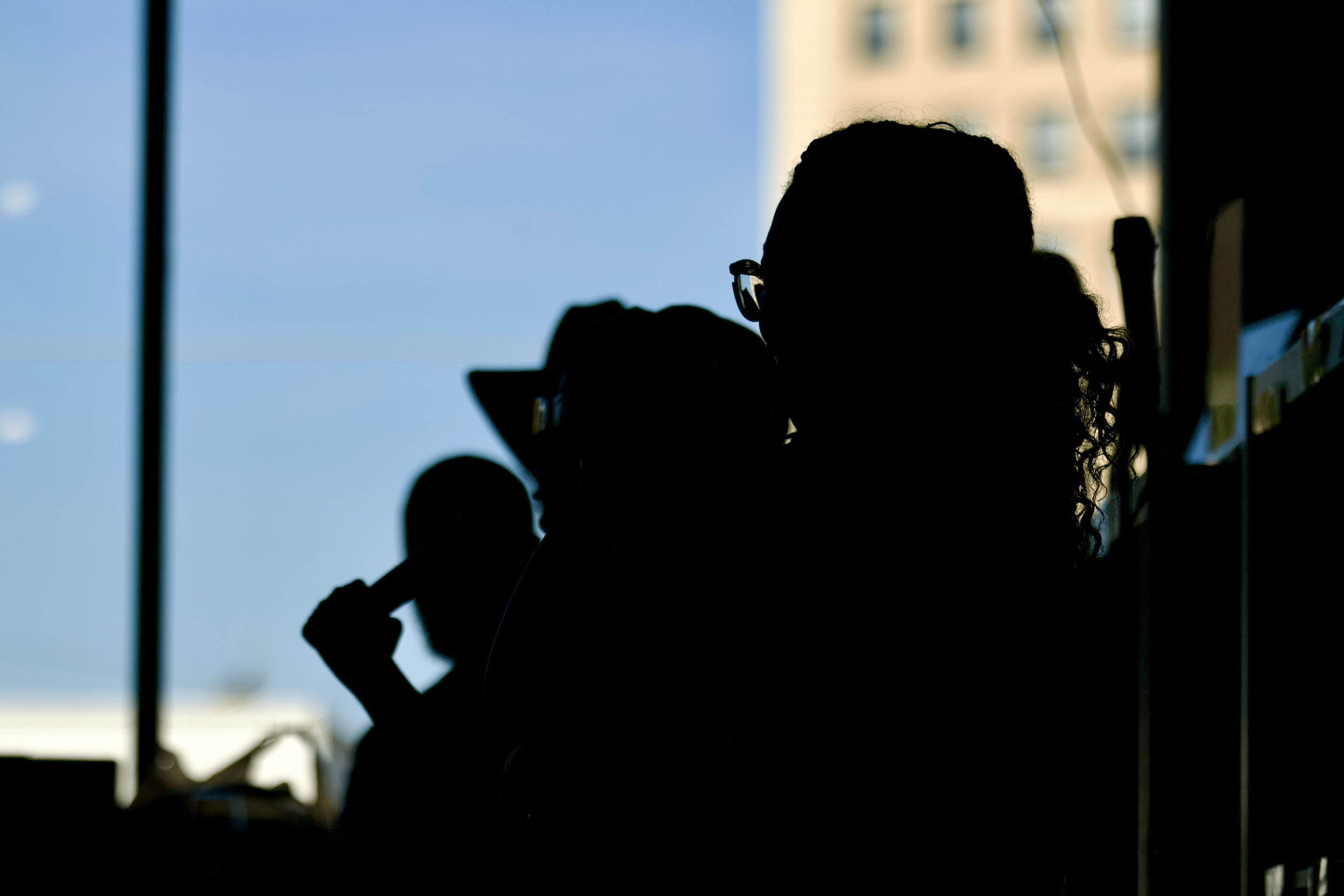
FLINT, Michigan — It was 102 degrees on July 14, one of the hottest days of the summer, and somehow half the room was celebrating a birthday. Mine included. Someone opened the mic by yelling, “Where the Cancers at?” — half the room threw a hand up.
I’ve hosted a lot of conversations for Flintside and my business, The Modern Queer, over the years, and this one felt different.
Reflections on Black PRIDE: A Panel Discussion was The Sankofa Project’s contribution to Flint’s 16th annual Pride Week and an acknowledgment of, and a vow of support for, the Black queer community.
“This event was dedicated to them — to making a public space for our Queer siblings to dream, grapple, name, share, and otherwise breathe life into their existence at the intersections,” explained The Sankofa Project’s founder, Delma Jackson. “By their poignant observations, the sharing of their pain and their joy — their brilliance and their full selves, they reaffirm the debt we collectively owe to our siblings — both living and ancestral.”
That debt owed fueled is why I told the room something that’s been sitting with me since I heard T.S. Madison say:
“We don’t need allies. We need accomplices.”
And those who showed up in support of Jo Ikigai, Kyle Bennet Houston, and Jimmela Byrd were just that.
Ikigai is a spoken-word artist from Flint’s south side whose whole practice is built around one line: remember your reason for being. Byrd is a place-based community leader here in Flint whose faith sits at the center of almost everything she does. And Bennet, whose bio I read, hit like its own piece of poetry: “Recovery didn’t just save me. It built a version of me that’s impossible to break.”
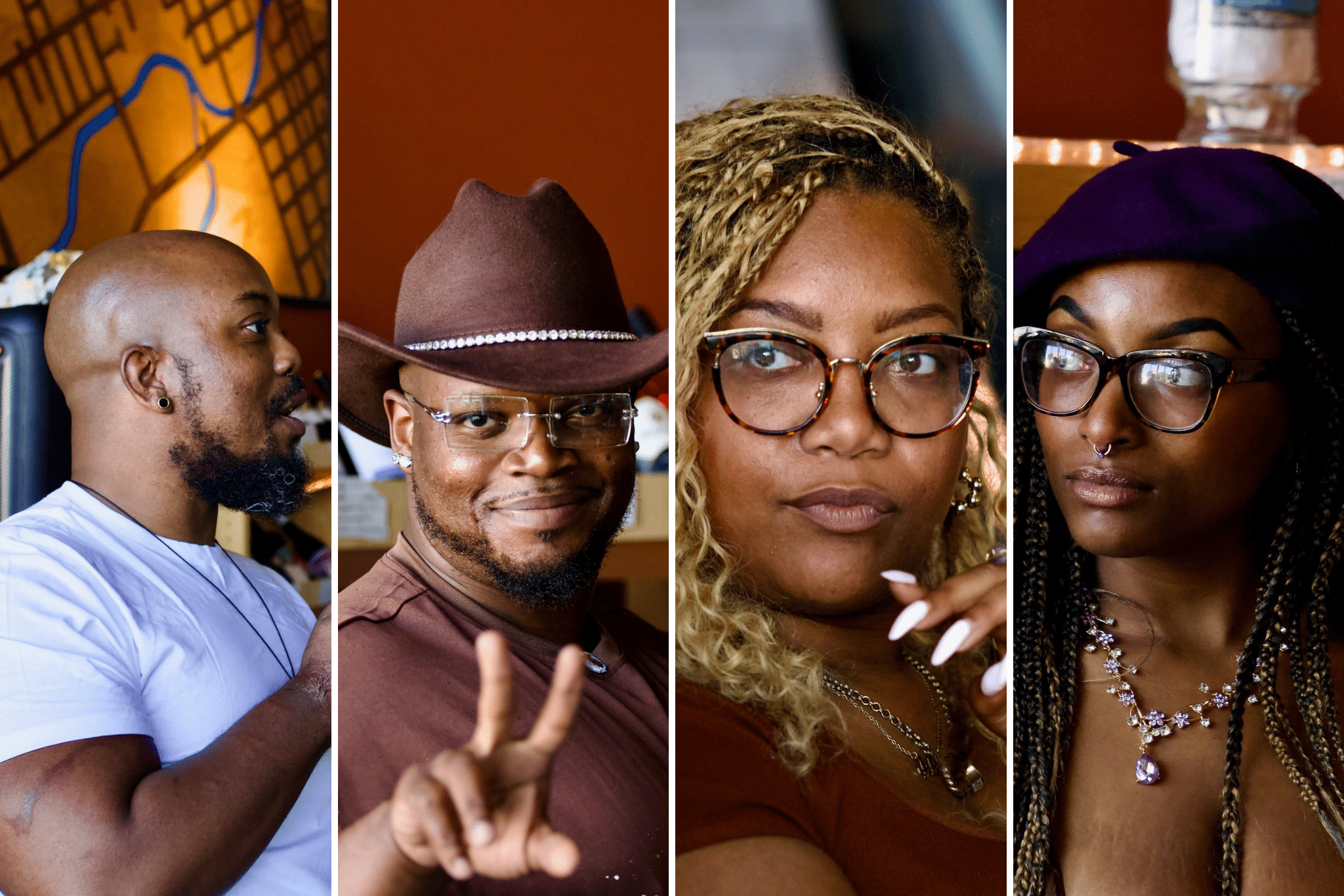
I asked them first about home — how Black queer people keep loving the communities that have raised us but also, in many respects, made us feel unwelcome in our own skin.
“I have to be an example of unconditional love in all the spaces I enter,” Byrd said, “no matter what my home life is like.”
Ikigai talked about being twelve years old and watching their father react to a gay man on TV with disgust, and what it took to forgive that. “I can still tell my dad I love him,” they said, “even though I know there are parts of me he does not love, and he might never do. I won’t allow that to stop me from being myself.”
These are not easy things to say out loud.
We talked about faith after that — not the faith handed to us by society and our families, but the faith some of us have had to go find on our own terms.
Bryd described growing up in a Bible-study household, and the years it took her to arrive at what she called, simply, “a beautiful version of what God is.”
Ikigai doesn’t identify as Christian anymore but still finds Jesus compelling, expressing that “I think Jesus was a revolutionary, and like so many revolutionaries before him, they slaughtered him for it.”
I shared a little about finding my way back to spirituality through African cosmology, and I told the room what I still believe: “That God is within me, and all the stars in the universe out there are also inside me.”
The conversation veered into colorism and patriarchy, and why femininity gets treated like weakness even in spaces that should know better by now. Ikigai didn’t budge, saying, “Patriarchy is in its final throes. That’s why it’s fighting so hard. I want to abolish gender. I want to abolish race. I just want us to stop thinking inside of these very narrow boxes.”
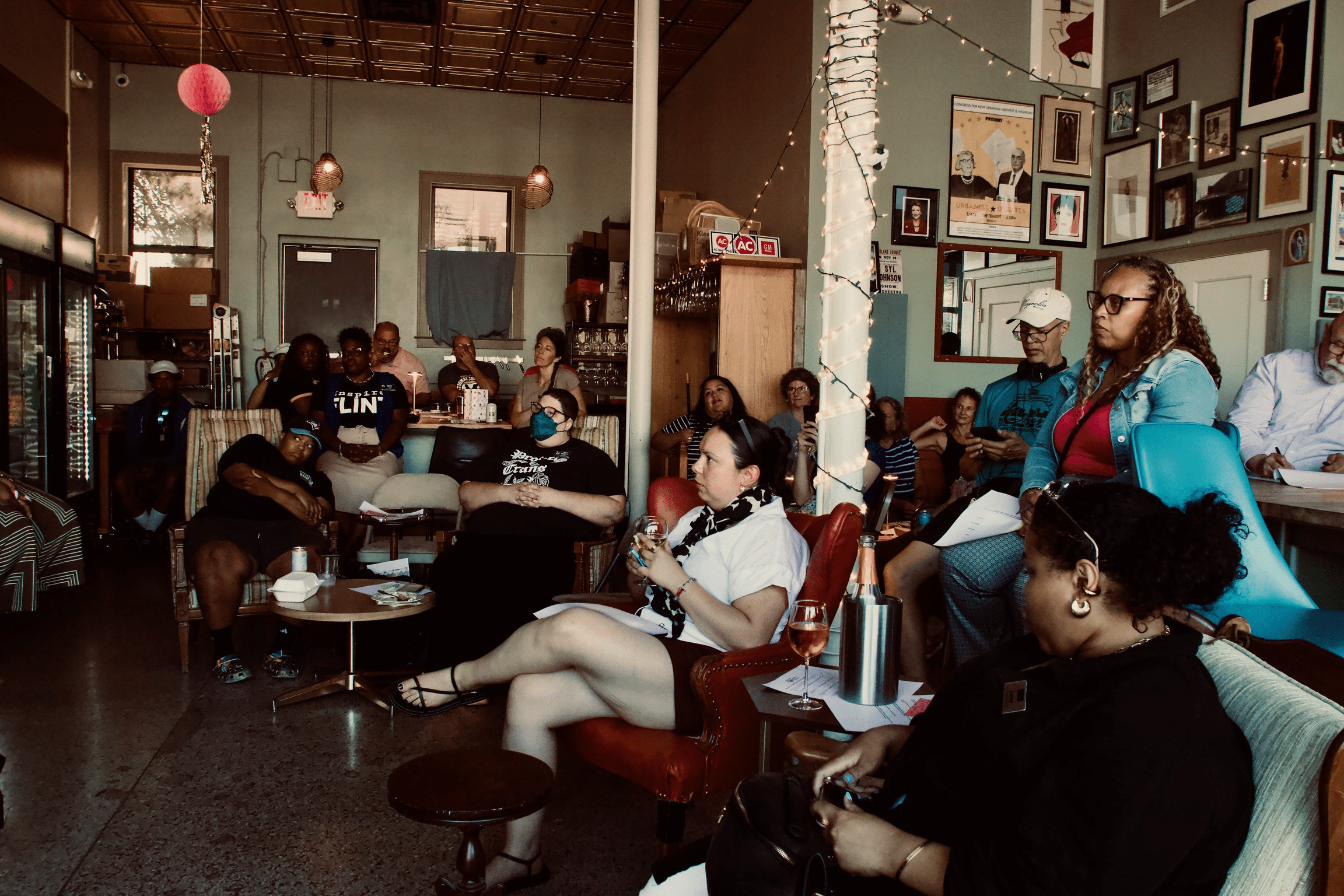
Coming out of those narrow boxes reminded me of the panel’s intentions. It wasn’t only Black queer people talking to other Black queer people. It was mothers. It was sorority sisters who showed up to be visibly proud of their gay line sisters.
It was someone from the Unitarian Universalist congregation letting us know their new minister starts in August, hoping some of us might consider church again. It was a white high school teacher, clearly nervous, asking what he could put on his classroom walls to make his students feel safe.
“It was a glimpse of the world we are striving to create, a world where every person is free to live authentically, love openly, and belong fully,” expressed Regina Laurie, co-lead facilitator and trainer for The Sankofa Project. “Guided by the wisdom of Audre Lorde, who taught us that ‘there is no such thing as a single-issue struggle because we do not live single-issue lives,’ the evening beautifully embodied the interconnectedness of Black Queer identities, religion, and our liberation.
We weren’t just Black. We weren’t just Queer. We weren’t just in recovery, or people of faith, or teachers trying to do better. We were all of it, in the same room, at the same time, and nobody was asked to leave a part of themselves at the door.
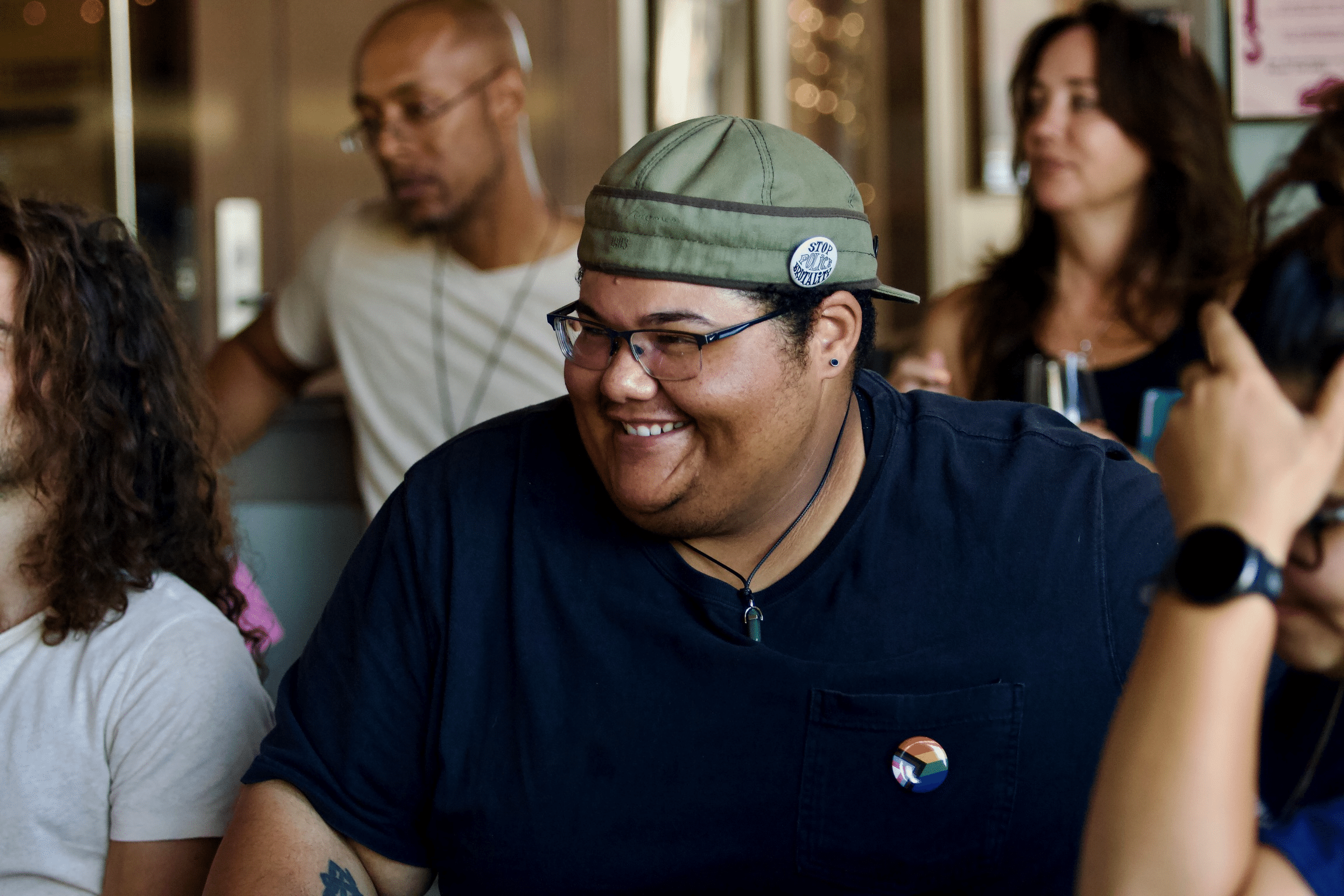
By the end, we expressed love and gratitude for those who got us here. Bennet didn’t hesitate.
“I am absolutely liberated to be here — being able to speak, be in my journey of recovery, and be in a space where I am accepted, loved, and appreciated.” Then he thanked his mom, who’s talked him through every relapse and every milestone since 2023. “She’s been my rock.”
Byrd thanked her ancestors, her mother, and a brother she’s lost. “They’re not physically here,” she said, “but they are in my life.”
To Jo Ikigai, Kyle Bennet Houston, and Jimmela Byrd — thank you for trusting me and that room, with all of it. To The Sankofa Project, UM-Flint’s Center for Gender and Sexuality, Queens’ Provisions, the Community Foundation of Greater Flint, and The Local Grocer for catering — thank you for building the table.
And to everyone who walked into a 102-degree Tuesday panel, especially the folks who weren’t there because it was “their” community but because it was ours — we see you. We needed you there.
Because as Laurie reminds all of us, “as the timeless invitation from Earth, Wind & Fire’s Fantasy reminds us, ‘Come to see victory in a land called Fantasy.’”
If this is the kind of room you want to see more of in Flint, or if you’ve got a story we should be following, email us at editor@flintside.com.
Author

Related Articles
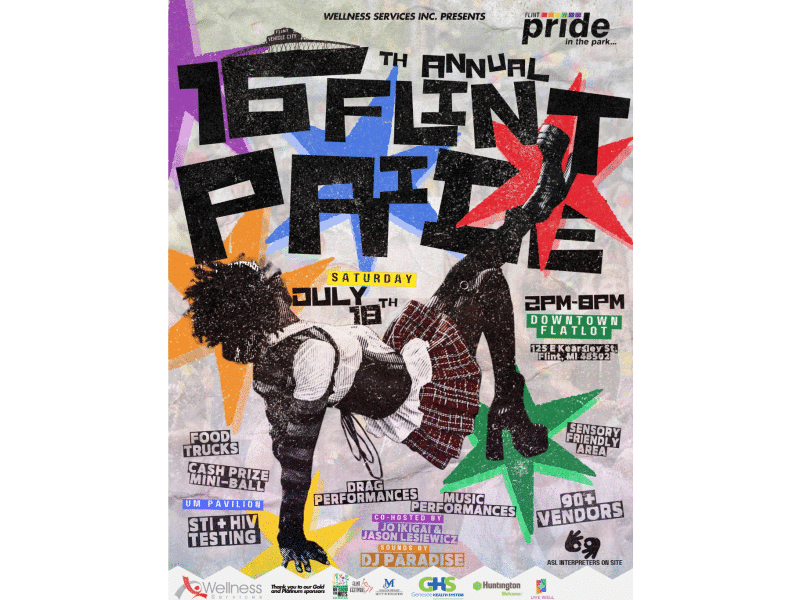
Flint celebrates 16th Annual Pride with weeklong lineup of community events
Flint residents will celebrate PRIDE with a week of events as Wellness Services hosts the city’s 16th annual Flint Pride celebration.
Vehicle City Voices: Black Women of Flint — Dr. Tanya Upthegrove Gregory
Dr. Tanya Upthegrove Gregory reflects on learning, growth, and helping Flint bloom again.