
Meet the Candidates: Mott Community College Board of Trustees — Santino Guerra
Santino Guerra is one of eight candidates vying for two open seats on Mott Community College Board of Trustees.
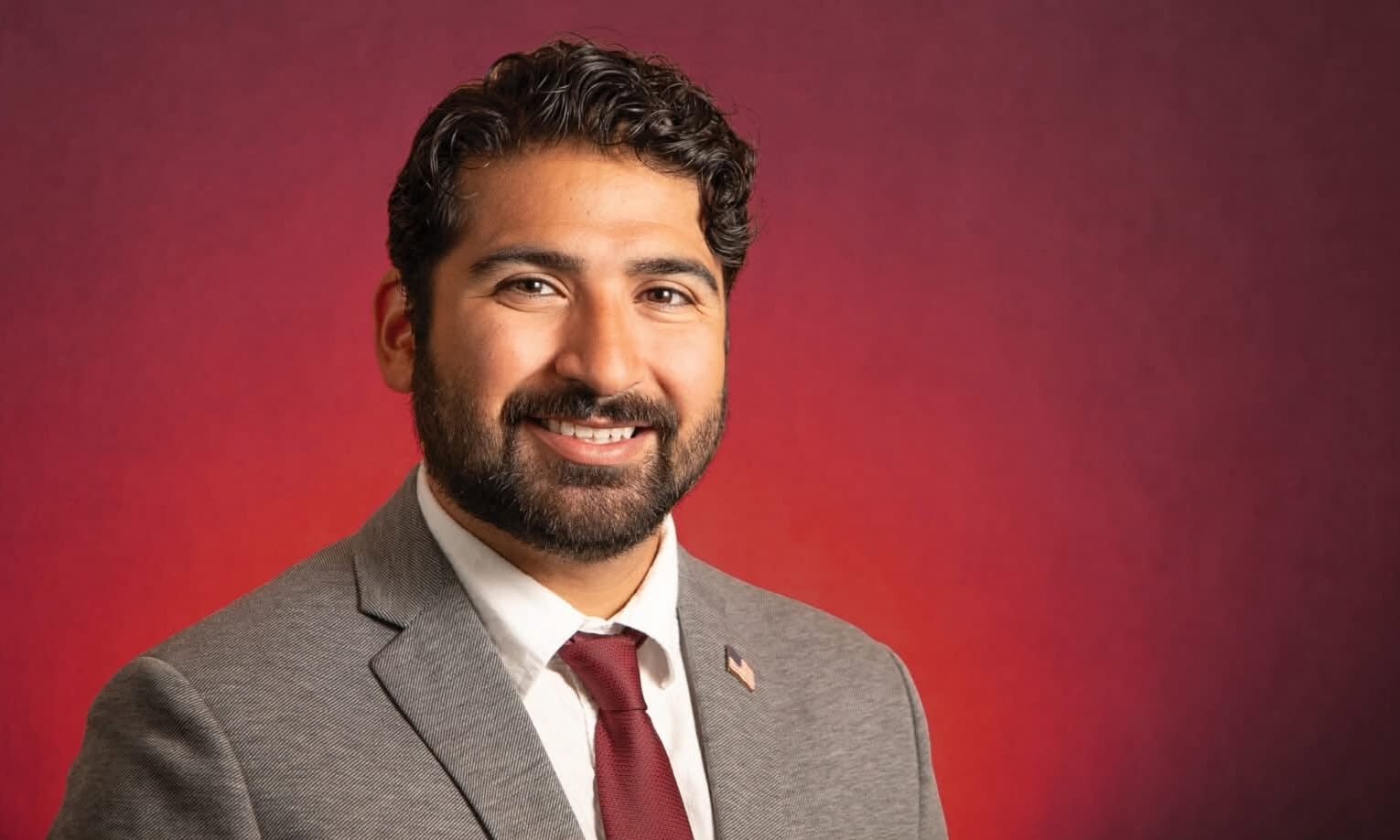
FLINT, Michigan — By the time I ask Santino Guerra my first real question at the Gloria Coles Flint Public Library, he’s already answered about four of them. Somewhere in that opening stretch, he stops and asks where I grew up and if I’ve ever played curb.
Curb is a game we both know. We played it in our respective neighborhoods as kids, then teenagers, and it needs nothing but a basketball and a sidewalk curb — no hoop, no court, no money. Years later, as a Genesee County sheriff’s deputy, Guerra noticed that the men coming through the jail knew the game, while most of his fellow deputies had never heard of it.
“Curb saves probably a million lives in our urban communities,” he says, as we share a laugh. “All you need is a basketball. That’s it, and you can play.”
It sounds small, but to Guerra, small things are the whole point. Games like curb kept him and his friends out of trouble — sometimes.
Now 28, Guerra is one of eight candidates running for two open seats on the Mott Community College Board of Trustees this November — a race that shares the ballot with the college’s operating millage renewal. He’s also the only one already sitting on the board.
The trustees appointed him in August 2025, and he hopes voters judge his record, not just his promises. And in September of this year, the Flint & Genesee Group named him to its 40 Under 40 Class of 2026.
That record started young. Raised by a single mother who was always working, Guerra spent much of his childhood with his grandparents. His father, he reveals, went to prison when he was a baby. He attended Kearsley schools, joined student government, served as class president, and, at about 15, was appointed a U.S. Senate page in Washington, D.C.
Back home, he started working on campaigns. Seeing “the difference that politics can actually make to impact people’s lives for the better,” he explains, “became a passion at a young age.”
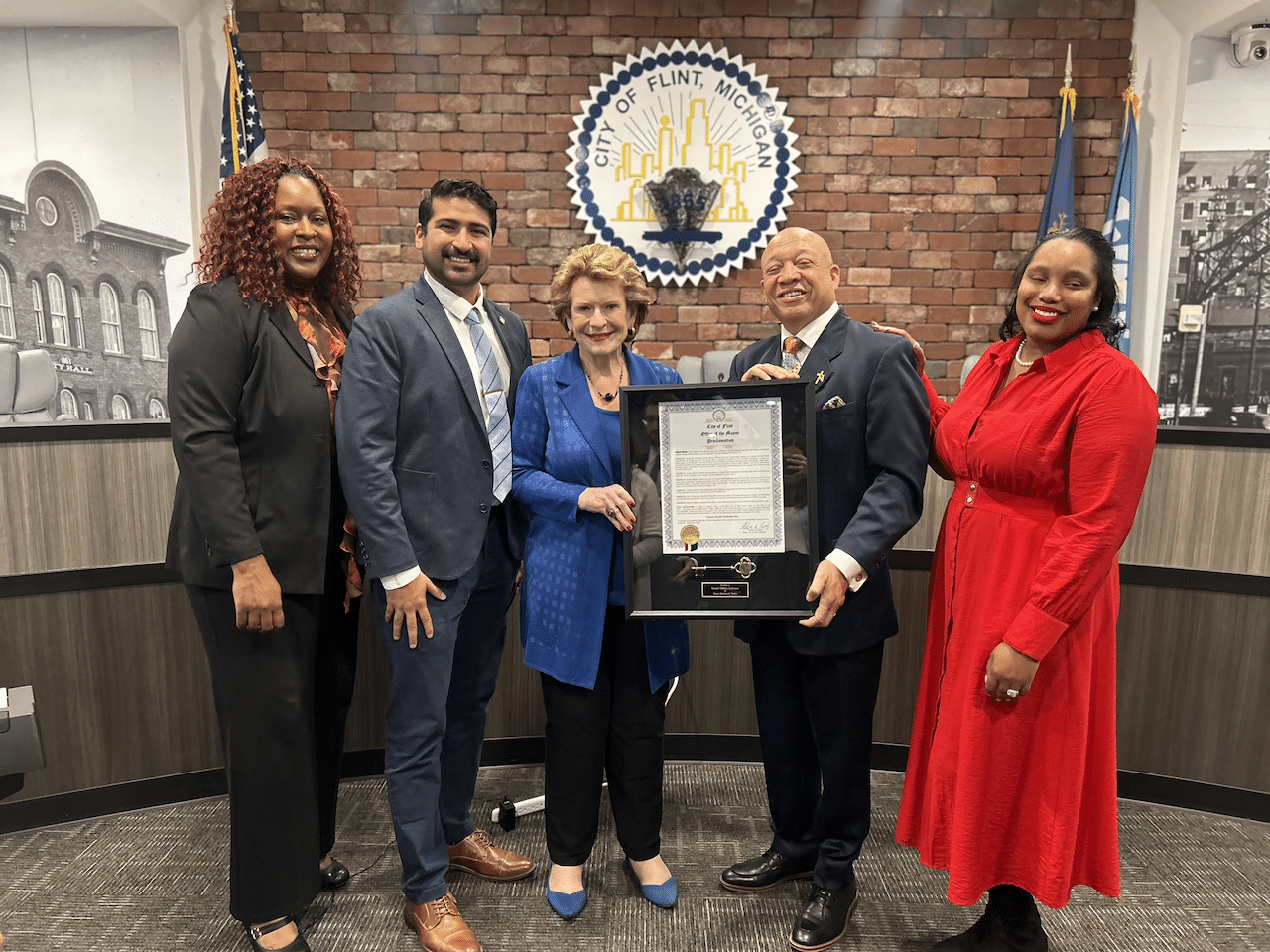
He stayed home for college at the University of Michigan-Flint just as the city headed into its first election since the water crisis. “If I want to make a difference, this is my chance to try,” he recalls as the catalyst for why he registered to run for city council at 18. Then a college freshman, he won the 3rd Ward seat at 19 — the youngest person ever elected.
“It was four years, and it felt like a very long time,” he says. “But we were able to get stuff done.”
He points to the start of the city’s recovery, public safety raises, blight removal across the 3rd Ward, and a reputation as a pragmatic problem solver who “was never on one side or another. I’m still not.”
He left council after finishing college, didn’t seek re-election, and went into federal law enforcement, where he now works for the U.S. Department of Homeland Security. But it didn’t take long to miss the community work — the neighborhood cleanups most of all.
So he started the Guerra Project that “isn’t a nonprofit. It’s not anything but just me saying I’m going to start a project with a bunch of little initiatives … to make their communities better.”
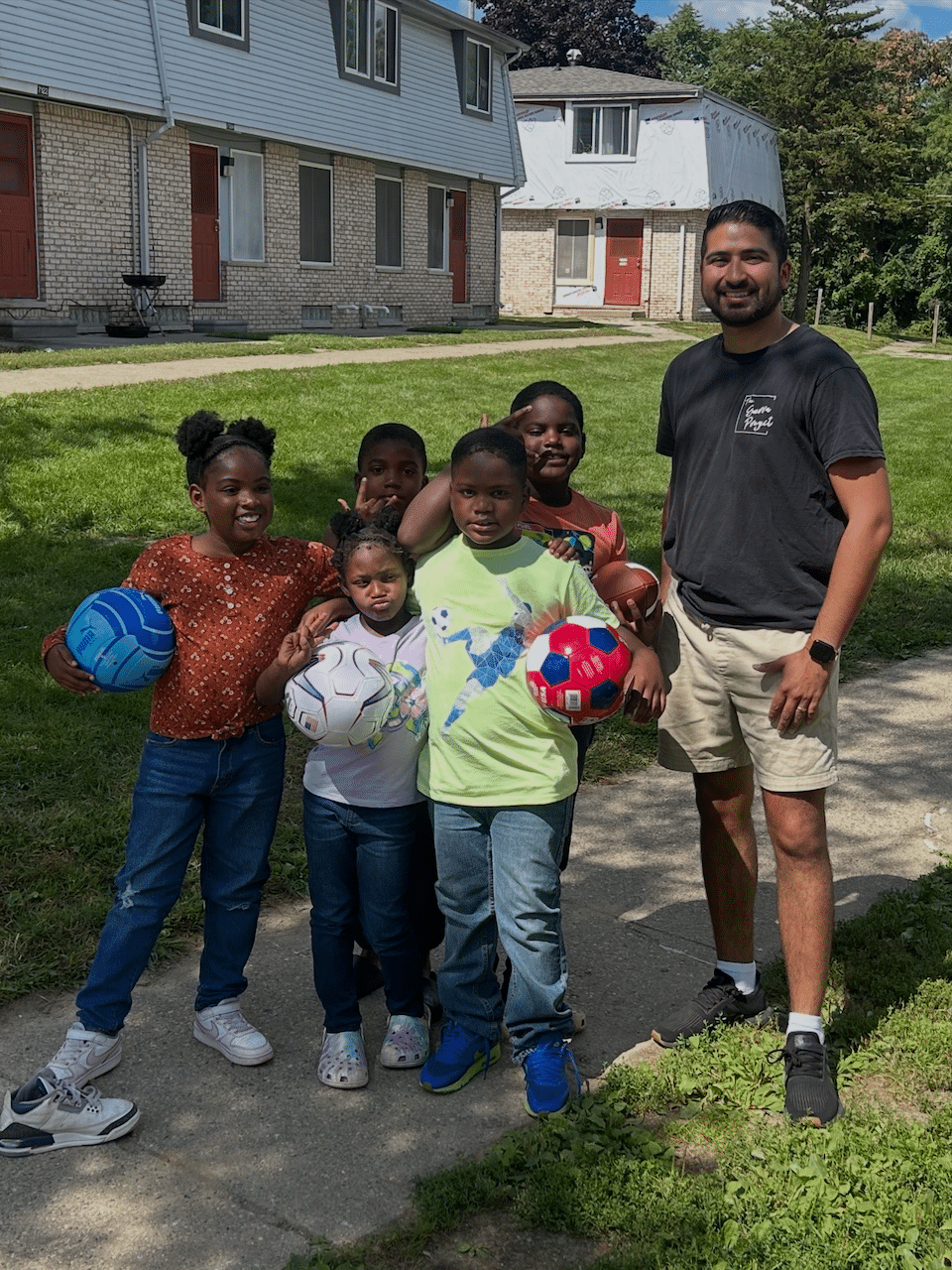
Inspired by his workouts, it began as a mile-long walk, picking up trash along the way, and grew as he invited friends and neighbors to join him in their own neighborhoods. On those walks, he kept seeing kids who reminded him of himself, with nothing to do. So he started handing out basketballs and footballs at cleanups.
He calls it Operation Streets and Fields: get off the street, get in the field. The project now includes school drives paid for out of his own pocket, and he volunteers as a mentor with Big Brothers Big Sisters of Greater Flint.
It’s the same logic from the game of curb. Give a kid a ball, and you’ve given him somewhere else to be.
He wasn’t planning a return to public office. Then a trustee resigned from the Mott board, and Guerra became one of roughly a dozen applicants for the seat. The board chose him in the first round of voting, which he credits to his reputation.
“I’m very down the middle,” he says, “trying to solve issues and work with everybody.”
When I ask what his first year taught him that he didn’t expect, he says it’s mostly good news.
“A lot of the time, we only see the negatives,” he says. “Since being on the board, 95% of the stuff that’s going on is good for our community, if not more.”
One of the first ceremonies he attended was a dental hygiene graduation. One graduate was about 19; another was a woman in her 50s. Both had families cheering, and both were just starting their careers.
“Two people at different parts of their lives, their lives just starting wherever they were at,” he says. “Being able to see that firsthand is the reason I decided to run.”
His platform fits in three words: affordable, accessible, and opportunity. In-district students who go straight to Mott after high school can get their first two years free, and Michigan Reconnect, which covers community college for adults without a degree, now starts at age 21. “Free plus free equals pretty affordable,” he says with a smile.
On accessibility, he keeps it simple: “Everybody belongs at Mott Community College.”
On opportunity, he runs through the careers that start there, from police officer to nurse to doctor. Two of his friends from Kearsley went through Mott and are now doctors.
As for the job itself, he breaks it into three parts. A trustee advocates for the college and keeps the community informed. A trustee minds the budget, paying faculty well enough to keep them while keeping tuition affordable. And a trustee sets policy, like the board’s recent update to its anti-hazing policy.
Much of what the college is doing, he says, comes up in public board meetings and never makes the news because “nobody’s talking about it in the media.”
Soon after his appointment, he and other trustees went to Washington, D.C., meeting with federal and state legislators and the U.S. Secretary of Education about Workforce Pell Grants, which extend federal aid to shorter trade programs.
Mott already holds classes inside the Thumb Correctional Facility in Lapeer through a partnership with the Michigan Department of Corrections. Guerra says a bigger plan emerged at a recent board meeting: turning the facility into what he calls a “mini Mott campus,” a college center where Mott will teach alongside other schools for incarcerated students preparing for release.
He worked as a deputy with the jail’s Ignite program and said, beaming with pride, “I’m super proud of what Mott’s doing.”
Closer to home, he recently proposed shared baseball and softball fields between Mott’s campus and the new Flint Community Schools campus, and he wants dual enrollment to keep growing. His brother graduated high school with a little over 30 college credits and carried them to a university for free.

Then there’s the support that keeps students enrolled, from the Venkat K. Rao Mott Eats Food Pantry and Ellen’s Closet inside the Lenore Croudy Family Life Center to on-campus child care for student parents.
Keeping that true takes money, which is where the ballot comes in. On Nov. 3, voters across the Genesee Intermediate School District will decide whether to renew Mott’s operating millage, worth about $8.9 million a year — roughly 9% of its operating budget, according to the college.
Guerra stresses that it’s a renewal, not a tax increase.
His campaign carries a recommendation from the Michigan Education Association and other groups, and when I ask how he stays independent from the people backing him, he’s matter-of-fact.
“Sometimes people get upset,” he says, “but it’s the same people that might be upset with me now that are happy with me later.”
His fix is to explain every vote, and he’s pushed the board to adopt public statements explaining its decisions.
“Even if I’m not elected,” he says, “the board should continue to be public on why they make these decisions.”
Now towards the end of our conversation, I ask him a personal question of my own. The seat is, as he puts it, “100% volunteer,” and as he stated, he might not even get re-elected.
So why do it at all? Why care so much?
“Because it’s home,” he says. “The people that are going to go through the halls of Mott … are going to be your doctors, your police officers, your nurses, your dental hygienists. It’s our future. I truly believe that if I can help make one life better for their future, it means that I’ve done what I can do while I’m here [because] we’re not here forever.”
Author

Related Articles
Meet the Candidates: Genesee County Probate Court Judge — Ashley Prew
Meet Ashley Prew, a candidate running for Genesee County Probate Court Judge on the Nov. 3 ballot.
Flint City Council: September Roundup
A summary of the most important resolutions and decisions from Flint City Council in September, plus a look at what’s coming in October.
Never Have Expectations: How Domonique Clemons Became Genesee County’s Clerk
Genesee County Clerk Domonique Clemons reflects on his journey to join a historic series of firsts.