
At Buckham Gallery, Demarcus Smith’s ‘Roses for the Blues’ Tells a Deeper Story
Demarcus Smith’s new exhibit at Buckham Gallery explores emotion, storytelling, and growth through blue-toned art.
FLINT, Michigan — It’s the last full week of March, but the showers meant for April have already arrived, tapping against my windowsill on what was supposed to be a sunny afternoon. As I start to grumble about the unpredictability of Michigan weather, my companion for the day, local artist Demarcus Smith, offers a quick reminder.
“That’s just like life, man. It’s unpredictable and a little dreary sometimes. But sometimes you need that.”
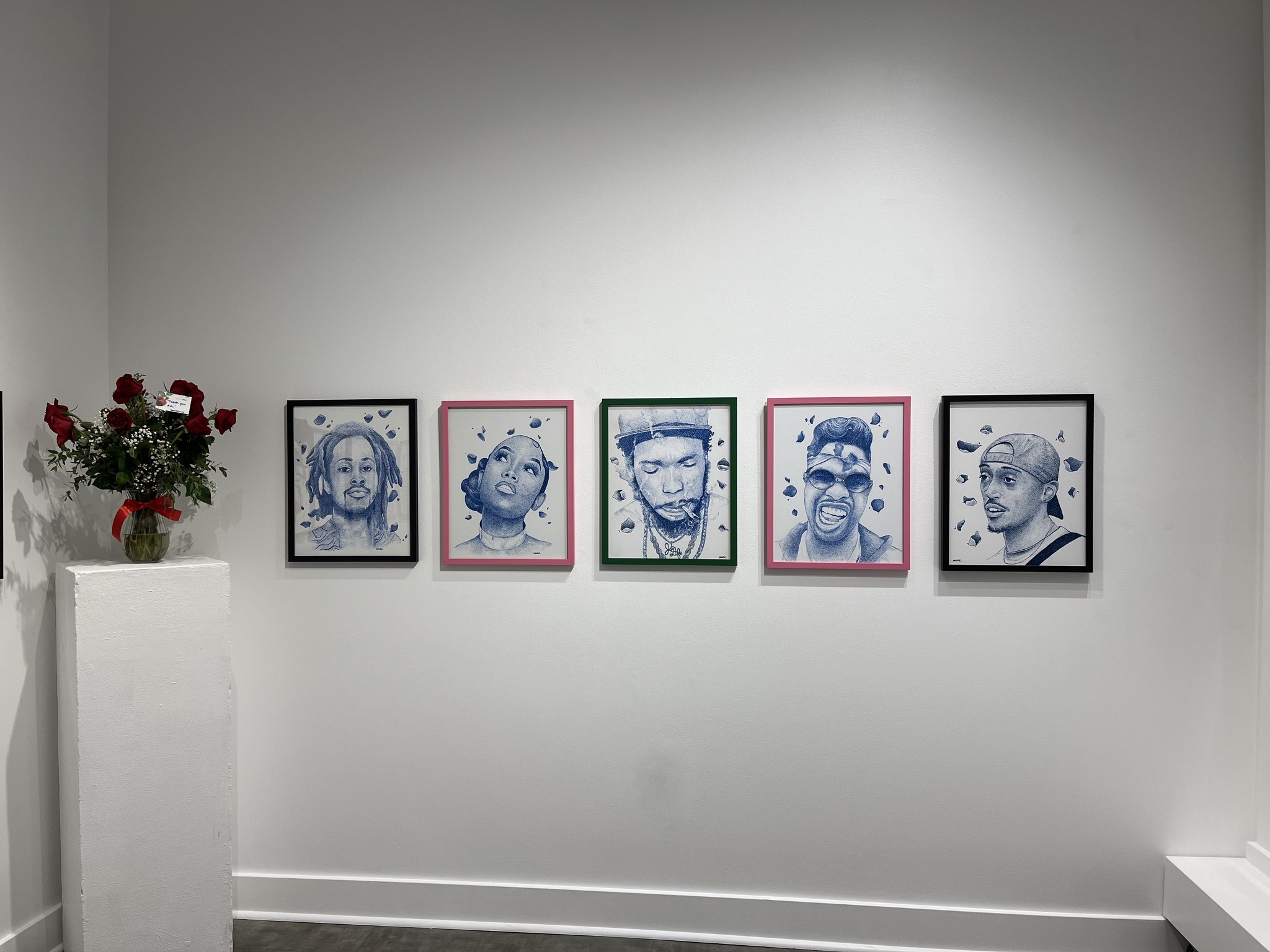
At first, the sentiment feels a bit out of place—but as our conversation unfolds, it begins to make more sense. Especially as we dive into a discussion about his upcoming solo exhibition, Roses for the Blues, which debuted on April 10 at Buckham Gallery.
You wouldn’t expect nerves from someone with more than two decades in Flint’s creative scene. Smith’s résumé includes exhibitions at the Greater Flint Arts Council and Good Boy Clothing Store, speaking engagements with youth at his alma mater, Mott Community College, and even being featured in group exhibitions such as Sons: Seeing the Modern African American Male at the Flint Institute of Arts.
Still, he admits the jitters are real.
There’s something almost full-circle about it—like stepping back into a Northwestern High School art room, waiting for a teacher to react to your work for the first time. Except now, the stakes are different. Roses for the Blues marks the largest collection of work Smith has ever presented.
However, upon the reveal of this collection’s name, I couldn’t help but be curious about his inspiration.
“The name sort of came from the fact that I use roses in a lot of my work. Because I feel like they represent love, gratitude, and a plethora of different things,” he explains. “It’s also a way to give flowers to collectors, people who really enjoy my work, and to also remind myself that I am worthy of flowers myself.”
The title holds a dual meaning. The roses speak to appreciation—both outward and inward—while the “blues” carry a layered significance. Visually, the collection leans into a monochromatic blue palette. Conceptually, it nods to one of the most notable artists of the 20th century.
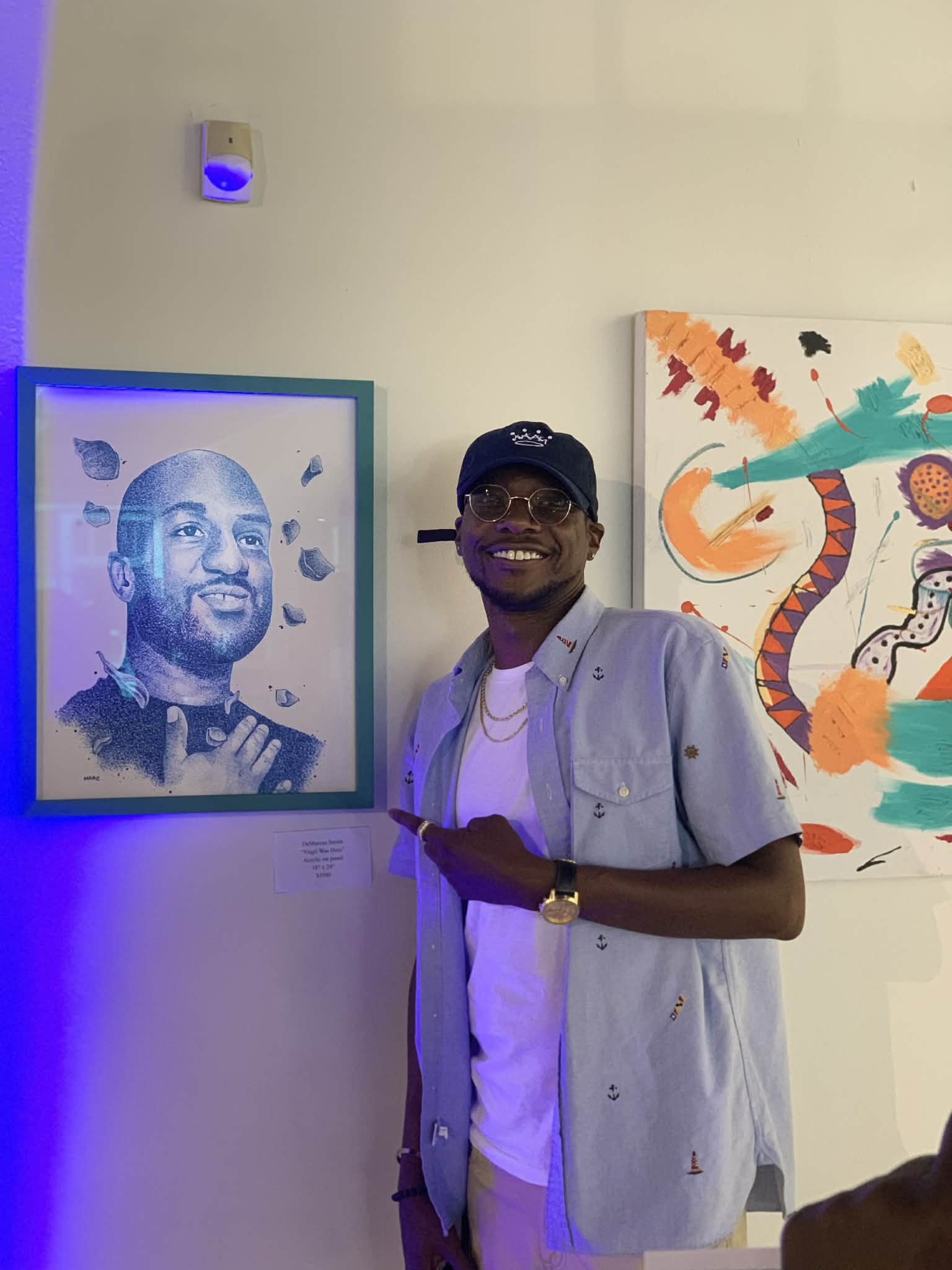
“It was sort of a tip of my cap to Picasso’s blue period. He painted exclusively in blue for an extended period of time due to the fact that he was really depressed because he had a lot of personal things going on. So I found that very interesting.”
That influence is more than aesthetic. Over the nearly six years Smith spent developing this collection, he found himself navigating his own emotional weight—periods of depression that, in a way, fueled the work itself. Art became a mechanism for turning his sorrows into sensation.
While Smith has long been embedded in Flint’s creative community, his journey didn’t begin strictly with canvas work. In the late 2000s and early 2010s, he made a name for himself through wearable art—custom pieces using airbrush and pointillism techniques that brought his work into everyday spaces.
Through his brand MarcMaking, he expanded the idea, even catching wider attention when rapper Dej Loaf was spotted in a pair of his custom Timberlands.
But this moment feels different.
“I’m trying to be more intentional about my storytelling on canvas, so to speak. More intentional about what I’m showing my viewers, and not just painting random things,” Smith says. “I love comics. So my thing is, I’ll use canvas, panels, or wood panels to give you a kind of fourth wall. And I hope that people are more captivated by the topics and stories that I’ll be telling.”
That intentionality shows up not only in concept, but in form. Much of the exhibition centers on portrait work—a notable shift for an artist more commonly associated with scenes and object-focused pieces. It’s a move that feels as if the artist is stepping out of his usual box and requires both technical discipline and emotional sensitivity: capturing not just a likeness, but a presence.
“I think building a cohesive body of art is important. And it really started out as a way to get people more involved in my storytelling, but soon morphed into a passion project. Finding pictures was actually more difficult. Finding the right picture to [capture] them in their element or essence was quite the challenge. But I eventually actually found some joy in the struggle when I noticed just how many amazing people I’m surrounded by and get to include in the series.”
There’s a quiet shift there—from challenge to gratitude. From searching to recognizing. And maybe that’s what makes the idea of opening night feel so meaningful.
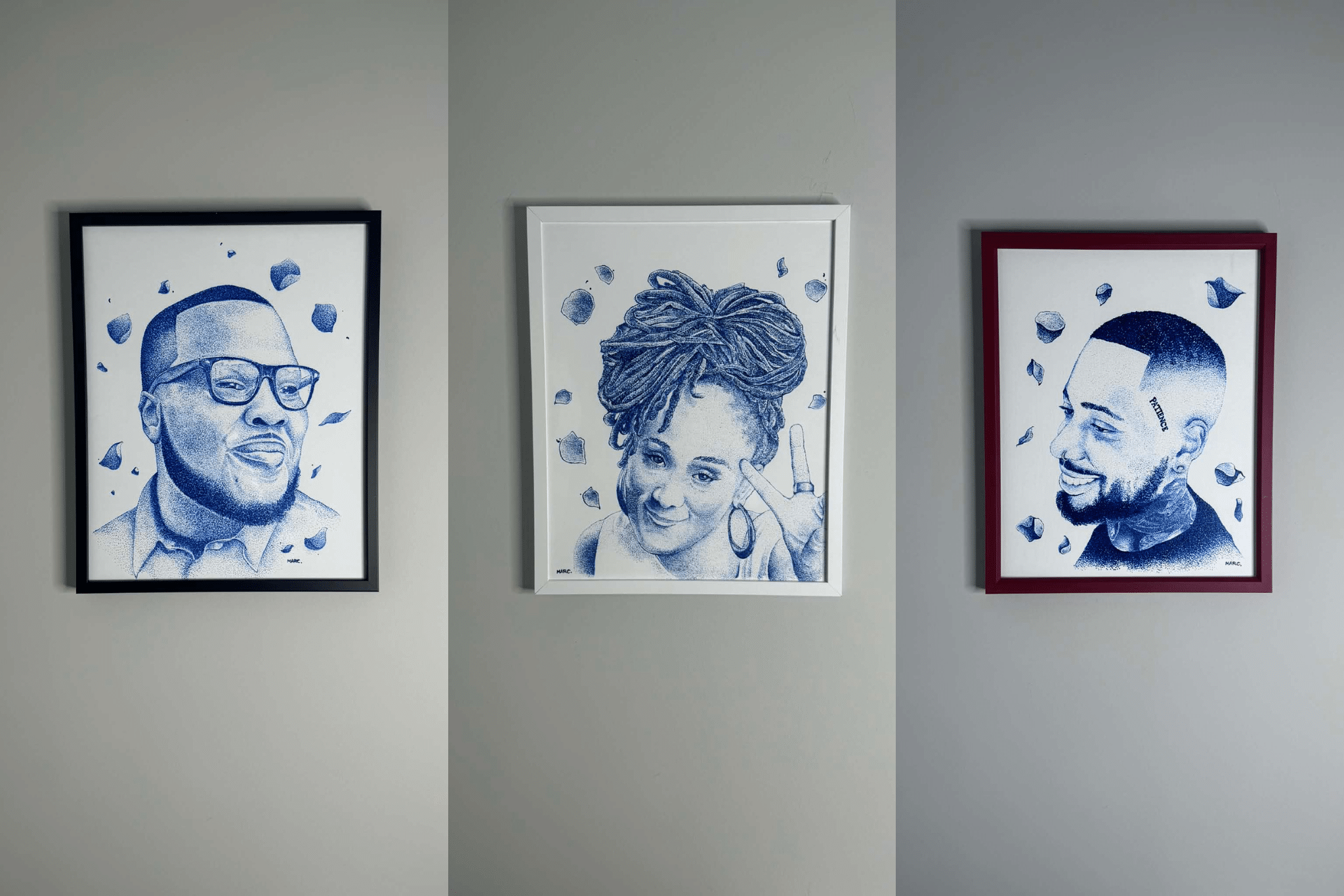
“ I think I’m just excited to see the reactions. To be able to see themselves in that light. I’m just so excited to know what that will be like, and to get the feedback.”
Still, Smith is intentional about managing expectations. The selection of muses wasn’t rigid or predetermined—it evolved over time.
“For everyone who may not necessarily have an image in the show. That doesn’t necessarily mean I wasn’t thinking of them. I changed the list of people at least four or five times. Added and subtracted people.”
He’s quick to acknowledge the broader network of support behind him—the many individuals who have influenced his journey, whether or not they appear on canvas. That reflection naturally leads to a bigger question: what does he want people to walk away with?
“Just know there are always people around you who you can look to for inspiration. And to always carry yourself in a way that is inspiring to others because you never know who may be watching.”
It’s a sentiment that feels both simple and expansive—grounded in community, but forward-facing. When asked what’s next, Smith keeps things open-ended, leaning into possibility rather than prescription.
“I’m pretty open to whatever. I also have another cohesive body of work I’m working on. I kind of have a book I’m working on with my niece. So hopefully once we’re both done working on the thing we’re doing now. We’ll get back to that and have her first major–major book published. So that’s exciting.”
At the mention of his niece, there’s a visible shift—something softer. It’s clear that beyond the exhibitions and accolades, there’s a deeper layer of purpose tied to legacy, family, and the next generation of creators.
And maybe that’s what Roses for the Blues ultimately becomes—not just a body of work, but a moment of recognition. For the people who shaped him. For the emotions that moved him. And for the artist, he continues to become.
Don’t miss Roses for the Blues, on display at Buckham Gallery from April 10 through May 3.
Author

Related Articles

Free “Paris Is Burning” Screening and Panel Coming to FIM Capitol Theatre Oct. 15
Free screening of ‘Paris Is Burning’ with a panel discussion comes to Flint’s Capitol Theatre Oct. 15.
Vehicle City Film Festival Set to Celebrate Michigan Filmmakers and Flint’s Film Community
Vehicle City Film Festival brings screenings, talkbacks & awards to Flint Oct. 1-3.

FIA to Host “Splendors of South Asia” Cultural Celebration
FIA hosts ‘Splendors of South Asia’ cultural celebration Oct. 3 with food, music and dance.