Genesee County Clerk Explains How Votes Are Counted and Why the Rumors Don’t Hold Up
Genesee County Clerk Domonique Clemons on how votes are counted, early vs. absentee, and key dates.
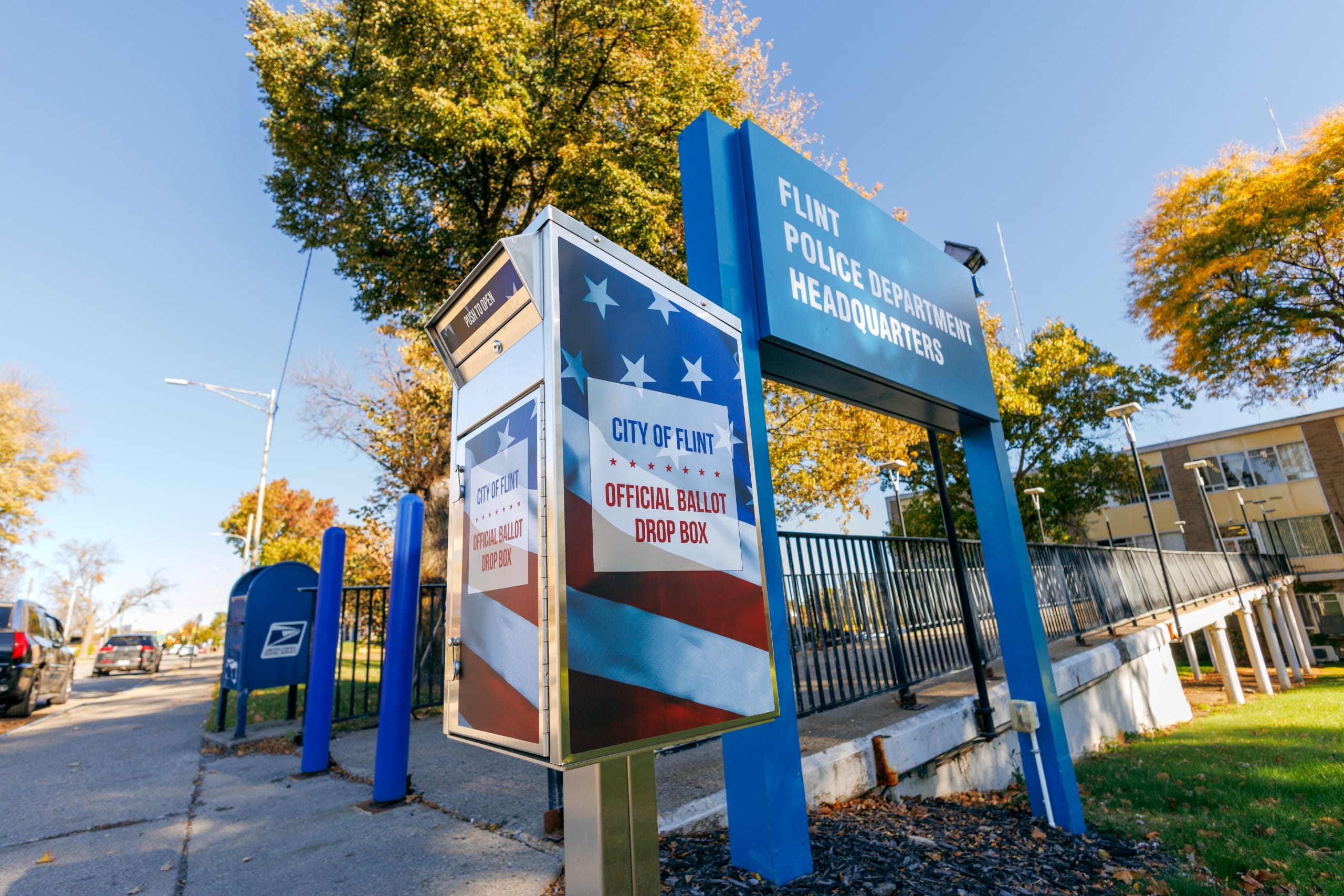
FLINT, Michigan — Elections are “really only about a quarter of my job as county clerk and register of deeds,” Genesee County Clerk Domonique Clemons said. Still, he spent much of our recent interview explaining how they work.
This article walks through what he described, from printing ballots to counting them, along with the key dates for the Nov. 3 election, and why the rumors don’t hold up.
Who Runs Elections Here
Michigan “has one of the most decentralized election processes in the country,” Clemons said. In most other states, counties run elections from the top down. In Michigan, the Secretary of State’s Bureau of Elections is “the administrative side of elections. They set the rules and procedures.” At the same time, each of the state’s more than 1,500 cities and townships runs its own elections. The county sits in between as “the pre, and we are the post of the election.”
Before Election Day
Part of Clemons’s job is “creating the ballot,” using names that each city and township clerk submits to him. He has “no say in who is or is not on the ballot for Flint City Council,” because the Flint City Clerk makes that decision.
Ballots then go through proofing, which follows a booklet of ballot-production standards covering font, race order, and the paper itself. “The paper’s got to be a certain thickness,” he explains to my surprise. His office reviews each ballot, then the county’s election commission, then the state, then every local clerk, and proofs go to every candidate to approve the spelling of their names.
The several-week process wrapped up at the beginning of the interview week, when ballots went to print. City and township clerks hire and manage poll workers, but the county trains them. Jurisdictions with fewer than 10,000 residents can’t run their own training. However, larger ones, like Flint, can.
Regardless, Clemons offers training to everyone for consistency. This year alone, he has held 13 four-hour trainings, and certification lasts two years.
After the Polls Close
Polls are open from 7 a.m. to 8 p.m. Cities and townships handle everything on the ground, and the county is “just the extra support.” When polls close, each precinct brings its materials to city or township hall, where a receiving board checks that the paperwork balances.
The county receives drives from the machines, which he compared to flash drives, and compiles the results.
“We’re not tabulating any of the results,” he elaborates. “We’re just compiling what all of our communities did into one report.”
A Board of County Canvassers, made up of two Democrats and two Republicans appointed by the commissioners, then goes through every poll book and voter list and certifies the election. Under state law, county boards of canvassers have until Nov. 17 to certify their results, and the Board of State Canvassers has until Nov. 23 to certify statewide races.

Every election is also audited. The state chooses which communities to audit, and the county performs the audit, checking training certificates, equipment setup, and ensuring everything balances. In each audited community, staff also hand-recount one race to confirm it matches the digital record.
The county also handles recounts in close races and recall petitions. Since Clemons took office, Genesee County has had 132 recall filings. Most of his colleagues, he chuckles, “get one to two every five years.”
Early Voting Isn’t Absentee Voting
“We’ve only had early voting since the 2024 election,” Clemons continues, meaning in-person voting in the nine days before Election Day. Absentee voting is older, and “absentee voting does not necessarily mean mail-in voting.” It means a voter was absent from their polling place on Election Day.
Before 2024, many cities let voters come to city hall early, where a clerk handed them a ballot. They filled it out, sealed it in an envelope, and returned it.
“You weren’t putting it in the machine,” he said. “That’s called an absentee vote.” In Flint, that meant a space set up in the council chambers. Voters can still request an absentee ballot in person at city hall, something that “people do all the time.”
One Voter, One Ballot
Michigan’s Qualified Voter File is “where all of the voter data is: who you are, where you’re registered to vote, if you have and haven’t voted, and how you voted.” This system “will only allow a person to have one ballot.” Each ballot has its own number, which the machine removes when it goes in, making it anonymous.
Voters who request a mail ballot but then lose it, never receive it, or decide to vote in person can still vote at their polling place on Election Day. They fill out an affidavit, a checkbox form stating they don’t have the mail ballot, never received it, or lost it, and a poll worker will “spoil” the original so it can’t be counted if it arrives later.
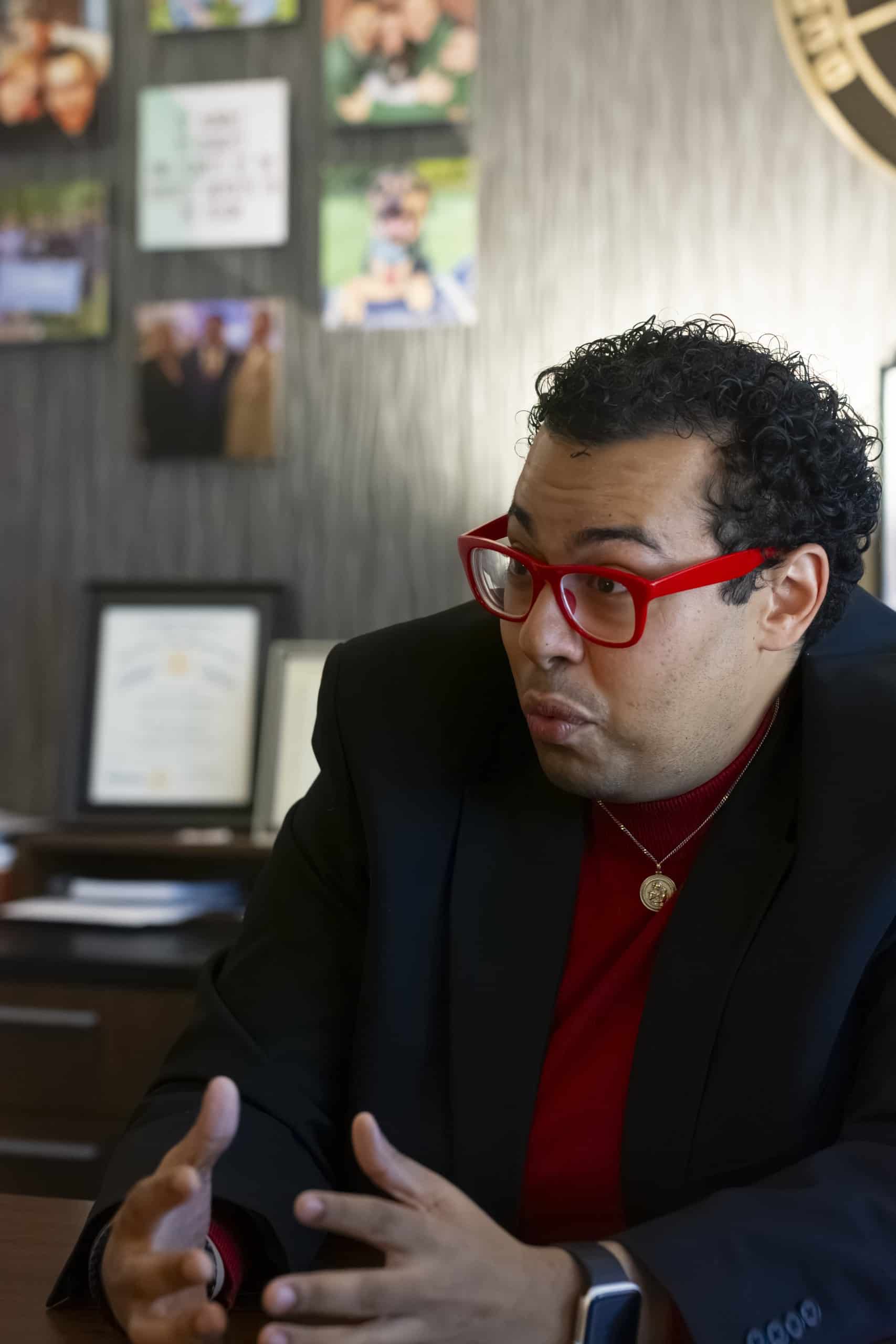
A voter who has already returned the ballot can’t vote in person because the system will show it was turned in. A voter can return a mail ballot by mail, in a drop box, at the clerk’s office, or by bringing it to a polling location on Election Day and having the voter run it through the machine.
He said the permanent ballot list is another source of confusion. The absentee application includes a checkbox for it, and checking it means a voter automatically gets a ballot every election.
Clerks have met voters who say they never requested one, and when clerks show their application, many have unconsciously signed up to receive a ballot automatically.
A child who moved away or went to college without updating their registration will still get a ballot at their parents’ address. Parents can forward it, throw it away, or call the clerk, but voting someone else’s ballot is “a federal crime.”
Every returned mail ballot envelope must be signed, and the signature is checked against the one on file from the voter’s license or registration. If the signatures don’t match, the ballot isn’t counted until the voter appears in person with ID and confirms it’s theirs.
Clemons recalled an older Genesee County voter who insisted she never cast her mail ballot until a clerk showed her the envelope. She acknowledged the signature, stating that she had been diagnosed with dementia six months earlier.
“I have no recollection of doing this,” she told the clerk, “but that’s absolutely my signature.” She didn’t get to vote another ballot, and that’s one reason the checks exist. Clemons stresses that it’s “not to criminalize or penalize people, but to make sure that the system is working.”
Key Dates for the Final Week
Early voting is underway, and the online or mail registration deadline has passed. Here is what’s still ahead.
Still need to register? You can register in person at your city or township clerk’s office with proof of residency, including on Election Day until 8 p.m.
Through Nov. 1: Statewide early voting continues. Flint’s clerk’s office will also be open Oct. 31 and Nov. 1 for in-person absentee voting.
Oct. 30, 5 p.m.: Deadline to request an absentee ballot online or by mail.
Nov. 2, 4 p.m.: Deadline to request and vote an absentee ballot in person at the clerk’s office.
Nov. 3: Election Day. Polls are open 7 a.m. to 8 p.m., and the clerk must receive absentee ballots by 8 p.m.
You can check your registration status, find your clerk, and sign up for ballot-status notifications through Michigan’s Voter Information Center. The state notes that tracking covers only absentee ballot and application activity.
For everything on Flint ballots, see Flintside’s voter guide. For how millages work and what’s on the ballot, see our millage explainer.

Sorting Rumor From Reality
Clemons sorts misinformation into three groups: “well-meaning people” who see something plausible and, not knowing the process, assume fraud; people who spread fear on purpose, to keep others from voting or to discredit an outcome; and social media interference from “other entities, other governments.”
He offered two examples. One was a Facebook post this summer claiming that adding a stamp to a mail ballot makes it first-class mail and speeds it up. It doesn’t, he said: “it just costs you the cost of a stamp.”
The other was a claim that people received eight ballots. “They bring me eight applications to vote, which is not a ballot,” he said. Any group can legally send applications, and filling out all eight still produces one ballot.
However, Clemons doesn’t claim that the system is perfect. “Our voting process is not perfect, and it will never be perfect,” because “human beings are imperfect creatures.”
Michigan requires paper ballots read by optical scanners, he said, and because “social media doesn’t stop at state lines,” something seen online “doesn’t mean it’s applicable to Michigan.”
He emphasizes that much of the process is public. People can watch poll workers set up and close down, and the canvass and audit results are public documents.
However, he asks people to question the system, explaining that, “I think it’s good for people to question and to challenge what the system is, because that’s what makes the system stronger.”
He urged voters not to trust unquestioningly but to ask questions and “come from a place of curiosity and understanding that there is a system of laws and checks and balances to have a safe, secure, and transparent election.”
Author

Related Articles

Millages Explained: What They Are and What’s on Flint’s Nov. 3 Ballot
A breakdown of what are millages and what’s on the Nov. 3 ballot.
Flint Voter Guide 2026: What’s on the Nov. 3 Ballot
Mayor, council, state races, and millages: what Flint voters will see on the Nov. 3 ballot.
Meet the Candidates: Mott Community College Board of Trustees — Andrew Watchorn
Andrew Watchorn is one of eight candidates vying for two open seats on Mott Community College Board of Trustees.