Meet the Candidates: Flint Community Schools Board of Education — Dominique D. McGlown
Dominique D. McGlown is one of eight candidates vying for three open seats on the Flint Community Schools Board of Education.
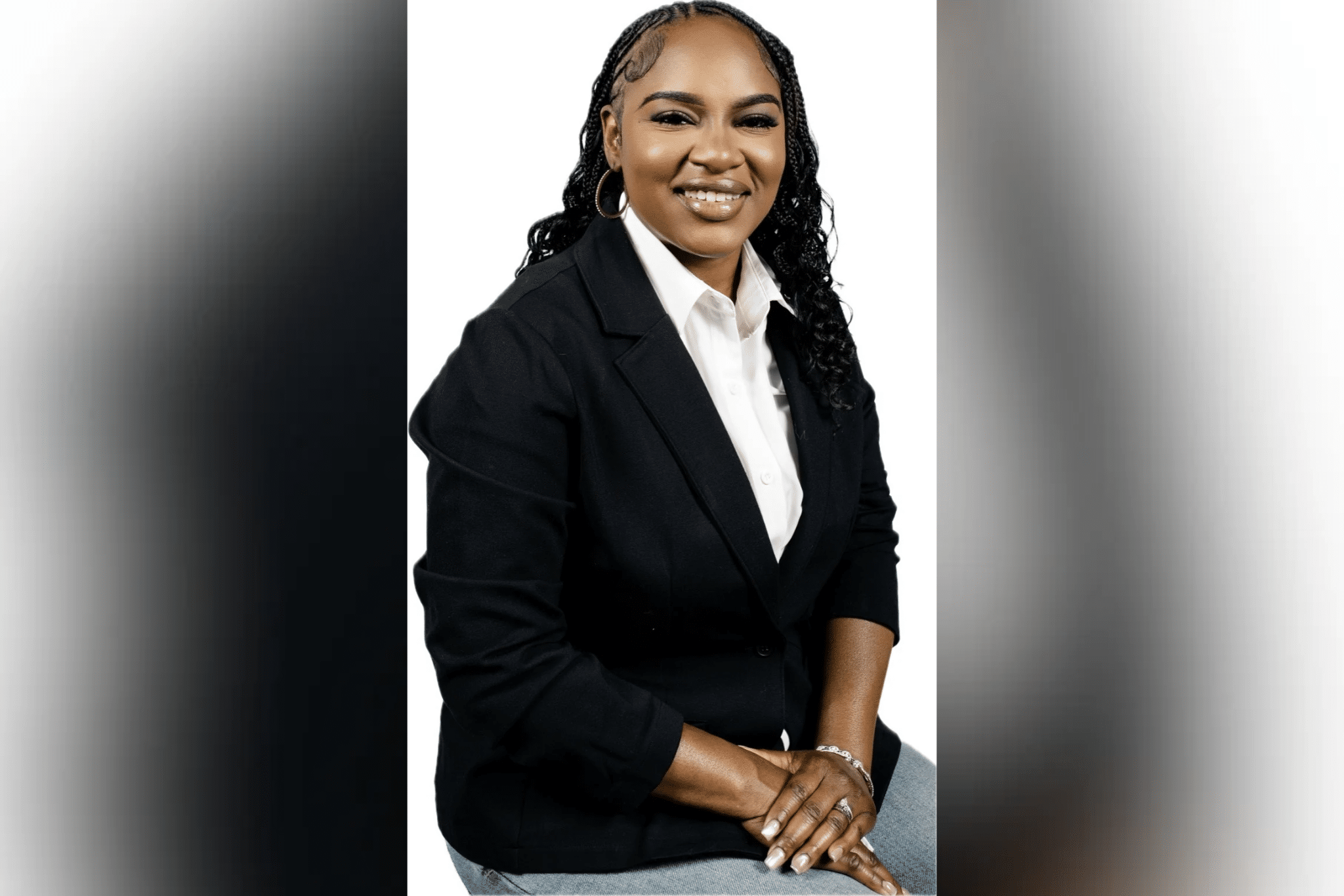
FLINT, Michigan — Of all the teachers Dominique D. McGlown had in Flint Community Schools, an AP teacher named Mrs. Nassif made the biggest mark.
“She challenged our critical thinking — she wanted us to explain how we got the answer, not just get it right — and she gave us a safe place to learn while being ourselves,” McGlown says.
McGlown is one of eight candidates running for three seats on the Flint Community Schools Board of Education on Nov. 3, alongside three incumbents seeking re-election. The winners will serve six-year terms.
She’s lived in Flint all 41 years and shared nothing but high praise for Flint students. However, she notes that today’s students are different from those of yesterday.
“Today’s students are just as capable, but they carry more into the classroom: housing instability, the loss of neighborhood schools, social media, and the lasting effects of trauma,” she says. “I want to rebuild the support around them so they get the same chance I had.”
McGlown describes being “Flint all the way through,” attending Stewart School, McKinley Middle School, and Flint Central High School. Her career led her to work as a case manager and behavioral health professional.
She also serves on the Flint Housing Commission, works with the Community Foundation of Greater Flint’s Neighborhoods Small Grants Program, and founded Uma Strong Marshall Outreach, a community organization that runs a summer reading program for Flint children.
“I am not running just to hold a seat.” To her, that frontline work is what the board needs. “As a case manager and behavioral health professional, I sit with families in their hardest moments. I see what a spreadsheet can’t: the child behind the behavior, the attendance problem that is really a transportation or housing problem, and the parent who isn’t disengaged — they’re overwhelmed.”
The plan is to “bring the family’s living room into the boardroom,” asking what a policy looks like on the ground, whether staff has what they need to carry it out, and whether the district responds to children with support before punishment. “Discipline and accountability matter, but so does asking what happened to a child and what their family needs.”
Then there are the families who have already left. Of the roughly 16,400 school-aged kids who live in Flint, only about 3,000 are enrolled in Flint Community Schools, according to the Mott Foundation’s 2024 Focus on Flint report. Bridge Michigan reports the same pattern: only 1 in 5 Flint children attend the city’s traditional school district.
“Families don’t leave by accident, and they don’t come back because of a slogan,” McGlown says. “They come back when they trust what they’ll find: safe buildings, stable classrooms with teachers who stay, strong reading and math instruction, honest communication, and a district that follows through.”
McGlown wants to advocate for staffing consistency, visible academic improvement, and “real showcases” that let parents see the district’s programs, followed by personal outreach to families who left.
To those parents, she wants them to know that “I understand. You made the best decision you could for your child, and I would never fault a parent for that. My job is to make Flint Community Schools a place you’d choose on purpose.”
She also wants to strengthen the district’s 2022–2027 Strategic Plan, which expires next year, by identifying what is and isn’t working.
She says the district can’t yet show families the progress the plan promised in attendance, reading and math proficiency, and consistency from building to building. She argues the next plan needs a small number of measurable targets with owners and deadlines, a public dashboard, and a focus on early literacy, attendance, retaining great teachers, and mental health.
“The next plan should have fewer promises and more proof,” she says. “A plan should be something the community can hold us to.”
Mental health is another focus. She wants to enlist a counselor, a behavioral specialist, and a social worker in every building, with manageable caseloads, plus trauma-informed training for all staff and a tiered system so a child in crisis gets help the same day.
The money, she says, can come from funding that already exists for this purpose: state mental health and school safety dollars, federal grants, school-based Medicaid services, and partnerships with community providers and foundations, all while “protecting these positions in our own budget instead of treating them as the first thing to cut.”
On accountability, McGlown wants to track a short list every quarter: attendance and chronic absenteeism; reading proficiency, especially by third grade; math proficiency and student growth; graduation rates; suspensions and whether discipline is equitable; teacher vacancies and retention; and the budget.
If the district misses a target, she expects a public explanation of the root cause, a corrective plan with deadlines, resources moved to where the problem is, and a report back.
“If we aren’t hitting targets, I would not accept ‘we’re working on it.’ Accountability isn’t about blaming students or teachers — it’s about the board insisting on answers until the numbers move.”
On keeping teachers, McGlown points to something “a lot of districts can’t offer. Flint is a place where a teacher’s work is visible,” she explains. “Many of our best educators are Flint people teaching in the schools that raised them.”
There’s also the chance “to be part of a genuine comeback story, including a brand-new high school.” That means competitive pay, strong mentoring for new teachers, manageable workloads, and grow-your-own pipelines for the district’s graduates and support staff.
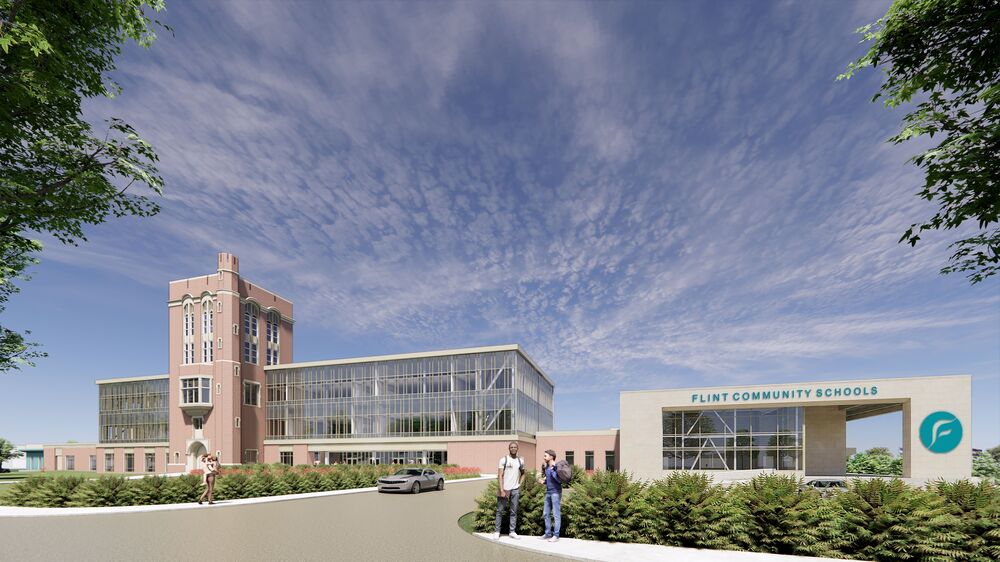
The district is building that high school on the former Flint Central campus, McGlown’s alma mater.
“As a Flint Central graduate, I know this campus is sacred ground for generations of Flint families, so what happens inside matters even more than the building,” she says.
McGlown wants “clear pathways, not just classes,” from career and technical education in high-demand fields to early college and dual enrollment, partnerships with colleges, the Cultural Center, and employers, and the arts, music, and athletics “that make students want to come to school,” because “a beautiful building with weak programming would be a promise broken.”
Each of McGlown’s community roles has taught the same lesson. At the Housing Commission, “Stable housing comes before homework — a child who moved twice this year isn’t a discipline problem; they’re a child whose life is unsettled.”
Through the Neighborhood Small Grants Program, she has seen how much residents can do for their blocks with even a small investment. And in summer reading, she has watched what happens when a child gets consistent time with an adult who knows their name.
Of everything, McGlown is proudest of founding Uma Strong Marshall Outreach, or USMO. Its technology device program serves families who don’t have a device at home, “so no child is trying to do homework on a phone.”
Its summer reading program runs six to eight weeks for children ages 5 to 12, covering fundamentals like cursive, and every child learns to write their first and last name. Its Warming Bodies Through Love program provides winter attire to families facing economic hardship and recently gave away 77 coats this past weekend.
“I’m proud of USMO because it isn’t a program on paper,” McGlown says with a smile. “It’s Flint children reading stronger than they did in June, families with the devices they need, and parents who know their community will show up for them in October and year-round.”
McGlown points out that school board races often come down to a small number of votes, and the board makes decisions that affect a child’s daily life, from who leads the district to how millions of dollars are spent.
“Please don’t sit this one out. The children in these classrooms can’t vote, so we have to vote with them in mind.”
And to voters who are still undecided:
“You don’t have to take my word for it. Look at where I’ve been when there was no election — in the community, doing the work. Then give me the chance to do that same work at the board table, and hold me accountable for it.”
Author

Related Articles

How Michigan organizations are tackling food insecurity on the local level
Fair Food Network, Groundwork Center for Resilient Communities, and Detroit Food Policy Council increase families’ healthy choices while supporting local growers and retailers.
Genesee County Clerk Explains How Votes Are Counted and Why the Rumors Don’t Hold Up
Genesee County Clerk Domonique Clemons on how votes are counted, early vs. absentee, and key dates.
Millages Explained: What They Are and What’s on Flint’s Nov. 3 Ballot
A breakdown of what are millages and what’s on the Nov. 3 ballot.