

FLINT, Michigan —For many Flint residents, parks and playgrounds are more than places to pass the time.
They are gathering spaces, anchors for community events, and where children burn off energy, grandparents sit and watch, families reconnect, and community members cross paths in ways that don’t always happen elsewhere. When those spaces are maintained, accessible, and welcoming, they can help shape how residents feel about their neighborhoods and about Flint.
That is part of the vision behind the Charles Stewart Mott Foundation’s commitment of up to $20 million to improve playgrounds and parks throughout Flint. While the investment will bring physical upgrades to school playgrounds and city parks, leaders at the Foundation say the work is also about safety, accessibility, youth voice, and ensuring residents feel a sense of ownership over the spaces they live in and engage with.
RELATED: Free 3-on-3 basketball tournament joins C.S. Mott Foundation’s Centennial Family Fun Days
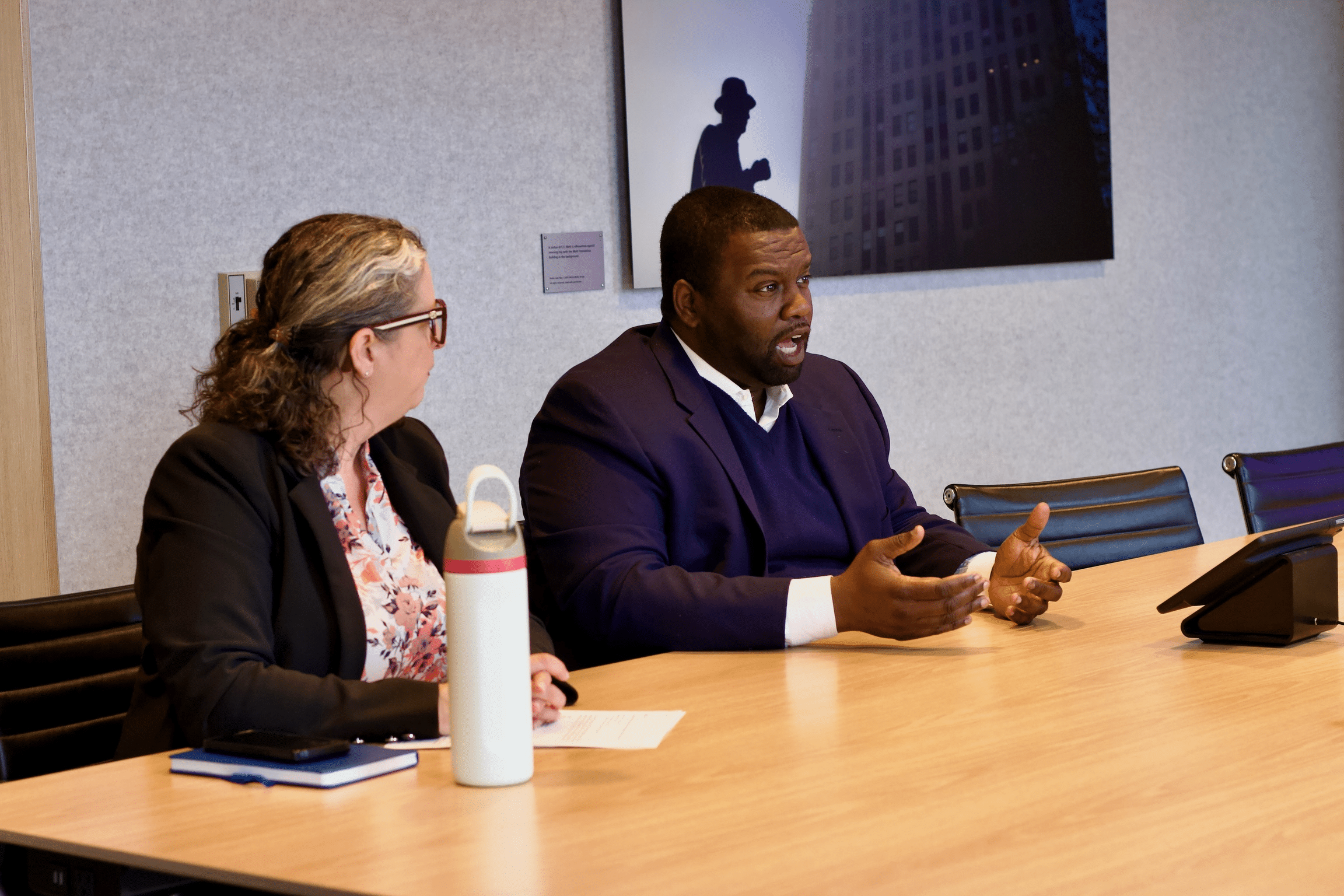
For Jennifer Acree, program officer at the Mott Foundation, the work is not just about new playground equipment or fresh park amenities. It is about how those improvements can shift the way residents experience their neighborhoods.
“So I think one of the things that we’ve heard from residents related to neighborhoods and parks is it’s a great place to be able to gather, come together,” Acree said. “Sometimes it’s with events that people organize together, or they just run into their neighbors in the park.”
That sense of gathering is one of the reasons the Foundation is looking closely at parks and playgrounds as part of the Foundation’s centennial initiatives. The investment includes just over $7 million for upgrades and renovations to playgrounds at five Flint Community Schools sites: Durant-Tuuri-Mott Elementary, Eisenhower Elementary, Freeman Elementary, Potter Elementary, and the Doyle Ryder Education Center.
The broader effort will also support improvements to city parks and outdoor spaces across Flint, with community input helping shape what those investments look like.
For Acree, the work goes beyond adding new features. It is also about addressing the perception and reality of safety in public spaces. The Foundation has heard concerns about safety and the condition of parks. And while physical improvements alone cannot solve every issue, she said, well-maintained public spaces can change how residents feel.
Having conducted a quality-of-life survey last year, the results showed that “there’s a perception sometimes that there needs to be more safety in the parks,” and seeing parks maintained and well-kept would assuage those concerns.

RELATED: Conversations With Flint: Reflections From Flintside’s On The Ground Listening Session
The investment comes as Flint residents continue to express interest in stronger neighborhood spaces, environmental justice, youth opportunities, and safer places for recreation.
During a recent Flintside On The Ground listening session at the Gloria Coles Flint Public Library, parks and recreation emerged as one of several themes that residents wanted covered in greater depth.
The timing of Mott’s parks and playgrounds work aligns with those concerns.
For Thomas Parker, executive-in-residence and program officer at the Mott Foundation, the playground component connects directly to the role schools can play beyond the classroom.
“Being able to have those schools continue to be hubs and the playgrounds being newly renovated gives a level of community ownership,” Parker said. “With the history of the Mott Foundation and community education, having those schools be activated is absolutely wonderful.”
That idea of schools as neighborhood hubs is not new in Flint. It is tied to the city’s long history with community education, a model that helped position schools as places where families and residents could access learning, recreation, and support.
RELATED: In Pictures: Brownell-Holmes
For Mott, that history matters.
One of the clearest examples of that model is the Brownell-Holmes STEM Campus on Flint’s north side, where a $14 million Mott Foundation grant, combined with $26 million in federal ESSER funds, has supported major renovations. The project includes a new community hub, The Cube; playgrounds; athletic spaces; basketball courts; track improvements; and other upgrades.
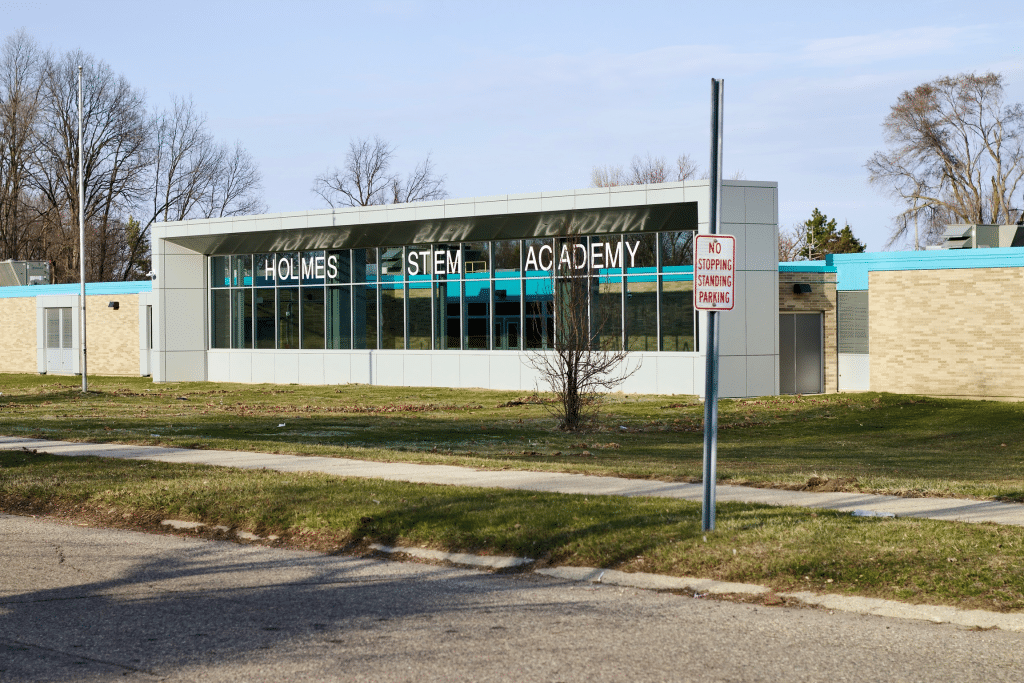
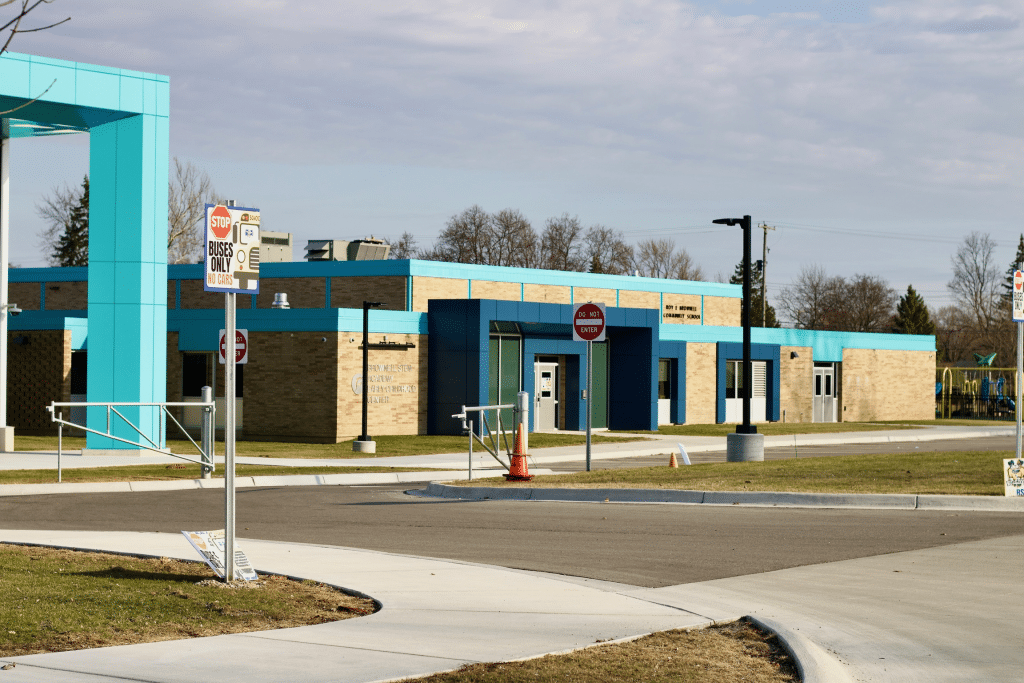
Pictured in April 2026, Brownell-Holmes STEM Elementary and Middle School has finished its recent renovations. Ryan Hobson | Flintside
Parker said the Brownell-Holmes project helped create a model for approaching future playground work.
“The Brownell-Holmes Neighborhood Association was a key partner in developing that campus and being a part of that playground and building a level of ownership,” he said. “That model is what we’re using to replicate across other schools in the city. That deep engagement of kids, parents, community, and staff is what we’re hoping to see across the city connected to the work at city parks.”
RELATED: Flint residents invited to help shape future park improvements through Mott initiative
One of the central pieces of the current initiative is resident voting. Flint residents have been invited to vote on which parks they would prioritize and what improvements they would like to see. That process runs through June 6.
The voting options were shaped in part by feedback from partners, including the City of Flint and Keep Genesee County Beautiful, as well as from people who have adopted or regularly use specific parks. Acree said the voting process was designed to give residents a chance to respond to existing ideas while also leaving room for new ones.
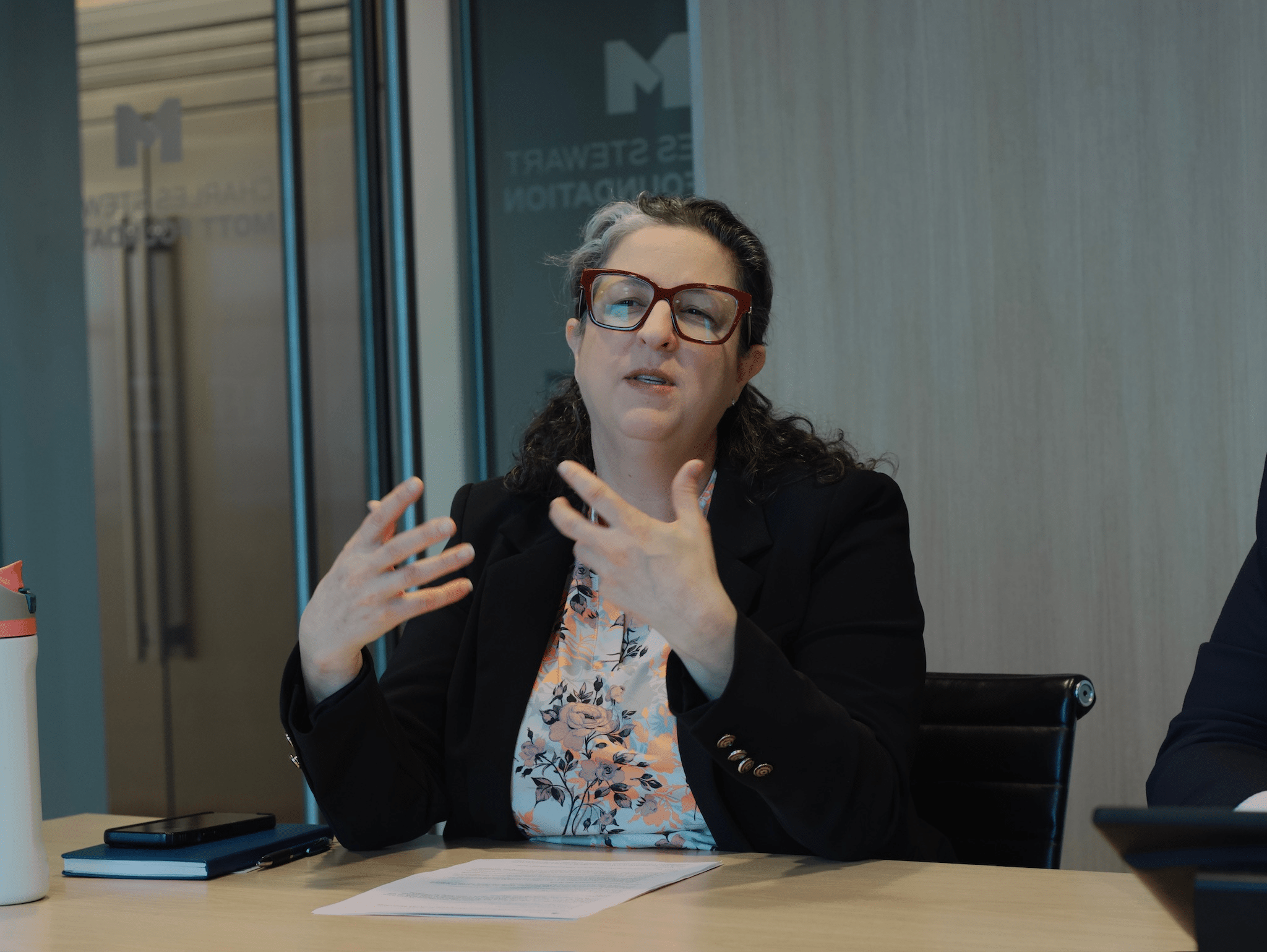
“So we used that list to sort of pre-populate some of the voting options on the website,” Acree said. “But then we left a lot of open-endedness, too, so people can give us input on things. Maybe they’ve been to a park they really like somewhere else, and they’d like to see a feature similar to that or things that we have not thought of.”
After voting closes, to ensure the process remains community-driven and transparent, the Foundation will be “sharing feedback back to the community based on what we learned, what we heard, and what we’re gonna do next.” Throughout this process, Acree notes that some ideas may need to be adjusted depending on what is possible at specific sites.
That is why partners such as the City of Flint, Keep Genesee County Beautiful, and the Genesee Conservation District are part of the process. Those relationships will help determine what can be built, where it should go, and how it can serve residents well.
RELATED: The Brownell-Holmes Neighborhood Association breathes new life into the community
One lesson from Brownell-Holmes was the importance of shaded areas. Parker said that feedback directly shaped the playground planning process.
“[We] did all this wonderful work on a playground, and the grandparents that were a part of that advisory committee said, ‘When we bring our babies out, we need shady places to sit. We need community shade.’ And that forced the committee to reconsider the configuration.”
For the new playground designs, Parker said each school will have a committee led by the community school director. Those committees will include parents, students, staff, and neighborhood association representatives. Moreover, youth input is one of the clearest examples of the Foundation’s efforts to make the process more community-driven.
One such approach was to invite students at schools involved in the playground projects into early conversations, while surveys were also used to reach more people. Once initial designs were created, students could respond in a more visual and informal way. Posters were placed in schools, and students were given dots to mark which features they liked or disliked.
“So kids could come by on their way to lunch, on their way to the bathroom, on their way to the principal’s office, and say, ‘I really like this piece of equipment,’ or, ‘I really don’t like this piece of equipment,’” Parker noted.
And for students who may not feel comfortable speaking up in a group setting, that approach gave them another way to be heard.
“Every kid doesn’t want to really talk in those big groups, but we created a safe space, and some kids did. But for those who didn’t, [they] could walk by and put a dot on a poster board and say, ‘I like slides,’ or, ‘I like spinners,’ or, ‘I like whatever.’”
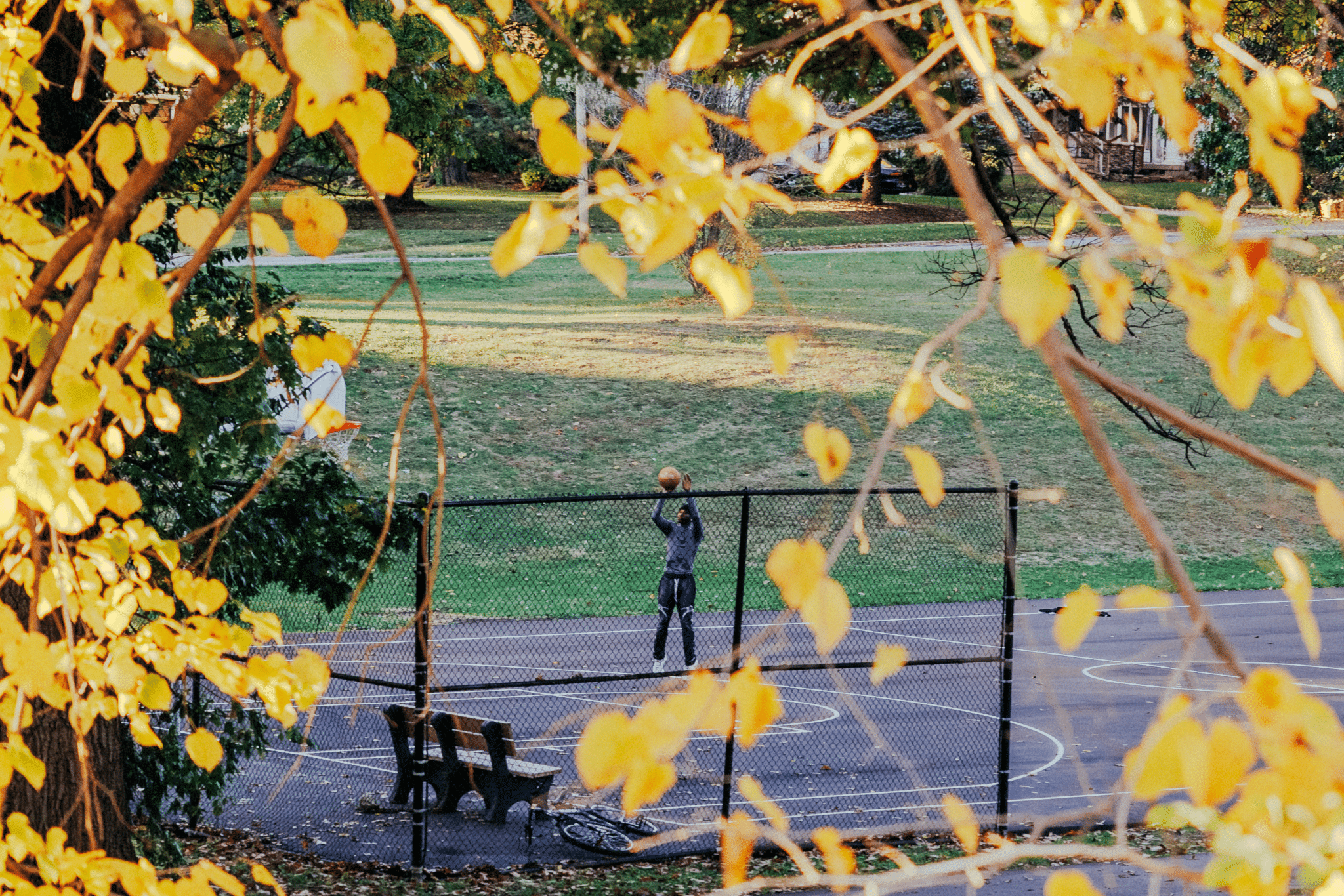
Another way that youth voice is being implemented is by going directly into neighborhoods and meeting residents where they are, including bringing iPads to parks so residents can vote on-site. Whether a group of young men playing basketball or skateboarding at Kearsley Park, “they’re not just waiting for people to come to them,” Acree said.
Accessibility is another priority. “We learned about the need for accessibility being built in as a core,” Parker responded, when asked about wheelchair friendly walkways, people who’ve suffered from strokes, or parents and grandparents of neurodivergent children.
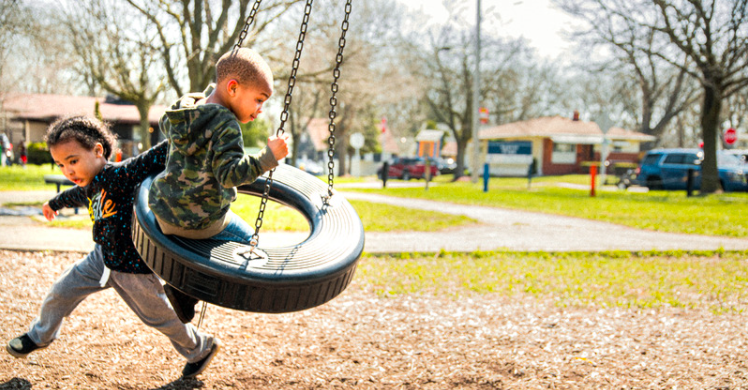
The Foundation and its partners are considering how residents of different ages and abilities will use parks, whether that means accessible playground equipment, workout equipment for older adults, parking access, or pathways that make it easier to move through a space.
“That’s also something that’s embedded in the process as we’re thinking about what people voted on, what are the opportunities to make those things as accessible as possible,” Acree mentioned. She added that modern playground and park design makes it possible to create more customized spaces than in the past, rather than a “one-size-fits-all.”
But when it comes to what children want most, Parker said one answer has been consistent.
RELATED: “It’s the simple things that make life worth living.”
“Slides and swings,” he said, eliciting laughter in the room. “If you’re building a playground and you ask kids… you had better have slides and swings to spare. Because that is the one thing that we consistently hear. That’s the equipment that they really want to play on.”
All within this framework, the Foundation’s larger goal is to lift up what already exists in Flint and strengthen those assets for decades to come.
“We have an amazing community, we have amazing neighborhoods. We have more parks per number of residents than most cities of our size,” Acree said. “We have these amazing assets, and there are a number of reasons that over time some of those opportunities in the city have not been as well maintained.”

She hopes the improvements send a clear message to children and families: these spaces are for them.
“I also hope it sends the message that the community cares about the kids and residents of all ages. But the fact that that kid is on the swing, going, ‘Okay, this was put here for me. This was for me and my friends to be here, and somebody took the time to listen and then to follow through and put these swings here.’”
RELATED: Sarvis Park neighborhood ushers in Juneteenth with a kickoff celebration
In the end, Parker understands that the work is ultimately about making high-quality public spaces feel normal for Flint children, not exceptional.
“The one thing that our president and CEO always says is that a child’s zip code should not determine their success and opportunities. So in five years, we want kids that are coming to these playgrounds to not feel like this is something exceptional or special, but that this is the norm for what a kid from Flint should have access to every day.”
For a city where public spaces have always carried more than one purpose, that vision matters. And when residents, students, parents, grandparents, and community partners are part of shaping those spaces from the beginning, it can also tell a larger story about what Flint deserves.
As Parker summarizes, “And I think that’s the key. The focus on parks and playgrounds and being expansive across the city as part of the centennial initiative is that we’re creating, hoping to create a sense of normalcy that this is what Flint kids and residents should have access to every day.”
Author

Related Articles
Free 3-on-3 basketball tournament joins C.S. Mott Foundation’s Centennial Family Fun Days
Free 3-on-3 basketball tournament to bring youth competition to C.S. Mott Foundation’s Centennial Family Fun Days