

In Flint, MSU Public Health is building a model rooted in community power
MSU Public Health centers Flint residents in a community-powered approach to health solutions.
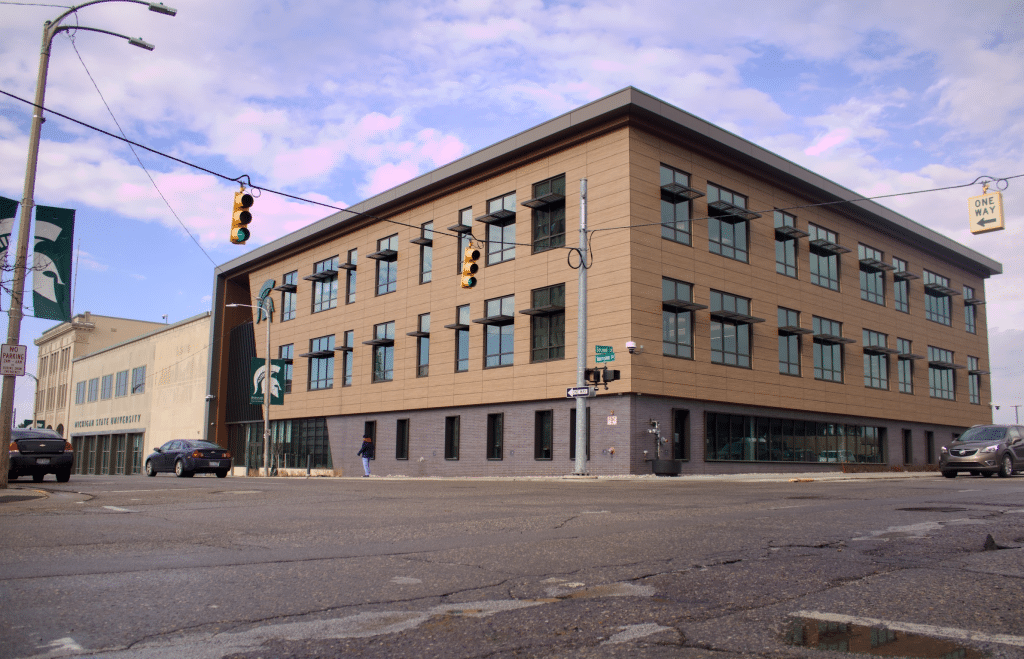
FLINT, Michigan — Public health is not only being studied in Flint, but it is also being built with the people most affected by the conditions public health seeks to change.
That philosophy guides Michigan State University’s (MSU) Charles Stewart Mott Department of Public Health, a Flint-based department within MSU’s College of Human Medicine that leaders say is redefining what community-powered public health can look like.
The department was created through a partnership between MSU and the Flint community and has become what MSU describes as the first academic department of any kind in the world to be co-developed and co-led with community partners.
The department’s work was recently highlighted during MSU’s Spartan Bus Tour, which showcases university initiatives and partnerships making an impact across Michigan communities.
For Dr. Jennifer E. Johnson, founding chair of the Charles Stewart Mott Department of Public Health and a distinguished professor at MSU, the model begins with a simple but powerful premise: the people closest to Flint’s public health challenges should also help shape the solutions.
“The idea for Flint to partner with MSU’s College of Human Medicine to create the Charles Stewart Mott Department of Public Health in Flint came from the Flint community,” Johnson says. “Funds to start the Department came from the Flint community. Topic areas of interest, feedback on faculty to hire, and strategic directions all came from the Flint community.”
A department shaped by community voices
The co-governance model is central to MSU Public Health’s work in Flint. Rather than involving residents only in individual research projects, the department’s structure is designed to keep community members engaged with the department itself.
“This is unique because we build relationships between the community and the Department itself, rather than just between community and individual projects,” Johnson says. “This is important because the relationship stays when individual projects end.”
Community members help shape priorities, participate in strategic planning, sit on faculty and chair hiring committees, and serve on major departmental decision-making committees. The department also holds twice-monthly open community meetings focused on Flint’s public health needs.
When the department was being developed, a community-university workgroup conducted more than 2,000 surveys and more than 100 interviews with Flint residents and leaders to identify the city’s most pressing public health priorities. Those priorities included mental health and substance use, chronic disease, and healthy behaviors.
Residents also made it clear they wanted research focused on solutions.
“They were also clear that they wanted research on solutions, not on what was wrong,” Johnson says.
Measurable impacts across Flint and Michigan
According to Johnson, using $60 million invested by the Charles Stewart Mott Foundation over the past 15 years, the department has secured another $491 million in external funding, with a total economic impact across Michigan of more than $1.2 billion. The department has also created more than 300 new jobs in Flint.
Its programs have reached residents across multiple areas of health. Johnson says MSU Public Health has reached more than 7 million people with information about adult vaccines, sent 500,000 free books to families, provided 195,000 fruit and vegetable prescriptions, delivered more than 50,000 substance use and mental health screenings, and provided suicide prevention resources to more than 30,000 people.
The department is also leading projects aimed at improving maternal and child health outcomes for more than 200,000 births in Michigan.
One example is Rx Kids, which MSU describes as the nation’s first community-wide prenatal and infant cash prescription program. The initiative provides mothers with $1,500 during pregnancy and babies with $500 per month for a designated period after birth.
MSU says the program has expanded to more than 40 Michigan communities and has shown measurable impacts on family financial stability, maternal mental health, prenatal care utilization, birth outcomes, child welfare, and local economic stimulus.
Addressing health through food and prevention
After the Flint water crisis, nutrition became a key public health priority as families sought ways to reduce lead absorption. Amy Saxe-Custack, a registered dietitian and the Pediatric Public Health Initiative’s nutrition director, partnered with Flint pediatricians to develop Michigan’s first Fruit and Vegetable Prescription Program for children.
The program provides children with prescriptions for fresh fruits and vegetables during pediatric visits. Families can redeem prescriptions for $15 worth of produce at the Flint Farmers’ Market, Flint Fresh, and select Meijer stores.
MSU reports that children participating in the program consume more fresh fruits and vegetables over time, experience less food insecurity, and show healthier blood pressure measures.
Flint Kids Cook builds on that work by teaching children how to prepare healthy meals while supporting nutrition knowledge and social-emotional well-being.
Rebuilding trust through long-term relationships
For Johnson, community-powered public health is also about rebuilding trust in communities that have historically experienced extractive or short-term research relationships.
“Building relationships between the Department and community versus only individual projects and community matters because the relationship stays when projects end,” Johnson says.
She says the department works to keep residents informed and engaged through public-facing websites, monthly community meetings, more than 200 community webinars since 2020, and Genesee County Health Equity Report Cards that track dozens of public health indicators.
The report cards, available through Flint Research, are designed to put data back into the hands of the community and help residents, nonprofits, and policymakers better understand local health disparities and outcomes.
MSU Public Health leaders say Flint’s model offers lessons for other cities seeking more equitable public health systems.
The department’s work is rooted in the belief that local wisdom and academic research should work together to shape solutions that are more sustainable and responsive to community needs.
“We are the first department to be developed and led with community,” Johnson says. “This experiment in Flint has worked. Strong academic departments and universities can and should be built and co-governed in partnership with [the] community.”
Author