
A Conversation between Hollywood and Childhood — with Judah Edwards and Flint Youth
Flint students interview Judah Edwards on acting, education, and why hard work matters.
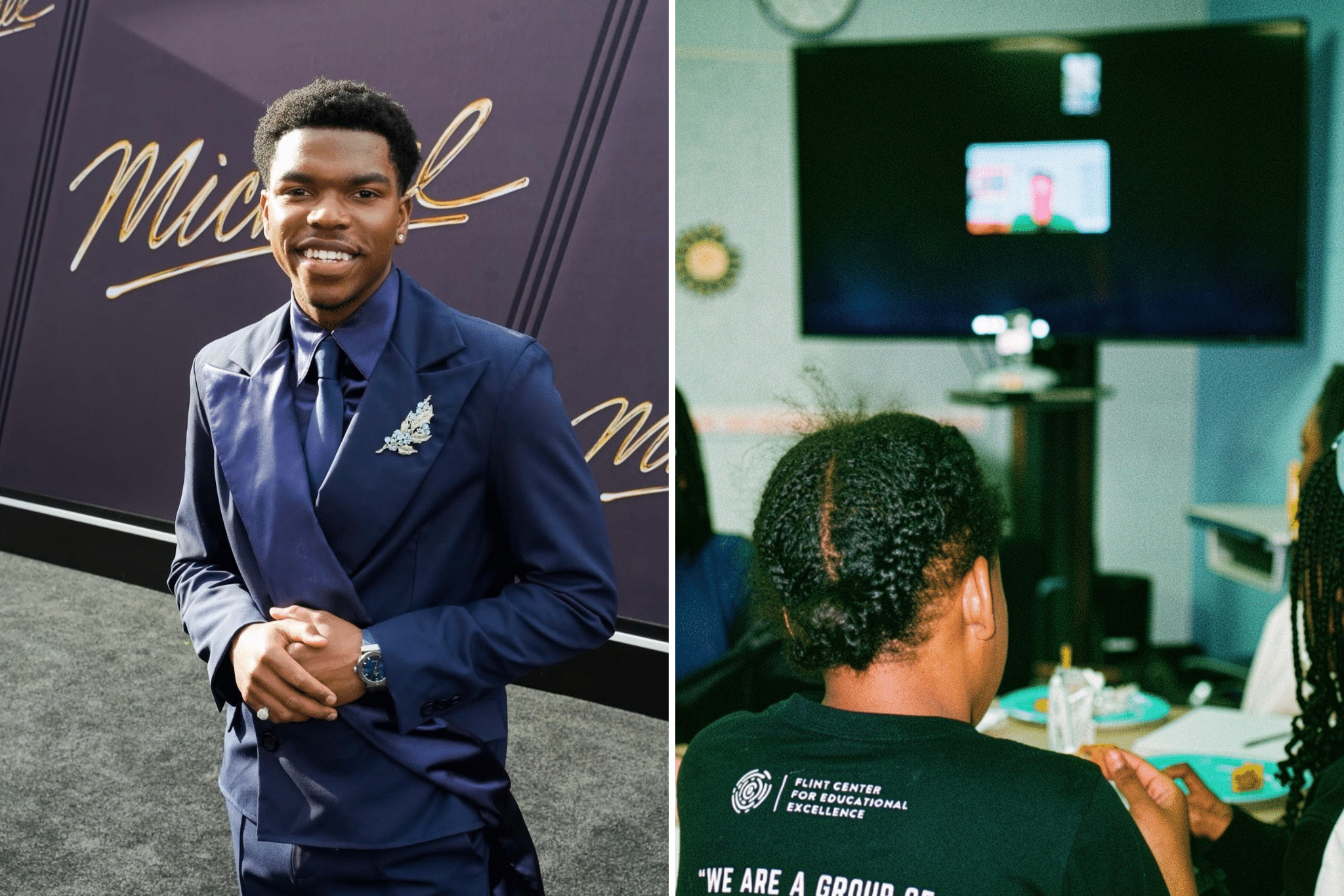
FLINT, Michigan — Before Judah Edwards answered a single question about portraying young Tito Jackson in the Michael Jackson biopic, the room had already become exactly what childhood is supposed to be: curious.
Eight students from the Thrive On Afterschool program at Flint Cultural Center Academy leaned toward their microphones, some smiling, some fidgeting, all trying to decide who would go first.
There was no polished introduction or carefully rehearsed question. Just students excited to meet someone who, despite finding success in Hollywood, wasn’t much older than they were.
For Edwards, the interview was different, too.
“I usually have adults asking me questions,” he said with a smile. “I figured it’d be fun for the younger people to ask questions. I think y’all have some insightful stuff to add today.”
He wasn’t wrong. The students didn’t care about asking the “right” questions. They wanted the real ones.
“How did you get the role?” One said. “Has anybody recognized you in public?” Another chimed in. “Will you be in the second movie?” Voiced a third.
One even wanted to know how many friends he has.
The conversation bounced effortlessly between Hollywood and childhood, reminding everyone on the Zoom call that sometimes the best interviews happen when children are allowed to simply be children. When asked how he landed the role of young Tito Jackson, Edwards didn’t jump straight to the exciting ending. Instead, he walked the students through the waiting.
He explained that the process lasted nearly six months. After submitting an audition tape, production came to a halt because of the Hollywood writers’ strike. For a while, he wasn’t even sure the opportunity would come back.
Eventually, it did. He flew to Los Angeles for callbacks, where the days were long and the competition was intense. There was dancing, improvisation, and multiple rounds of auditions before the final decision was made. Then he shared something the students probably didn’t expect to hear. During the dance portion of his audition, he kept making mistakes.

“I just kept messing up and messing up and messing up,” Edwards admitted. For a moment, he believed the opportunity had slipped away. Instead of sending him home, director Antoine Fuqua invited him to sit down and talk not about choreography or the script, but about music, comedians, and life.
“He really got to know me as a person,” Edwards said. “That gave me confidence leaving the audition.”
It’s a reminder that talent may open a door, but authenticity often keeps it open. And as the questions continued, Edwards pulled back the curtain on an industry many of the students had only seen from the audience. He explained that actors often receive auditions through agents and managers, but talent alone isn’t enough.
“Acting is really about connections as well as hard work,” he said. “You want to make sure that you know the right people, that you make good impressions, that you show your face.”
Whether the students pursue acting, journalism, athletics, or something entirely different, the advice felt universal. When asked what comes next, Edwards made it clear that success hasn’t changed his priorities.
This Fall, he’ll attend Hampton University to study marketing and business while continuing to pursue acting. “No matter how successful you get, education is definitely important,” he told the students. “There’s never a stage of your life where it’s not important.”
With that, the room shifted naturally between serious moments and laughter. One student asked if people recognized him in public. Another wanted to know if he would appear in the second part of the Michael Jackson film. Then came perhaps the most anticipated question of the afternoon.
“Can you moonwalk?”
Edwards laughed. He explained that he learned the famous dance when he was just four or five years old after watching Michael Jackson perform “Motown 25” with his father. For an entire week, he practiced around his grandmother’s house in New Orleans until he figured it out.
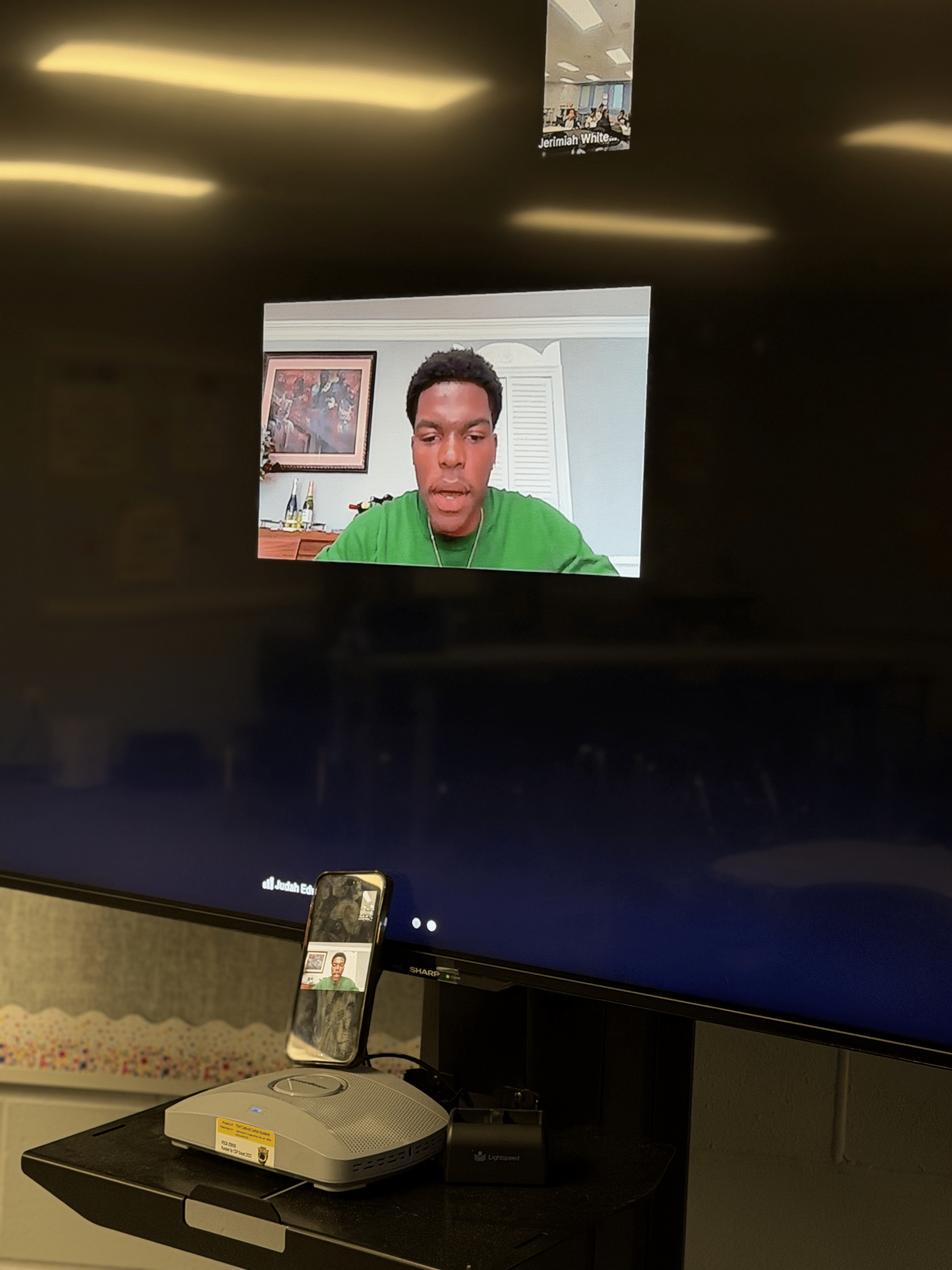
These days? “I might be a little rusty,” he joked, and the students laughed right along with him.
As the interview continued, the conversation drifted toward favorite superhero movies, theater, basketball, and even Roblox. There was no pressure to stay on script. Instead, Edwards met the students exactly where they were.
When he learned that several of them enjoyed theater, he encouraged them to stick with it, explaining that community theater had helped shape him as an actor and given him a place to grow alongside people who shared the same passion.
Towards the end of the conversation, the questions became more reflective. If he could speak to his fifth-grade self, what would he say?
“Do as much as you can,” Edwards answered. “Go out, experience things, learn as much as you can.”
He reminded the students that there are no stupid questions and encouraged them to stay curious while adults are still eager to teach them. “When you grow up,” he said, “it’s time to put whatever you learned to use.”
Then came one final question that seemed to tie the afternoon together. What would he tell a student who doesn’t think they’re talented enough?
Edwards paused before answering. He explained that natural ability only goes so far. Passion is what keeps people practicing long after everyone else has gone home.
“My mom had something she used to say,” he began. “‘Hard work beats talent when talent stops working hard. The most important thing is that you love it. If you love it, you’re naturally going to work hard at it.”
As the Zoom call came to a close, the students weren’t quite ready to say goodbye.
“You have to come see us!”
“You have to come next week!”
Edwards laughed and promised, “I will definitely pull up.”
Whether that visit happens next week or sometime down the road, the invitation said everything about the afternoon. Before logging off, Edwards shared one last piece of advice, a phrase his mother often reminds him of.
“What’s for you is for you.”
For eight students in Flint, it may have been the most important line of the entire interview.
Stay connected with Judah Edwards by following him on Instagram, checking out his interviews, or exploring his work on IMDb.
A special thank you to the staff, students, and parents of the Thrive On Afterschool Program for welcoming Flintside and allowing us to capture this unforgettable experience for Flint’s youth.
Author

Related Articles

Genesee Career Institute to Host Meet the Teacher Event
Genesee Career Institute hosts Meet the Teacher event Aug. 19 to help students prep for new school year.