
From Landscapes to Impossible Worlds: FIA Invites Visitors into the Mind of M.C. Escher
FIA invites visitors into M.C. Escher’s world of impossible spaces, prints, and patterns.
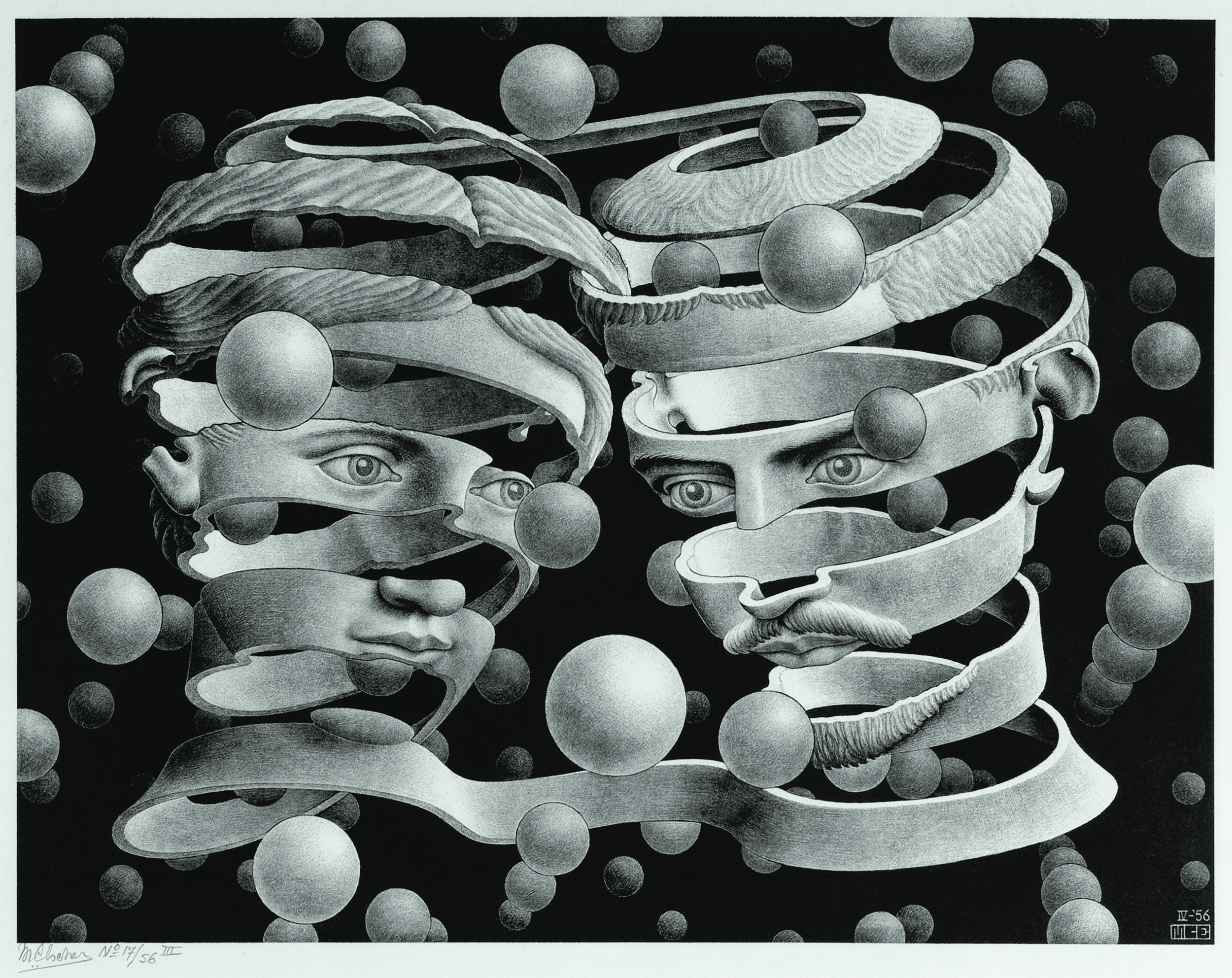
FLINT, Michigan — Visitors to the Flint Institute of Arts this summer can step into the fascinating world of one of history’s most recognizable artists through M.C. Escher: Infinite Variations, on view through Sept. 13.
The exhibition features more than 140 works by Dutch graphic artist Maurits Cornelis Escher, including woodcuts, lithographs, drawings, studies, and original printmaking materials.
Drawn from the world’s largest private traveling Escher collection, the exhibition traces Escher’s artistic journey from his early landscapes and architectural studies to the visually perplexing prints that made him an international icon.
While many visitors may be familiar with famous works such as Relativity and Drawing Hands, FIA Associate Curator Rachael Holstege says the exhibition offers an opportunity to understand the artist behind those images and how his distinctive style evolved over decades.
“One of the things I hope visitors discover is that Escher’s famous impossible worlds did not emerge out of nowhere,” Holstege says. “His artistic evolution was gradual and deeply rooted in observation, and he continued to develop his entire life.”
The exhibition begins with landscapes, architectural studies, and scenes inspired by Escher’s travels. Over time, those observations evolved into explorations of pattern, perspective, and spatial relationships.
“Seeing the full arc of his career allows visitors to understand that the mathematically inspired works for which he is best known grew directly out of lifelong curiosity,” Holstege says.
Although he often described himself as a mathematician rather than an artist, Holstege notes that Escher had no formal mathematical training.
Instead, he became fascinated by concepts such as symmetry, tessellations, and infinity, finding ways to transform abstract ideas into compelling visual experiences.
“The exhibition demonstrates that Escher occupied a unique space between artistic creativity and mathematical inquiry. Visitors can see how logic and imagination worked hand in hand in his practice,” Holstege says. “Many viewers grew up with Escher posters on their walls, so there is a sense of nostalgia for some. Others who may be new to the artist are immediately captivated by his impossible worlds, as well as his skill and precision in printmaking.”
While visitors will see some of Escher’s best-known works, Holstege encourages them to spend time exploring the pieces that came before them.
“There have been very few artists who have created a body of work that is so intellectually challenging, accessible, and engaging, so people of all ages can resonate with his work and legacy. Much of the exhibition leads up to these iconic works,” she says. “Through early landscape drawings and original printmaking materials, guests will see Escher’s skill as a printmaker and his interest in architecture and the natural world.”

The FIA designed the exhibition chronologically, allowing visitors to follow Escher’s development from his earliest works in the 1920s to Snakes, the final print he worked on before his death in 1972.
“Our goal was to create an experience that encourages visitors to view each chapter of Escher’s life and understand how he got to be one of the most well-known printmakers of the 20th century,” Holstege says.
To enhance that experience, the museum incorporated angled walls, paint treatments, and wallpaper inspired by Escher’s imagery to create a sense of wonder throughout the galleries.
The exhibition also includes the FIA Exploration Annex, which features interactive learning opportunities and a collection of psychedelic black-light posters inspired by Escher’s work during the 1960s and 1970s.
“The section devoted to the black light posters highlights an unexpected chapter in Escher’s afterlife, showing how countercultural movements in the 1960s and 1970s embraced his imagery,” Holstege says.
Visitors interested in learning more about Escher’s artistic development can attend Coffee with a Curator: M.C. Escher: Early Experiments to Infinite Variations on Monday, July 13, at 10:30 a.m. The free lecture, led by Holstege, will explore the artist’s progression from his early experiments to the groundbreaking prints that challenged viewers’ understanding of space, perspective, and reality.
M.C. Escher: Infinite Variations remains on view at the Flint Institute of Arts through Sept. 13.
Author

Related Articles

Flint Rep Opens Its Season with August Wilson’s Ma Rainey’s Black Bottom
Flint Rep opens its season with August Wilson’s Ma Rainey’s Black Bottom, Sept. 18.

FIA Patio Nights bring live music, art and community together on summer Fridays
FIA’s Patio Nights are offering Flint and Genesee County residents and families a new way to enjoy Friday evenings.

Songwriters’ Round brings Nashville-style storytelling to Flint’s music scene
At Totem Books, Mikey Abbaspour pairs Flint musicians with the stories behind their songs.