
Step Afrika! Brings Rhythm, Heritage, and History to Flint
Step Afrika! brings the cultural rhythm of stepping and African American heritage to Flint.

FLINT, Michigan — When we think about our everyday lives—how we move through the world and how we express ourselves—one of the most essential things we do is move. Through movement, we walk, run, dance, and sometimes, we step.
Not simply stepping one foot in front of the other, but stepping in a way that honors heritage, history, joy, and purpose.
For more than three decades, C. Brian Williams has dedicated his life to sharing that movement with the world through his dance company, Step Afrika!, which he founded in December 1994. Over the last 32 years, the company has grown into what is widely recognized as the “world’s leading authority on the art form of stepping.”
On a busy afternoon during the company’s Evolution Tour, Williams took the time to explain the cultural significance of stepping to a curious young person.
“It’s a percussive style of dance where our bodies are both the dancer and the instrument,” Williams said. “Stepping is an African American dance form created by historically Black fraternities and sororities.”
Williams noted that the art form’s roots stretch back even further.
“This art form has origins in African American culture dating from the arrival of Africans into the country in the 1500s.”
Williams himself was introduced to stepping while pledging his fraternity, Alpha Phi Alpha Fraternity Incorporated, at Howard University in Washington, D.C. The experience connected him to a deeper understanding of culture and history—one that ultimately shaped his life’s path.

For Williams, stepping is more than performance. It is a form of preserving cultural memory.
“Whenever you see the art form of stepping, and you see African Americans use their body as instruments, what you’re witnessing is a cultural memory,” he said.
While people often speak about muscle memory or the body “keeping the score,” Williams believes stepping goes beyond those ideas. Through the movements, rhythms, and traditions of the dance, performers carry their heritage forward.
That cultural connection is closely tied to the Divine Nine, the nine historically Black Greek-letter fraternities and sororities that make up the National Pan-Hellenic Council. Williams emphasized that those organizations are reflected within the company itself.
“The artistic director of Step Afrika! is a member of Delta Sigma Theta Sorority Incorporated,” he said. “And in the company, some of the dancers are members of Alpha Kappa Alpha Sorority Incorporated and Phi Beta Sigma Fraternity Incorporated.”
Beyond performance, service and education remain central to the company’s mission. Like the organizations that helped shape stepping, Step Afrika! places strong emphasis on community engagement.
“I’d like to say that as much as Step Afrika! are world-class athletes on the stage, they are also excellent teaching artists who go into K–12 schools everywhere to serve,” Williams said.
That mission of outreach and cultural education will continue when Step Afrika! comes to Flint on Friday, March 13, at the Whiting Auditorium. Although the company has visited Flint before, this performance will mark its first time performing at FIM Whiting Auditorium. Williams said returning to Flint is meaningful for the company.

“We want to go wherever the people are, and the people are in Flint,” he said. “Step Afrika! is an organization that wants to serve all of our communities.”
The company’s performances blend African traditions with contemporary expression, highlighting how movement can connect the past with the present.
“So what I love about people seeing a Step Afrika! performance is that we’re seeing the African body express itself in a very new way, but it is still informed by African culture and traditions,” Williams said.
Those traditions include influences such as the Zulu dance of South Africa, performed with high energy and rhythmic drumming, as well as other cultural movements passed down across generations.
When asked who should attend the show, Williams made it clear that the performance is designed for everyone.
“Step Afrika!’s performance is designed to be a family performance,” he said. “Everyone in the community—including Flint’s Divine Nine members, youth, and families—is invited to come and experience a physical manifestation of culture and heritage.”
Tickets for the performance can be purchased through FIM’s website, and additional information about the company is available on the Step Afrika! website.
Author

Related Articles

Free “Paris Is Burning” Screening and Panel Coming to FIM Capitol Theatre Oct. 15
Free screening of ‘Paris Is Burning’ with a panel discussion comes to Flint’s Capitol Theatre Oct. 15.
Vehicle City Film Festival Set to Celebrate Michigan Filmmakers and Flint’s Film Community
Vehicle City Film Festival brings screenings, talkbacks & awards to Flint Oct. 1-3.
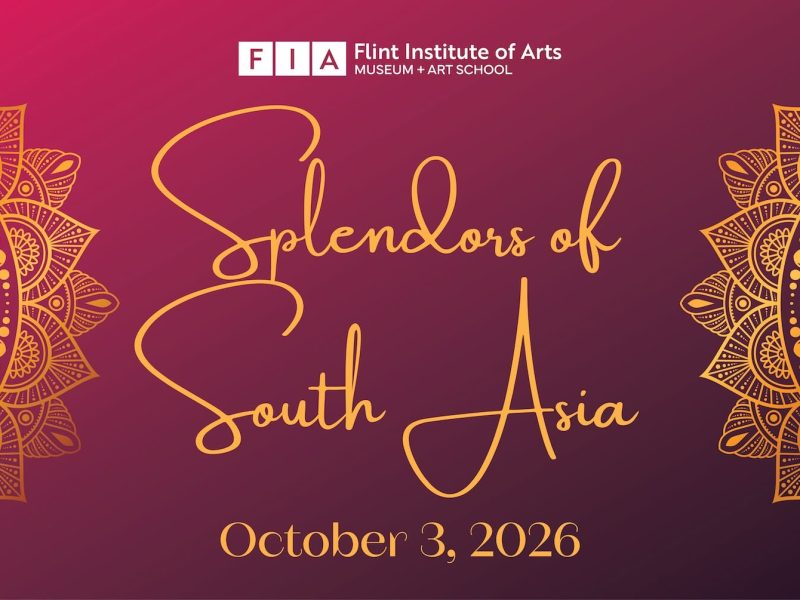
FIA to Host “Splendors of South Asia” Cultural Celebration
FIA hosts ‘Splendors of South Asia’ cultural celebration Oct. 3 with food, music and dance.