

Flint’s liability to multiple water suppliers has residents confused and angry
Residents lament new rate increases and how Flint has replaced less than 20% of its main water pipelines.
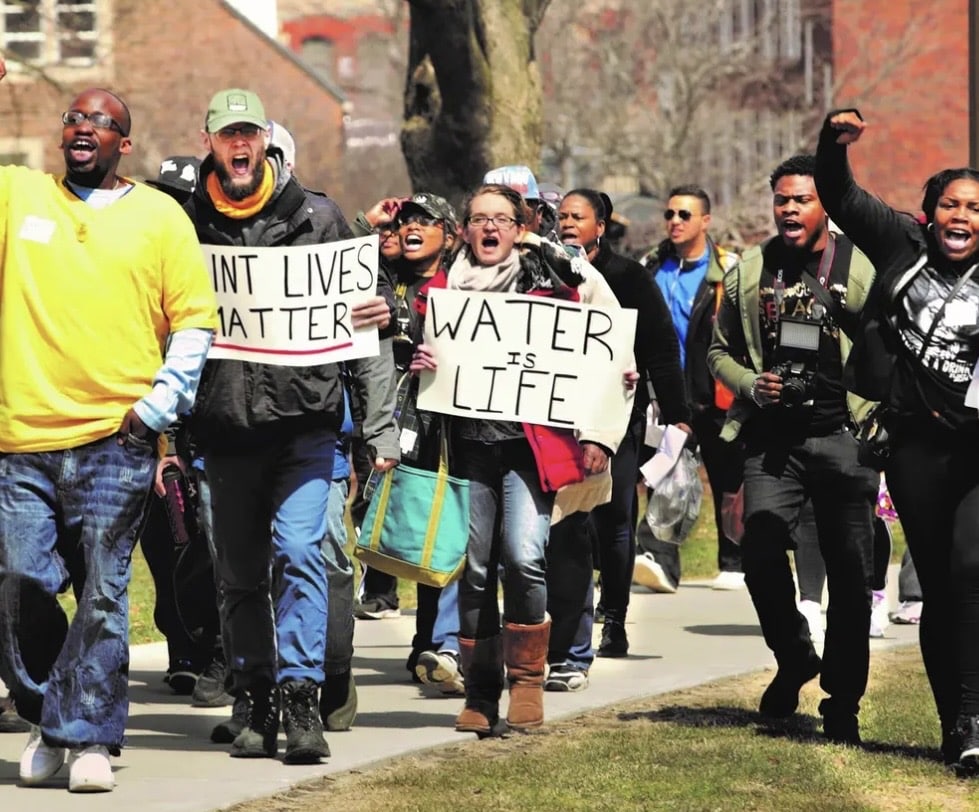
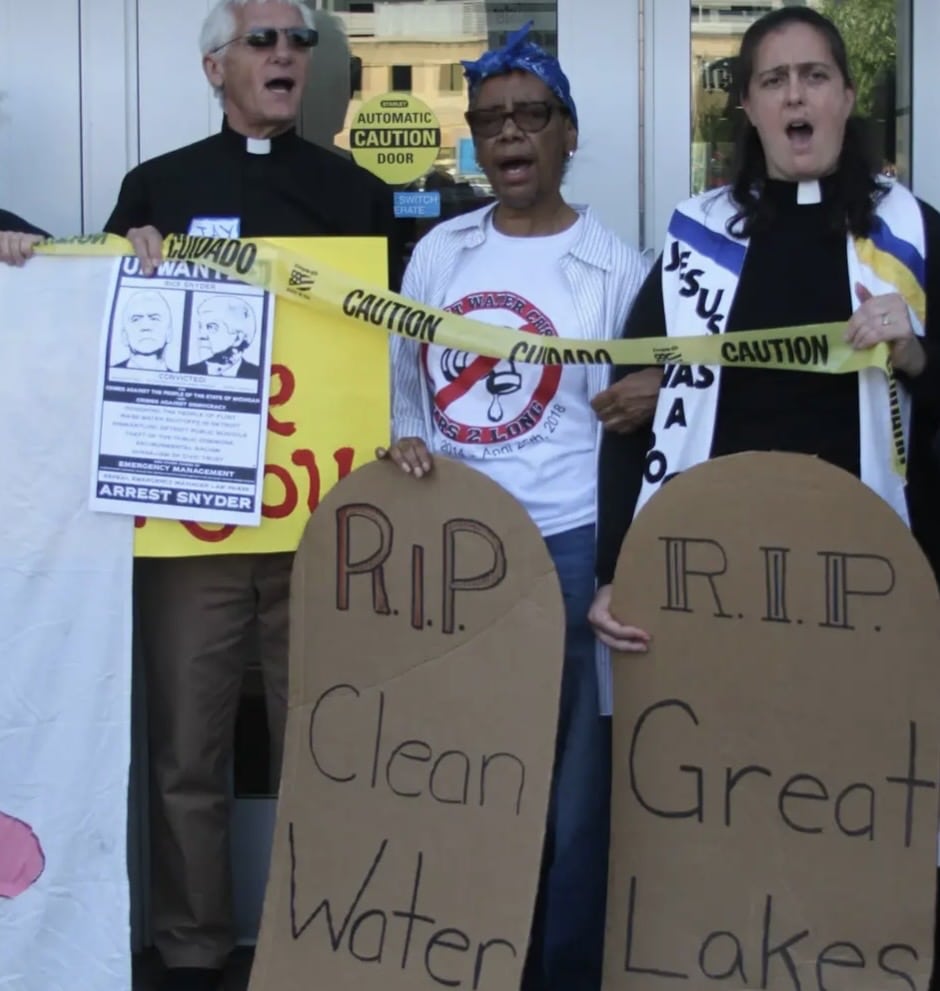
FLINT, Michigan — Claire McClinton entered the back of a police car with her hands cuffed behind her back. The yellow caution tape she and her fellow protesters used to section themselves off in front of the state Capitol building lay on the ground.
Her “R.I.P. Clean Water” tombstone, made out of cardboard, had been confiscated. Yet somehow, her white shirt remained bright and clean, bearing the words that summed up the demonstration: “Flint water crisis: four years too long.”
That was in 2018, when McClinton was among a group of 30 demonstrators arrested for resisting arrest and obstruction. The charges were later dropped.
“It’s disheartening,” McClinton, 77, said. “You fight for things, and you think you’re making some headway – and then no. It’s not what you think it is. It just really exposes how the system works.”
McClinton, a retired General Motors worker and longtime activist, has led the charge in securing access to clean water for residents during the water crisis and beyond. She has also been an instrumental member of activist groups that have pushed back against Flint’s various emergency management stints over the decades.
Her latest fight involves leading groups of activists working to get Flint residents off the hook for water charges from multiple companies. These charges are consolidated into one monthly bill that residents receive. Flint’s primary water supplier is the Great Lakes Water Authority (GLWA), which the city paid $11.7 million last fiscal year.
Flint’s backup water supplier is the Karegnondi Water Authority (KWA), which the city owes more than $80 million in bonds as of 2024 for pipeline construction costs. The City of Flint also funds payments to the Genesee County Drain Commissioner (GCDC) for maintaining KWA as a backup supply. This arrangement is part of the fallout from the 2014 water crisis.
“It’s just so corrupt,” McClinton said.
“It’s really a slap in the face,” said Keishaun Wade, head of the Flint Housing Union.
These expenses add to residents’ frustrations about rising water rates and reopen wounds tied to the origins of the water crisis and its aftermath—particularly because less than 20% of main water pipeline replacements have been completed to date.
Flint residents pay GLWA directly and GCDC indirectly
Flint is the only city in Genesee County that does not receive water from KWA, according to KWA’s website. Flint signed a 30-year contract with GLWA and finalized a contract with KWA in 2017. The city reconnected to what is now GLWA in 2015 following pressure to end the water crisis. Flint originally entered the KWA deal in 2013 with GLWA, GCDC, and the Michigan Department of Environmental Quality.
The deal required Flint to pay about $100 million of KWA’s $300 million pipeline construction costs. The city issued bonds to cover the expense.
According to the contract, GLWA credits Flint’s wholesale billing account with 97% of its KWA construction bond debt payment, and Flint pays the remaining portion. However, both GLWA and the City of Flint said in separate statements that GLWA also covers Flint’s portion. With these credits applied, Flint paid GLWA $7 million last fiscal year, according to GLWA.
“The City of Flint receives a reduction of their annual charge equal to their debt service owed to KWA,” GLWA said in a statement to Flintside News. “GLWA funds the KWA debt service.”
“GLWA pays KWA on behalf of the city. The city makes no direct payments to KWA,” the City of Flint said in a statement to Flintside.
The contract states that the reduction in payment also reflects GLWA’s purchase of Flint’s water rights to KWA.
RELATED: Water lab in Flint Development Center to test water for Flint residents
From 2021 to 2024, the City of Flint’s annual comprehensive financial reports state that “the City pays the debt service payments to KWA on a monthly basis,” listing payments ranging from $2.3 million to $2.5 million each year. The reports also indicate that Flint received or was awaiting between $4.3 million and $5 million annually from GLWA.
GLWA’s annual comprehensive financial reports, along with data obtained by Flintside for the same period, show that GLWA credited Flint’s account with between roughly $6 million and $7 million each year.
GLWA confirmed its figures in a statement to Flintside and said that the City of Flint would “be the best source to reconcile those amounts.”
The City of Flint did not respond to Flintside’s follow-up request for comment on its accounting.
“There is not always clarity on what Flint is paying in a given year to what source,” said Louise Seamster, a professor at the University of Iowa whose forthcoming book, “The Flint Water Coup: Debt at the End of Democracy,” digs into the financial and political causes of the water crisis.
“They’re often not marked specifically as what the payments are for,” she said.
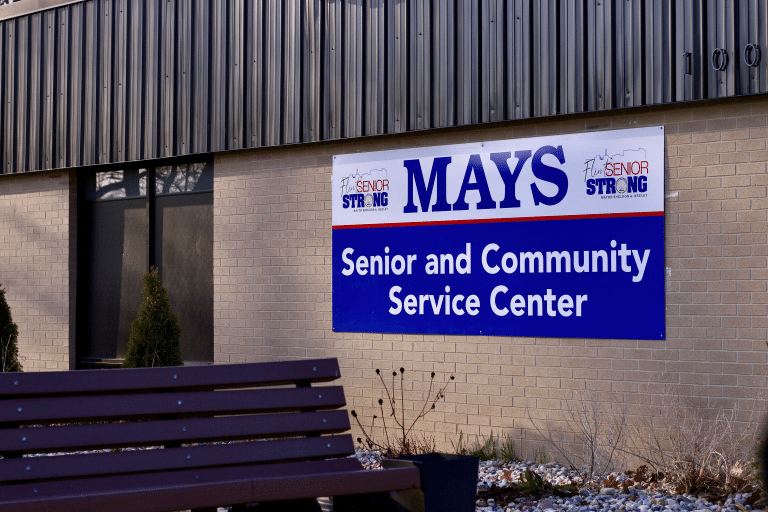
City Council voted recently to subpoena Mayor Sheldon Neeley for more information regarding the city’s budget and how money is spent, FlintBeat reported. Calls for greater budget transparency peaked amid a separate matter regarding funding for the Eric B. Mays Senior and Community Service Center, the outlet reported.
GLWA’s invoice to Flint also includes charges from GCDC, as outlined in the contract and confirmed by GLWA to Flintside. These “pass-through” charges, as the contract calls them, are what GCDC bills Flint for operating and maintaining a segment of KWA as a backup source. When Flint pays its GLWA invoice, it indirectly pays GCDC as well.
Jeffrey Wright, the Chief Executive Officer of KWA and the Genesee County Drain Commissioner, said in a statement to Flintside, “those who continue to push conspiracy theories and falsehoods regarding KWA and GCDC over a decade later do a disservice to those impacted by the water emergency.”
The lawsuits previously brought against Wright were dismissed in 2023.
A 2016 order from the Environmental Protection Agency requires Flint to maintain a backup water supply.
“We had to rely on KWA water a few years ago when some GLWA pipes burst. It would have been catastrophic without the backup source,” said 2nd Ward Councilwoman Ladel Lewis.
Flint retains 3% of its interest in KWA as an “intangible right to use asset under government accounting standards,” the contract states.
GLWA credits are expected to cover $79 million of Flint’s remaining $81.5 million KWA bond debt by 2045, according to Flint’s 2024 annual comprehensive financial report.
“I think it’s a shame if [KWA] gets a dime from any citizen of Flint,” said Peter Hammer, an economist and the Director of the Damon J. Keith Center for Civil Rights at Wayne State University’s Law School. Hammer submitted written testimony back in 2016 advocating for Flint.
“This deal still mystifies me. The financing behind the KWA, the policy, the rationale [for entering the contract], who holds the money is, in my mind, the biggest unresolved question of the crisis,” Hammer said.
Flint’s water contracts have a ‘booby trap in the deal’
The deal has been highly scrutinized over the years.
“The KWA/GLWA deal I inherited was not in the best interest of the Flint residents. It was more in the best interest of those — the State — that were taking advantage of us, the Flint people… The City Council and Mayor sold our pipeline, and my thoughts then and now remain the same: what happened in Flint was criminal,” said former Mayor Dr. Karen Weaver in a statement to Flintside. She was in office from 2015 to 2019.
RELATED: Flint lab aims to rebuild community trust in the water
In 2010, Flint bought water from the Detroit Water and Sewage Department (DWSD), which is now GLWA. Then-Mayor Dayne Walling was chairman of KWA, according to an October document he signed at a special meeting that month.
In that same meeting, Walling also signed off on Wright becoming CEO of KWA, according to a separate resolution. Together, they led the charge to get KWA off the ground, securing $10 million in initial grants and bonds.

By March 2013, then-Emergency Manager Ed Kurtz and the city’s attorney, Peter Blade, authorized the City of Flint to enter a capacity contract with KWA, according to a resolution signed by each of them.
The agreement committed Flint to paying for a portion of the pipeline’s construction costs. At the time, Flint was in a year-to-year contract with DWSD for water. The City Council voted to stop using Detroit’s water to save money while the pipeline was being built.
“While it was built, we get switched to the not so good stuff,” McClinton said, referring to how the Flint River became the water source for the city on April 25, 2014.
RELATED: Reclamation of the Flint River: A local perspective on our river
Hammer said, “The decision to participate in the KWA pipeline at a time when the city had no finances to speak of in terms of paying for it, and to do it at the behest of interest, still somewhat obscure, but really compounded by Mr. Wright, for their own private ends. [It screamed]: Who cares what happens to the City of Flint, either financially, which was the concern at the origin, or the whole cascading events that led to the lead poisoning in the Flint water crisis.”
Wright said in written testimony back in 2016 that Flint would use its water fund to pay the debt. It had $50 million in the fund at the time, he wrote. Wright signed the bond agreement for both KWA and GCDC in 2013, according to a copy of the agreement obtained by Flintside.
“When one person is the buyer and the seller of this water source, they have automatically more of a window into what’s happening,” Seamster said.
Other officials also signed additional parts of the 329-page document. Walling, who was mayor from 2009 to 2015, signed the agreement for Flint. He did not respond to Flintside’s requests for comment.
“It’s like everybody from the bottom of the line to the top of the line take a cut while Flint residents bear the brunt,” Seamster said.
When the City Council voted to stop using Detroit’s water to save money while the pipeline was being built, it did not vote on which water supplier to switch to in the meantime, MLive reported.
The outlet added that the emergency manager at the time, Darnell Earley—who was appointed by and reported to then-Governor Rick Snyder—proposed the Flint River as the new source, and Snyder approved it.
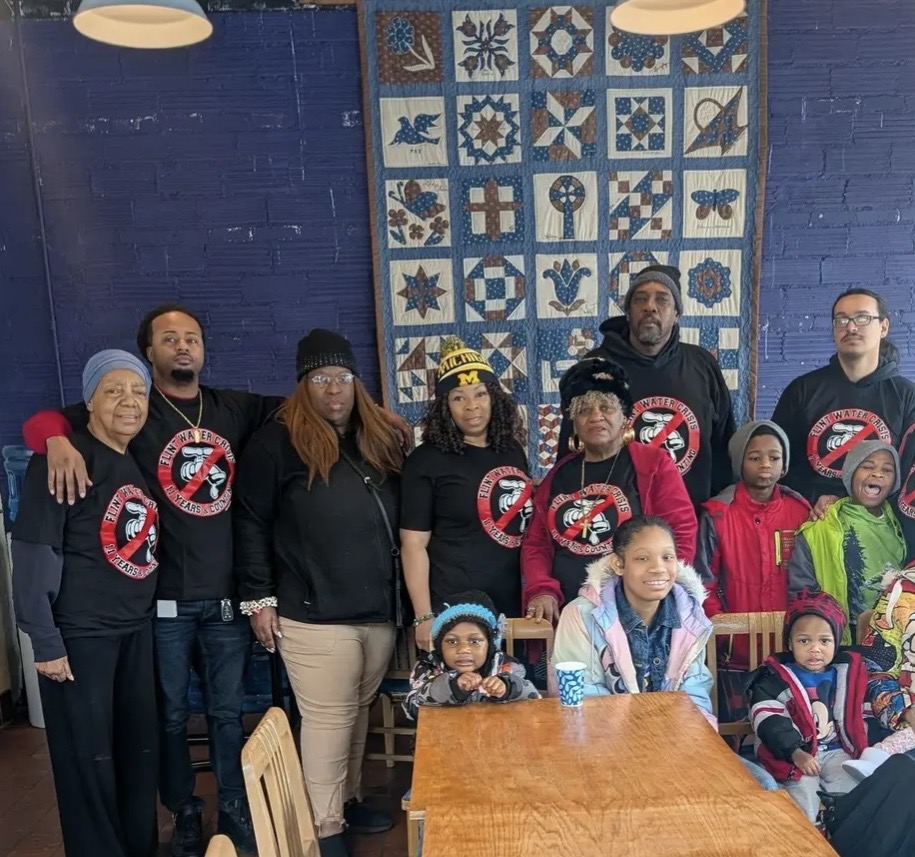
“Without emergency management, the chances of them switching the water to the Flint water would have been very hard because you would have had to go through the community, the city council,” McClinton said. “If Wall Street leeches hadn’t came in here trying to build a new pipeline to make money and seize control of the water, then we wouldn’t have never gotten in this poison situation.”
The master KWA-GLWA-Flint-GCDC agreement, signed in 2017, included amended clauses that penalized Flint if it attempted to exit the deal within the first few years. It stipulated that GLWA could revoke past and future credits to the city if a “Flint challenger” or a third party legally “challenges the validity of the Contract or the authority of Customer to enter into the Contract, or the authority of Customer’s representative to execute the Contract.”
“They basically put this booby trap in the deal where if people start trying to pull on it, it explodes,” Seamster said.
RELATED: Mapping Flint: Flint River Watersheds
The statute of limitations on the clauses expired in 2023, when GLWA returned about $10 million in a security deposit (including interest) to Flint, which had previously enforced the clauses. The contract also guarantees that Flint can appoint members to KWA’s board in proportion to its shared percentage of the pipeline. Neeley, Lewis, and Judy Priestley (4th Ward) are three of the 14 board members.
“Once you get into these sort of closed-door, behind-the-scenes efforts, public transparency may not be the only motive,” Hammer said, referring to the potential for backroom deals.
The City of Flint said in a statement to Flintside, “the board, as originally designed by Genesee County Drain Commissioner Jeff Wright, includes leaders from the communities that initially invested in the project.”
Lewis said in a statement, “I was appointed by the mayor to serve at the beginning of my term. If my appointment was problematic, it would have been addressed years ago.”
Priestley did not respond to Flintside’s request for comment.
RELATED: Residents gather, renew calls for justice on 7-year anniversary of Flint water crisis
Flint’s water rates continue to rise
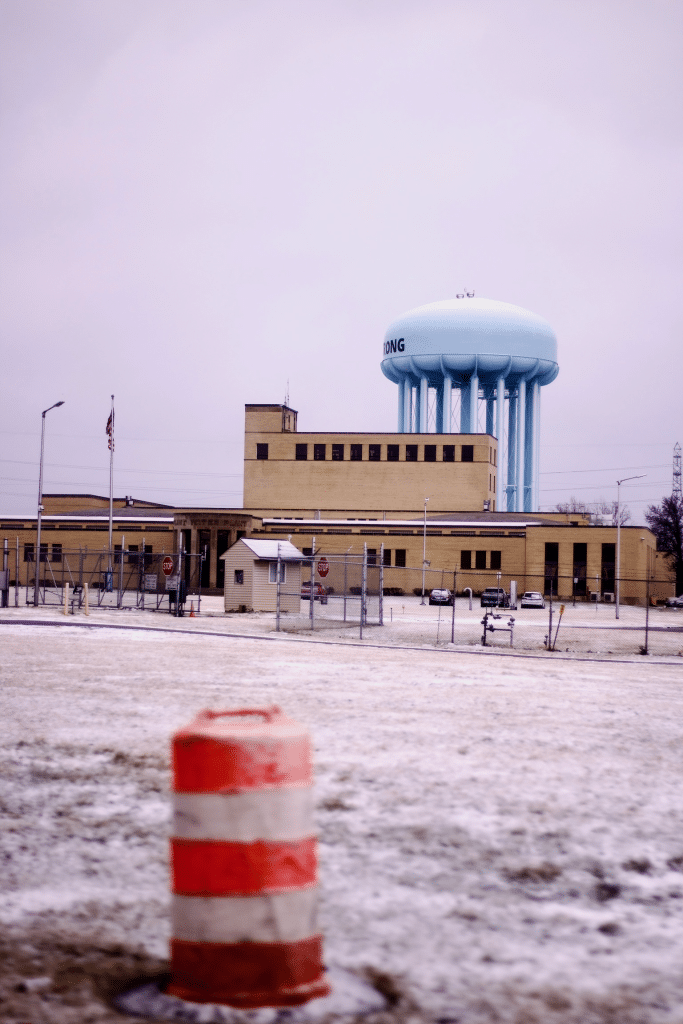
The average Flint residential water bill is about $110 per month, according to residents’ bills obtained by Flintside. In neighboring communities, residents in Grand Blanc and Davison report monthly fees of about $85 and $35, respectively. The national average is about $73 for a family of four. Flint’s rates were already higher at baseline prior to the water crisis.
“The Flint water system is hard because [it] was built for a city that’s probably closer to a population of 250,000 people compared to the 80,000 people or so [who live there] today,” said Chris Douglas, an economics professor at the University of Michigan – Flint. “The water system is all fixed costs, so the population shrinks and you’re trying to spread that fixed cost over fewer and fewer people, which is resulting in higher and higher water rates.”
GLWA has raised its water rate by nearly 12% over the last two years.
“GLWA establishes a charge for water service for the City of Flint using the same methodology as all other Member Partner communities,” GLWA said.
RELATED: Tests point to safe water in Thread Lake following dam breach
Neeley has vowed not to pass the increase on to residents, instead proposing a $1 million transfer from federal stimulus funds to cover next fiscal year’s increase.
However, the City Council rejected the proposal, calling it a band-aid fix when a long-term plan is needed, FlintBeat reported.
1st Ward Councilman Leon El-Alamin said he supports using remaining funds from the American Rescue Plan to help residents pay their water bills. He is also considering establishing an income-based subsidy plan.
About 15% of water customers do not consistently pay their bills, and the city has spent more than $8 million covering water costs for residents.
With GLWA becoming more expensive—and given that cutting costs was the original impetus for switching to the Flint River—many residents question why the city did not follow through on the initial plan to join KWA once the pipeline was completed in 2016.
Weaver said the switch did not happen during her administration because “the county’s water treatment plant wasn’t built with enough capacity to supply both the county and the City of Flint. Without the necessary capacity, it [KWA] was never an option.”
Some residents still want KWA to become the primary supplier, with GLWA serving as the secondary source. KWA has not increased its rates in nine years as of 2024, according to its annual report.
“The previous city council voted against it, disregarding the constant admonishing from the drain commissioner,” Lewis said.
Flint’s main water pipelines still need to be replaced
About 97% of lead service line replacements have been completed, according to the city’s progress report. Flint ranked in the 90th percentile for water quality in 2024.
“They’ve touted service lines being replaced, which is a small part of the total water infrastructure package. It’s under 20% of [mains] that has actually been replaced,” Wade said.
“The City of Flint has invested more than $200 million in upgrading the City’s water infrastructure and improving water quality. Major capital improvement projects are ongoing,” the city said in a statement.
El-Alamin said the replacement rate is due to “outdated infrastructure that needed to be replaced even before the water crisis.”
The Drinking Water State Revolving Fund report for fiscal year 2026 found that “the average age of water distribution system water mains is nearly 100 years old, and many water mains are still in need of replacement. An additional transmission main replacement will be necessary, as well as systematic replacement of the smaller system mains in the next twenty years.”
Smaller mainline replacements—including Court Street, Kearsley Street, Dupont Street, Atherton Road, Longway Boulevard, and Flemming Road between Pierson and Carpenter roads—are in need of replacement, are under construction, or have received patchwork repairs.
Other infrastructure improvements in the queue include replacing or removing multiple dams and installing or repairing pump stations across the city, the report said.
RELATED: This view of the Flint River will soon look $37 million better
“This has to be addressed, but not by placing another burden on the residents’ backs,” El-Alamin said. “The funding should come from grants and other funding streams.”
Designs for the Northwest Transmission Line’s replacement of 30,000 feet of pipe are about 90% complete, the report said, and construction may begin this fall. The line runs east to west across the north side.
The project was initially estimated to cost about $20 million in 2016, the report said, but it is now projected to cost closer to $30 million. Last month, the City Council considered applying for state funding or using money from the Drinking Water State Revolving Fund to cover the difference, MLive reported.
City Council is also considering an 11% rate increase to cover the costs.
Council members LaShawn Johnson (3rd Ward), Jerri Winfrey-Carter (5th Ward), Tonya Burns (6th Ward), Candice Mushatt (7th Ward), Dennis Pfeiffer (8th Ward), and Jonathan Jarrett (9th Ward) did not respond to separate Flintside requests for comment.
“I recognize the importance of maintaining infrastructure, particularly in wake of the water crisis. Residents have endured significant hardship and financial strain, which is why I cannot support any increase in our water rates,” El-Alamin said, calling for the State of Michigan to fund the city’s free bottled water program again until replacements are complete.
The State stopped funding it in 2018.
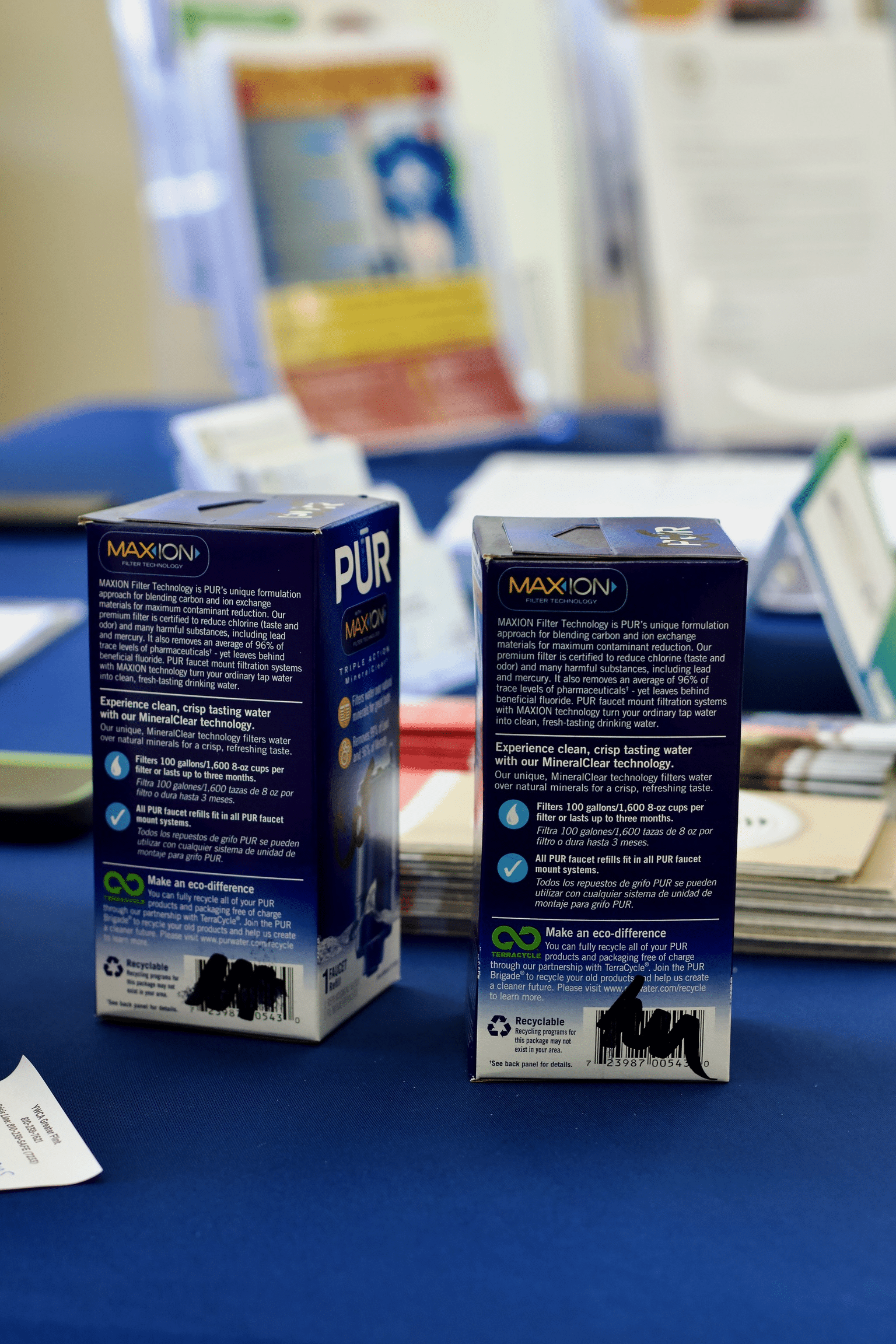
The City of Flint no longer offers free water, but residents can pick up free water filters at City Hall.
‘Just diabolical’: Flint activists are still fighting for water equality
McClinton lamented that KWA has never become Flint’s primary water supplier, despite the rigmarole residents went through to make it available to the rest of Genesee County.
“They were just like forget y’all. It’s just diabolical the way we have been treated,” she said.
RELATED: Flint neighbors harness social media to deliver water, medicine, and scavenger hunts
There is also lingering public distrust in Flint’s water.
“We still drink bottled water,” said Kenyetta Dotson, a mom and local advocate for access to clean water. “Although the [service] pipes are all [replaced], people still don’t trust the water. People are utilizing bottled water that oftentimes they can’t afford.”
Wade and McClinton said in separate interviews that their activist circles are developing a plan to organize residents against high water bills. They are also brainstorming ways to pressure the city to complete main pipeline replacements sooner—and without increasing rates.
“We got to understand this capitalist system and how it works. We’re going to have to change the system to get out from under this mess,” McClinton said. “I’ve learned from history: The people will have the last word. Y’all think y’all getting away with it, but you’re not.”
Author

Related Articles
In Pictures: Flint & Genesee Group Women’s Equality Day Luncheon
Photographer Natalia Avery captures Flint & Genesee Group Women’s Equality Day luncheon on Aug. 26.

Flint & Genesee to Host Women’s Equality Day Luncheon Featuring Local Leaders
Flint & Genesee hosts a Women’s Equality Day luncheon Aug. 26 with local women leaders speaking.

Desmond London Talks Fatherhood, Flint, and His Vision for the Gloria Coles Flint Public Library
New Flint Public Library director Desmond London talks fatherhood, his journey, and his vision for Flint.