

Flint Water Crisis settlement checks roll in as residents lament 12th anniversary
The first wave of payouts began December 2025 for property claims. Compensation for adult injuries is expected to start disbursing next month.
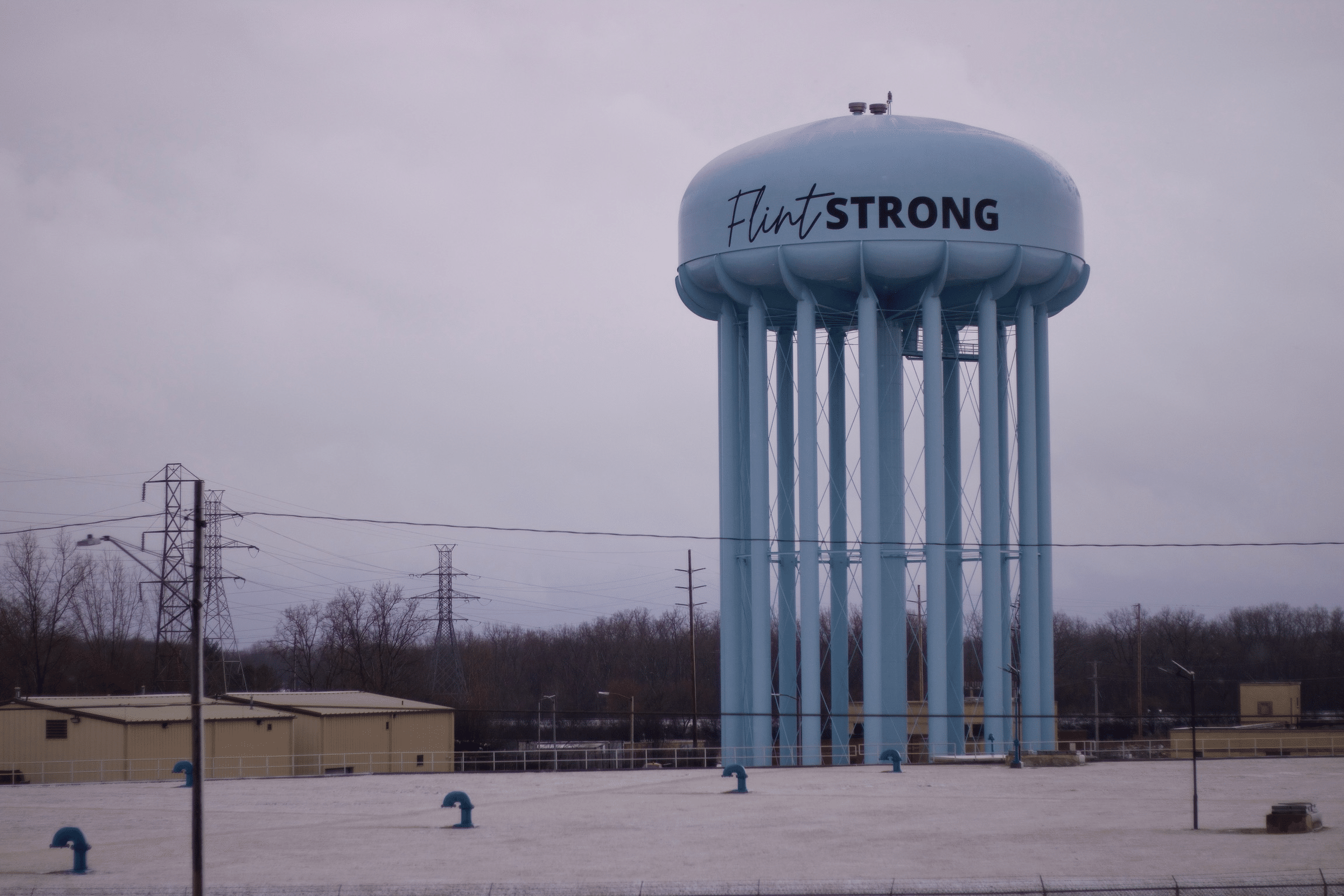
FLINT, Michigan — Kenyetta Dotson’s young daughters once loved taking relaxing baths in their home on the northeast side. That all changed in 2014.
“They’re still suffering from the trauma of brown water,” Dotson said of her then-14-year-old and 7-year-old. They lived off Dort Highway and Court Streets when the Flint Water Crisis started more than a decade ago, which is when they stopped taking baths to limit their exposure to lead-laced water.
Some of the lasting impacts of the water crisis in Dotson’s family also include her oldest daughter, now 25, living with high lead levels in her body that require her to be careful about her diet to stay healthy. Her youngest daughter, now 19, experienced developmental barriers during the formative stages of her life that are still present.
Saturday, April 25, is the twelfth anniversary of the Flint Water Crisis.
RELATED: Years after Flint water crisis, schools continue supporting students exposed to lead
“We still drink bottled water [now],” Dotson said of their lingering distrust. “People still don’t trust the water. We’re still in the crisis.”
Dotson filed for her daughters to receive a settlement payout and is waiting to hear back on whether they were approved in the injury categories. The first wave of settlement payouts for property claims began in December 2025. Compensation for adult injuries is expected to start disbursing next month.

Court documents show that just under 26,000 total claimants were approved for payment in November, and the bulk of compensation will go to people who were minors at the time of the crisis. Many residents are outraged over the years-long delay in receiving money, and the hoops they had to jump through to confirm their eligibility add to the frustration.
“I hope it’s an amount that truly compensates people for what all they’ve been through over the past 12 years and what they will continue to go through from this,” Dotson said. She has become an advocate for access to clean water in her role as a Community Outreach Specialist at Michigan State University – Flint, in the Department of Public Health.
Judge Judith Levy officially approved a $626 million settlement for the victims on November 21, 2021, in the U.S. District Court for the Eastern District of Michigan. The lawyers were paid about $47 million from the fund in 2023, according to court records.
How the $625 million Flint water crisis settlement is disbursed
A budget-cutting decision to switch water suppliers from a source in Detroit to the Flint River led to the 2014 crisis, exposing about 140,000 Flintstones to unsafe levels of lead and other contaminants once the Flint water corroded pipes throughout the city. The fallout includes 12 deaths and 90 illnesses from waterborne legionella bacteria, higher fetal death rates, lower fertility rates, learning disabilities and developmental delays, and a staunch public distrust in the current water available.
The settlement fund is divided into 30 categories, court documents show, with tiered payouts based on the severity of the documented claim.
The three lowest-paying categories – residential property damage, business property damage, and business economic loss – make up the first wave of payments, which began in December at $1,000 per parcel of property. About 8,200 claimants are in these categories, but a couple thousand haven’t been paid as of April 5 because they have not selected their payment method, according to the settlement website.
Just under 13,000 claims were submitted by adults in the six personal injury categories or in the property damage section, court records show. Another roughly 13,000 claims were submitted in the 21 minor injury categories. Each category required medical records, blood tests, bone scans, or property records that tied any losses to exposure to Flint water from April 25, 2014, to July 31, 2016.
“The whole settlement situation is jacked up. It’s just horrible how they’ve taken advantage of residents,” said Claire McClinton, a 77-year-old local activist who has been fighting for clean water and prompt settlement payments.
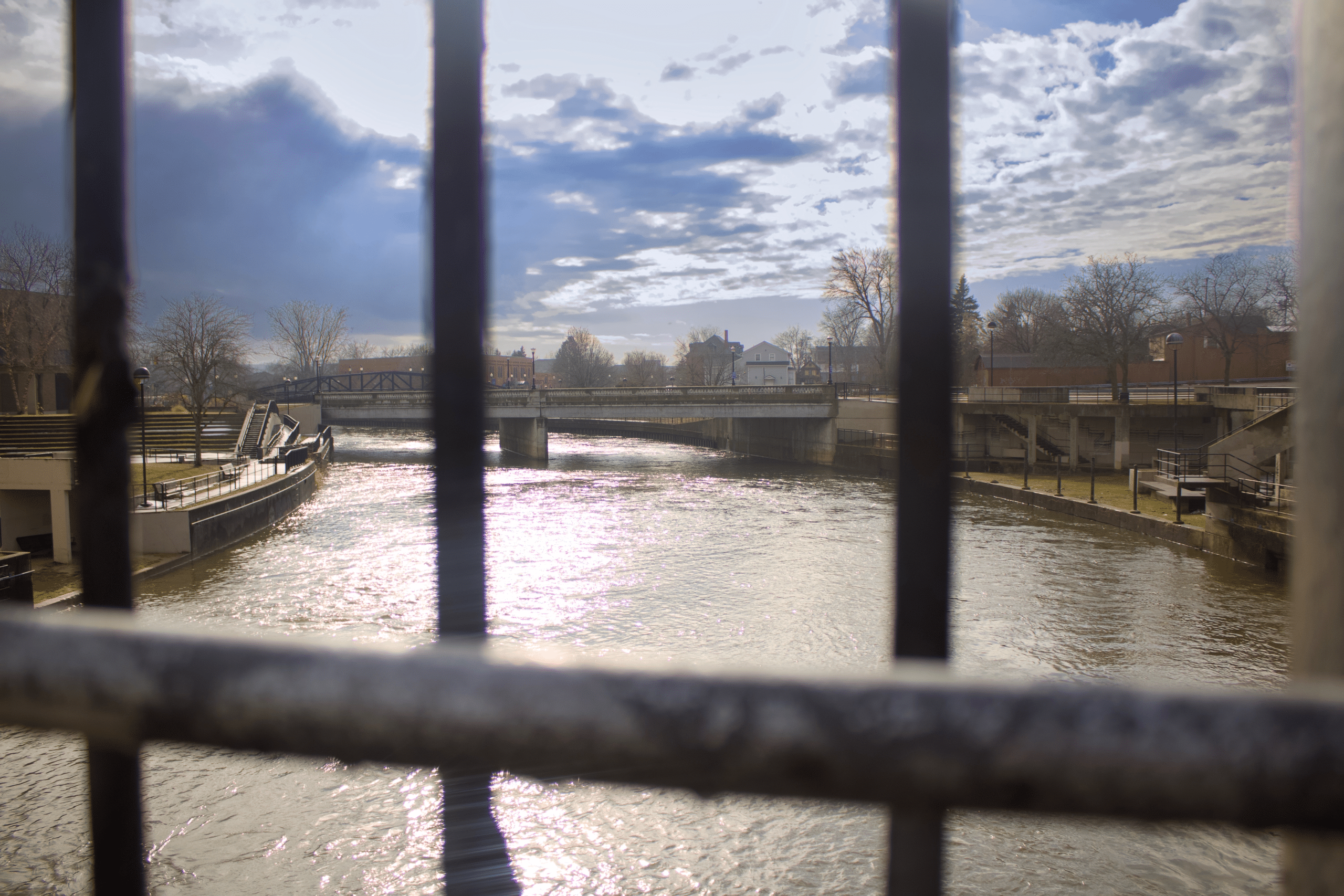
Flint water crisis settlement payments start rolling in
McClinton was approved for her $1,000 property damage claim, but hasn’t yet picked a payment method to receive the money.
“It’s so little, but I’m going to get it,” she said, adding that the payout does not cover the full amount of new water filtration systems that many people installed in their homes on their own dime.
Judge Levy called the $1,000 “modest” in an order she issued in February, describing the money as a reimbursement, which makes it tax-exempt next year if the tax preparer lists it as such.
McClinton and Dotson bemoaned in separate interviews how long it has taken to get paid.
“It should not have taken 12 years to make a decision and then to pay out the money that’s due to people who have been impacted by the water crisis and still to this day and going forward will have lead living within their body,” Dotson said.
RELATED: Flint Registry connects, supports, counts those affected by water crisis
Next in line for payouts are injury claims from people who were adults at the time of the crisis. About 2,500 are set to receive written notice of their approved payout amounts in May. After that group, current adults who were minors at the time of the crisis will receive notices and compensation, followed by claimants who are still minors.
Dotson’s daughters are in the second group.
“I’m just hoping it’s not a $2,000 check,” Dotson said, adding that her daughters intend to use their compensation to pay for college.
Chris Douglas, an Economics professor at the University of Michigan–Flint, said that one-time payments of any amount are unlikely to have much economic impact.
“The money is spent, and things go back to normal,” he said. “But, if it was like a $10,000 payment every year for the next 30 years or something, then you might see some sort of economic impact [in Flint] from people permanently increasing their spending.”
RELATED: Flint & Genesee Economic Alliance awards grants to 25 local small businesses
Dotson and McClinton lamented in separate interviews that it is “not fair” and “pitiful” that the lawyers were paid before residents.
Flint Water Justice, the legal team representing Flint residents, is comprised of several different law firms that shared the roughly $47 million payment that Judge Levy ordered to them in 2023 for expenses and fees. Levy capped their total payout at 25% of the settlement amount after other expenses are subtracted.
The group of attorneys filed to receive more, including a portion of the interest that the settlement fund has been collecting, but an appeals court denied their claim.
Flint Water Justice includes Theodore J. Leopold of law firm Cohen Milstein Sellers & Toll PLLC; Michael Pitt of Pitt McGehee Palmer & Rivers PC; Reed Colfax of Relman Colfax; Hunter Shkolnik of Napoli Shkolnik PLLC, and Corey Stern of Levy Konigsberg LLP. A full list is available on flintwaterjustice.com.
The group did not respond to Flintside’s requests for comment.
“You need the lawyers or you’re not going to get the settlement, so it becomes a matter of public policy and for the interest of the people who are harmed to make sure there’s an adequate incentive structure to get [lawyers] to represent people,” said Peter J. Hammer, the Director of the Damon J. Keith Center for Civil Rights at Wayne State University’s Law School.
Hammer submitted written testimony back in 2016 advocating for Flint.
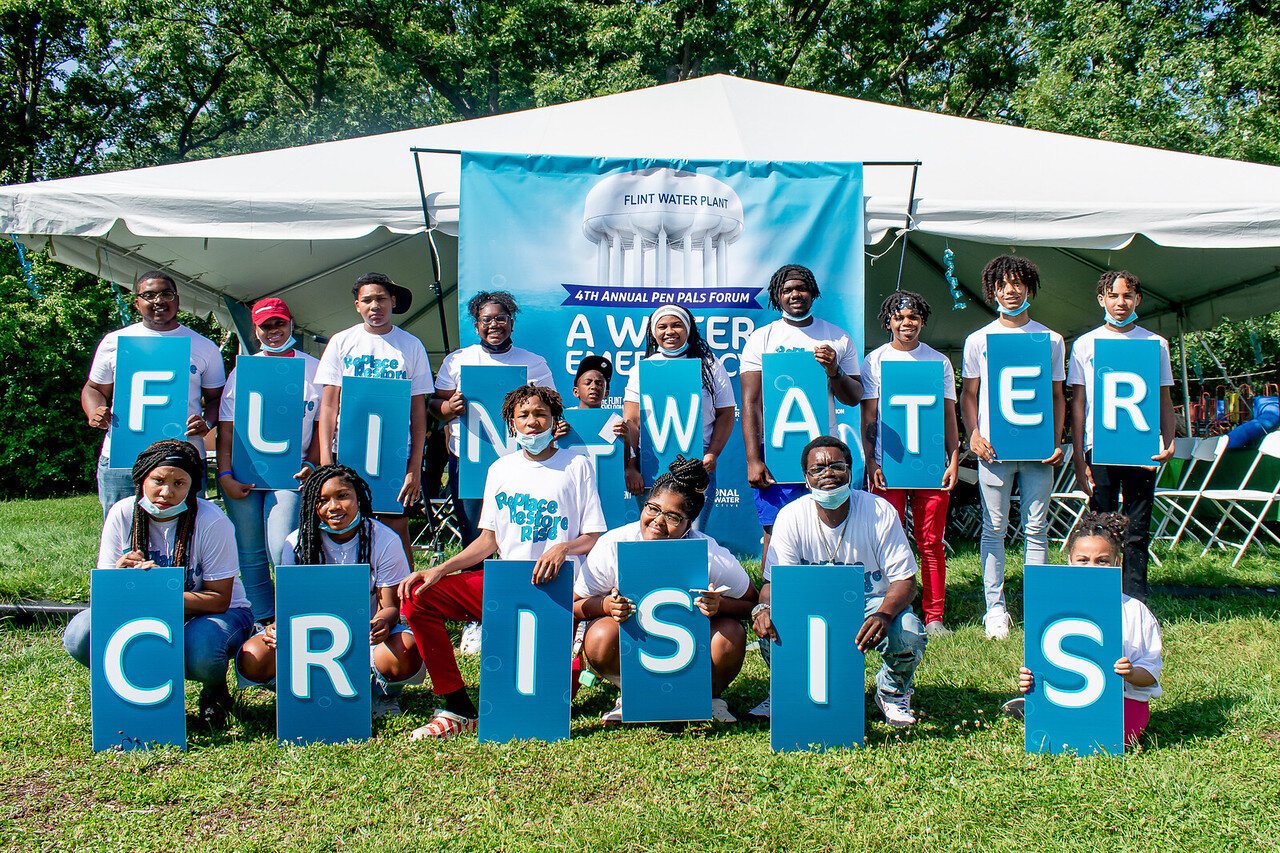
The problems with the Flint Water Crisis settlement
Residents say many eligible people were excluded from the settlement due to the narrow scope of eligibility, an inability to provide documentation, and a lack of awareness of the deadlines to join the class.
Keishaun Wade was 13 years old during the crisis. Wade, now 25, suspects that exposure to Flint water has negatively impacted his health. But he did not regularly seek medical care back then because he did not have insurance. Without any medical records, he wasn’t eligible to file for a settlement, and now he’s glad he didn’t.
“I just heard so many horror stories about all the things that were happening to people when they did try,” said Wade, referring to bone scans administered without protective gear. “I just never went through the rigamarole. I think now, seeing what has come, it would have just been a bigger disappointment.”
McClinton said she declined a bone scan over ethical concerns.
“I didn’t trust it. It reminded me of the Tuskegee Airmen, like, you’re experimenting on us or something,” she said. “To me, you should have got paid for living here.”
Dotson said cohorts of people – adults who cannot read, people without internet access, and senior citizens, to name a few – missed out because they didn’t know about deadlines due to information being inaccessible to them.
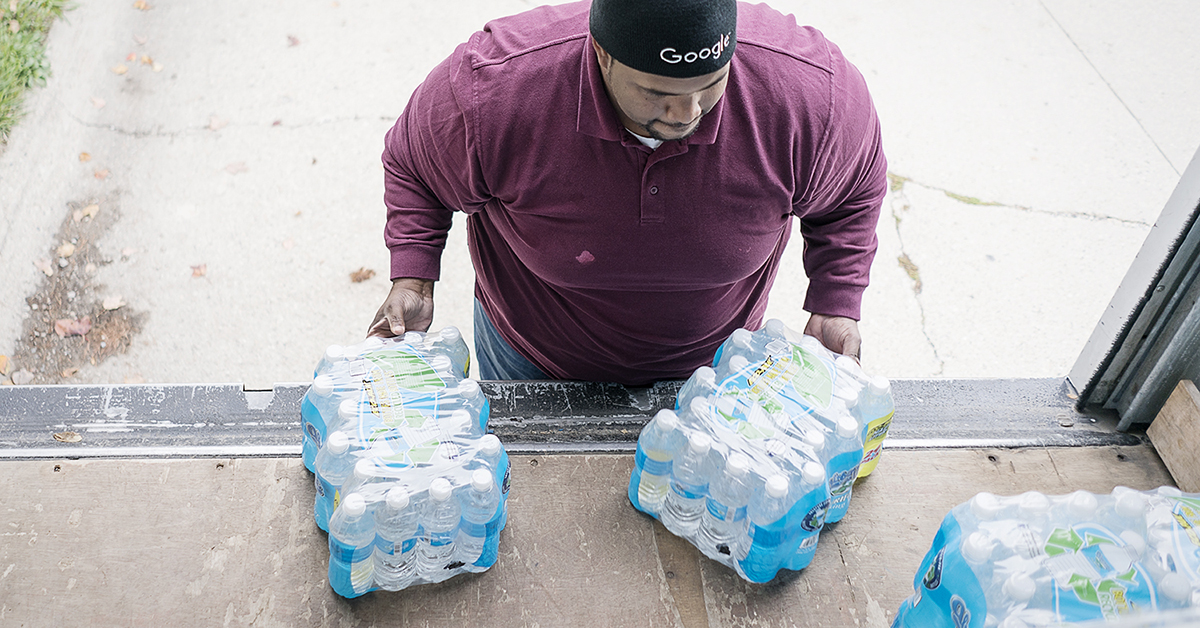
The Flint water crisis now
According to the city’s progress report, about 97% of lead service line replacements have been completed. Flint was in the 90th percentile for water quality in 2024. About 20% of the main water pipelines have been completed.
“It is a great concern as Flint has old, outdated infrastructure that needs to be replaced – even before the water crisis happened,” said Councilman Leon El-Alamin (1st Ward) in a statement to Flintside. “This has to be addressed, but not by placing another burden on the residents’ backs… The funding should come from grants and other funding streams.”
The Drinking Water State Revolving Fund report for fiscal year 2026 found that “the average age of water distribution system water mains is nearly 100 years old, and many water mains are still in need of replacement. An additional transmission main replacement will be necessary, as well as systematic replacement of the smaller system mains in the next twenty years.”
RELATED: New Flint lab aimed at rebuilding community trust in water
Dotson said the crisis is still ongoing due to a lack of closure. Residents are often looking for free water and filters, she said.
The city has not offered free water since the State of Michigan ended funding in 2018. El-Alamin called on the state to fund the program again until all repairs are complete.
Residents can pick up free water filters and testing kits from City Hall. When state funding for this program runs out later this year, the city will fund it through 2028.
“People are still utilizing bottled water that oftentimes they can’t afford,” Dotson said. “Our ‘new normal’ looks like [this] as we move forward.”
Author

Related Articles

In Pictures: Flint & Genesee Group Women’s Equality Day Luncheon
Photographer Natalia Avery captures Flint & Genesee Group Women’s Equality Day luncheon on Aug. 26.

Flint & Genesee to Host Women’s Equality Day Luncheon Featuring Local Leaders
Flint & Genesee hosts a Women’s Equality Day luncheon Aug. 26 with local women leaders speaking.

Desmond London Talks Fatherhood, Flint, and His Vision for the Gloria Coles Flint Public Library
New Flint Public Library director Desmond London talks fatherhood, his journey, and his vision for Flint.