
Desmond London Talks Fatherhood, Flint, and His Vision for the Gloria Coles Flint Public Library
New Flint Public Library director Desmond London talks fatherhood, his journey, and his vision for Flint.
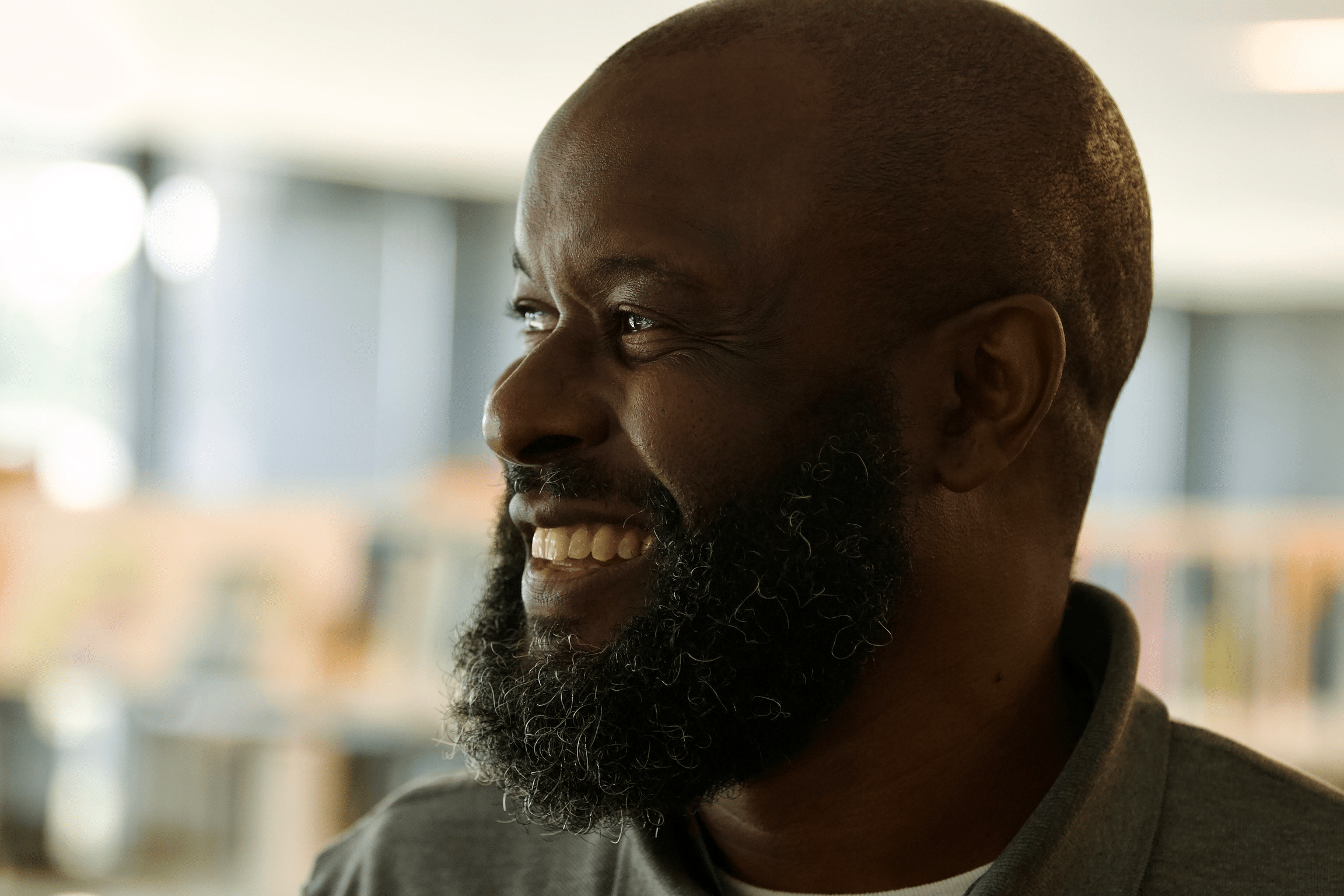
FLINT, Michigan — Desmond London wants people to know that where you start doesn’t have to determine where you end up — and his own path to becoming the newest executive director of the Gloria Coles Flint Public Library is proof of it.
London is the library’s first African American man to hold the role, following Gloria Coles herself, who became its first African American director in 1984. It’s a milestone he takes seriously, but he’s quick to point out that libraries, and Flint itself, aren’t entirely new territory for him.
London grew up in Milwaukee, Wisconsin, a city he sees as a close cousin to Flint.
“Milwaukee’s just one of those Rust Belt cities in the Midwest — kind of like Chicago, Flint, Detroit, Cleveland, St. Louis,” London said. “We all share the same story: a lot of factory jobs, a lot of people moving up from the South, and then those jobs moving out, and poverty moving in.”
That shared history, and the same hunger for progress he recognizes in Flint, is part of what drew him here. It’s a driving point that makes him passionate about his plans to be a part of the already ongoing movement here in the city of pushing the needle forward for learning, literacy, community togetherness.
But London is candid that his own relationship with libraries didn’t start as a love story. In his late teens, one of his first real interactions inside a library was a bad one.
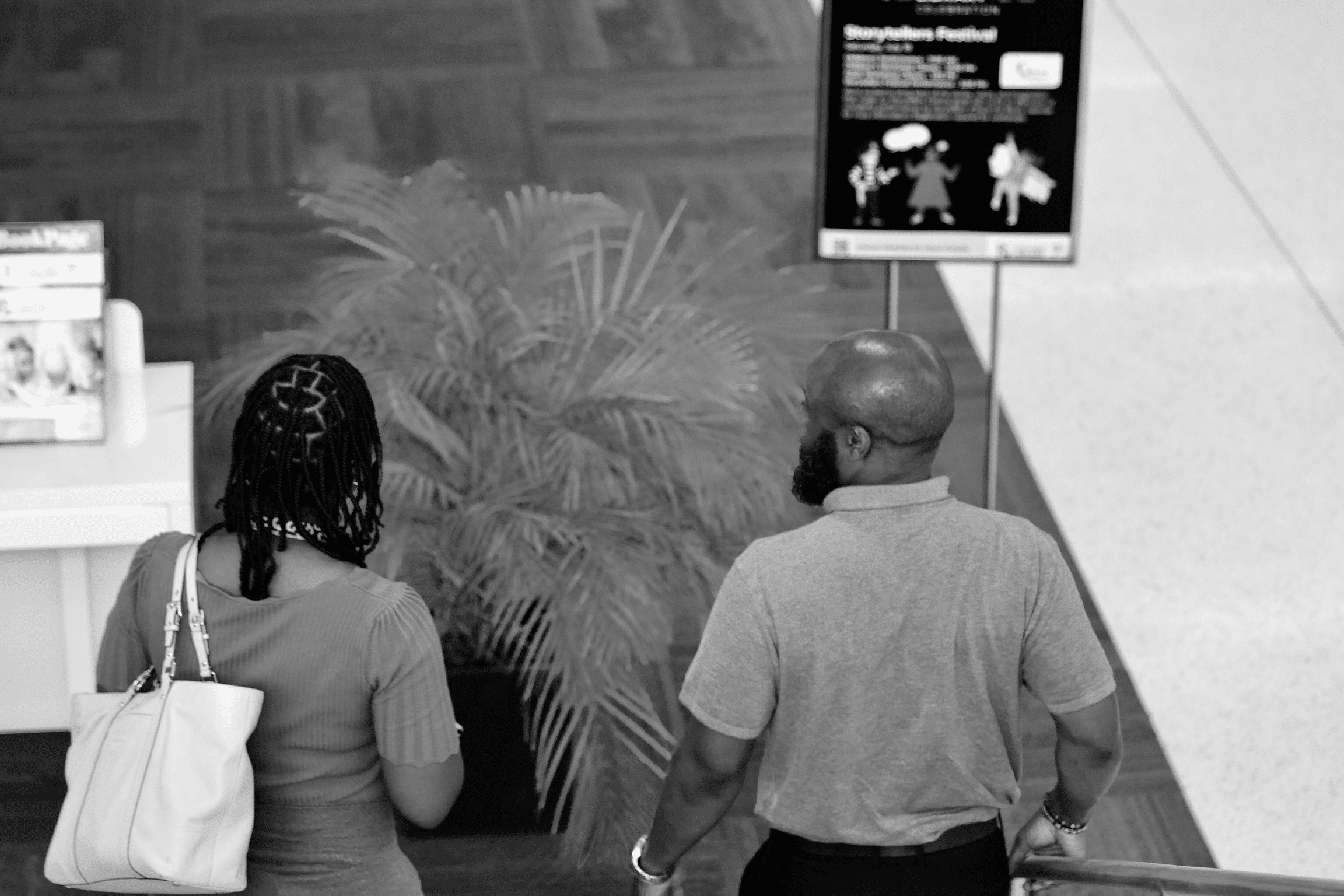
“I remember, at about eighteen or nineteen — I’d probably been smoking marijuana, so I probably smelled like it — talking to the librarian, and the librarian being rude to me,” London said. “I was never a dummy. I was in there knowing what I was looking for, and I understood how the space works. I remember thinking, ‘this is my f***ing neighborhood — you don’t even know it, and I could have fifty people up here on your day off if I wanted to.’ But I say that because it’s really important, when you’re in other people’s space, to respect it, and to show up in a way that they need.”
It’s a lesson London says he learned early, growing up in a rough home life that pushed him to find his own way to survive. For almost a decade, that meant selling drugs — while also, in that same stretch of years, taking classes at his local community college.
London points to that contradiction on purpose: he often cites hip-hop lyrics, including Jay-Z’s, that push for the dismantling of beliefs and propaganda that people in that life are chasing an image rather than just trying to get by.
London hit his own low point at nineteen, when he was robbed and shot in the back — the event, he said, that finally pushed him to get his life together.
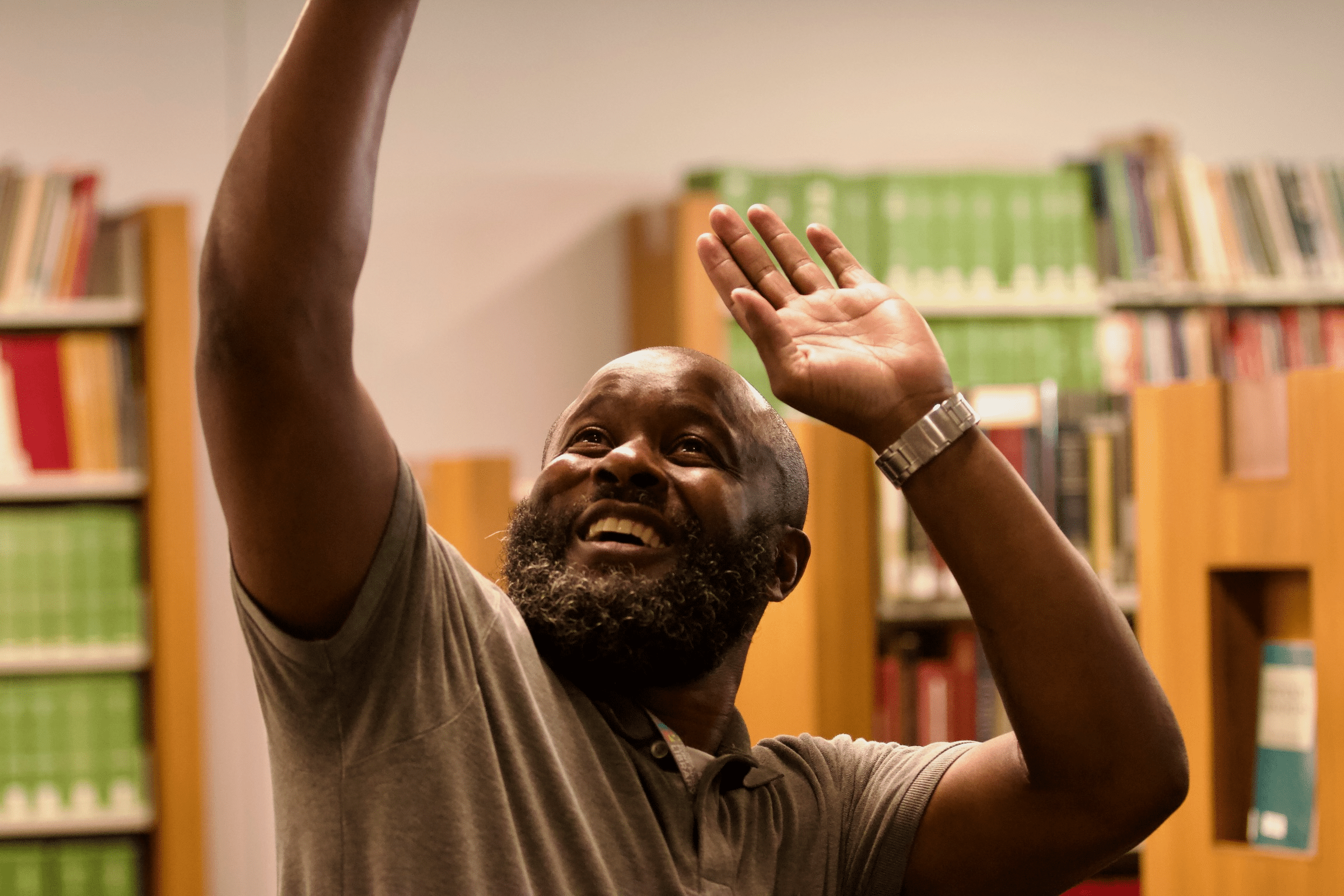
He wasn’t sure yet what came next, but he eventually landed in undergraduate studies at the University of Wisconsin-Milwaukee, pursuing a degree in Information Studies and Technology in a building that also housed the campus’s Library Science program.
It was there that a mentor, Twyla McGee, encouraged him to look seriously at library science after recognizing his passion for advocacy and education — especially around incarceration rates for Black men.
London found himself back in a library, but in a different phase of life. At thirty-three, he started figuring out a new kind of hustle as a page and circulation assistant, and this time found a new respect for the space he hadn’t had at nineteen.
That respect followed him to PVMU, where he worked as an Art and Architecture Librarian and became known informally as the “campus uncle” — the person students of every background gravitated toward.
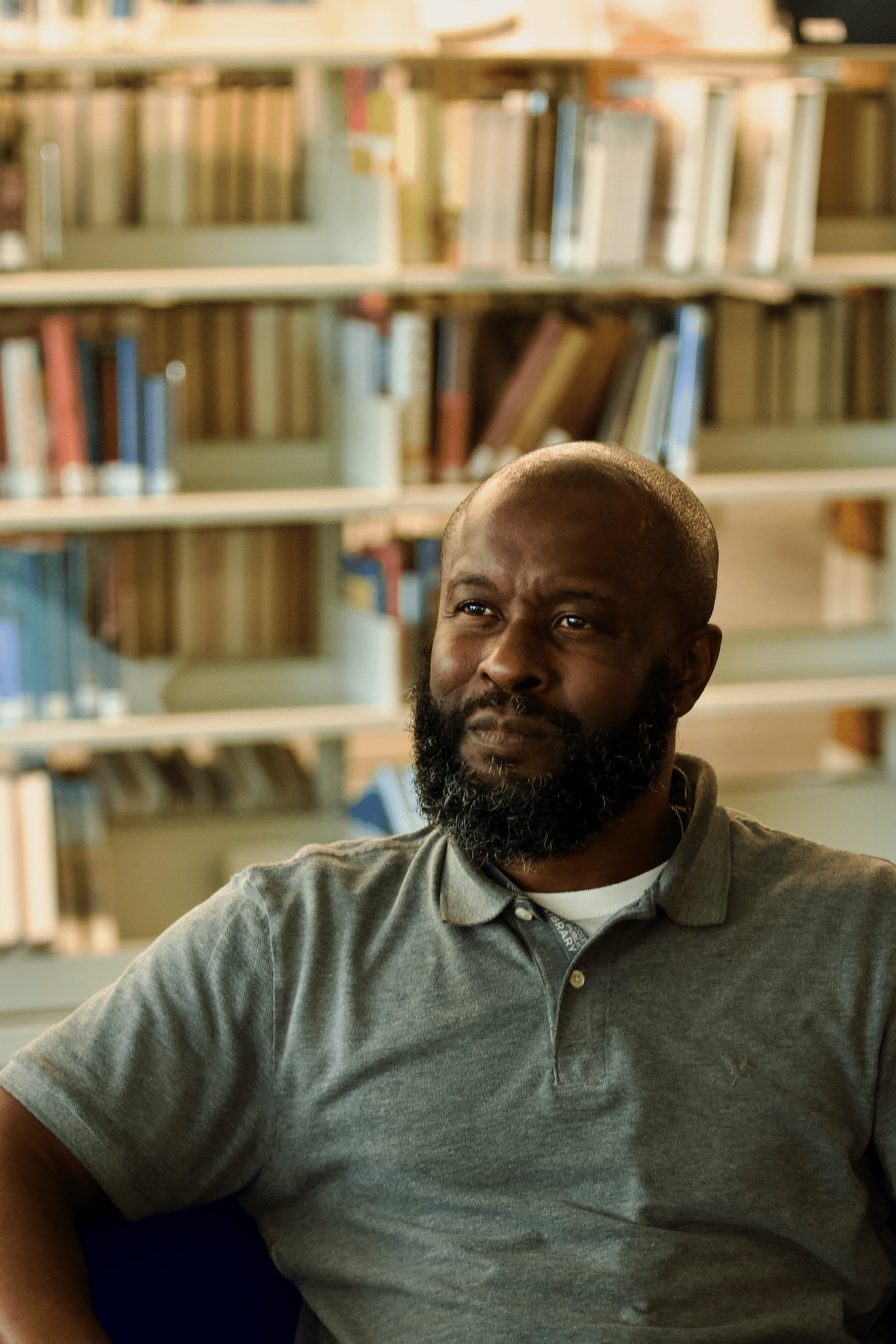
“I don’t know why, but groups of students would [find me],” London said. “I’d always set aside time in my office, and it’d be five or six students just around — we’d just talk, and it didn’t matter how they came in.”
The Iota Phi Theta Fraternity, Inc., member believes what’s often missing between adults and young people is simply trust.
“Stop spending all this time judging and just be there,” he said. “Some people are dealing with more s*** than you could ever understand, so sometimes we just need to take off our judgmental glasses and just be there.”
It’s why London makes a point of showing up at community events across Flint, not just inside the library’s walls.
London is also a father of three and a grandfather, with children ranging in age from five to twenty-seven — a gap he says has changed how he parents. When that age gap was pointed out, London laughs and shrugs his shoulders before acknowledging that he indeed has “lived a life.”
“As a father, my eight-year-old is getting a whole different version of me than my twenty-seven-year-old,” London said. At nineteen, while still finding his own footing, he leaned on a more traditional, disciplinarian style. “I hadn’t been to counseling for my stuff or any of that yet. So I was like the disciplinarian and stern figure. The difference now is I have a daughter in the middle, and a younger son. I still do that, but I’m very much more open. I want to hear your thoughts. I want to hear your ideas.”
He’s even told his kids, half-joking, that if they’re going to lie to him, they should at least make it a good one — that way he at least knows they’re thinking it through. “Just let me see that you’re growing and thinking, and that you have ideas,” London said. “If we’re going to do something, you can have a part in it, versus there being a hard line.”
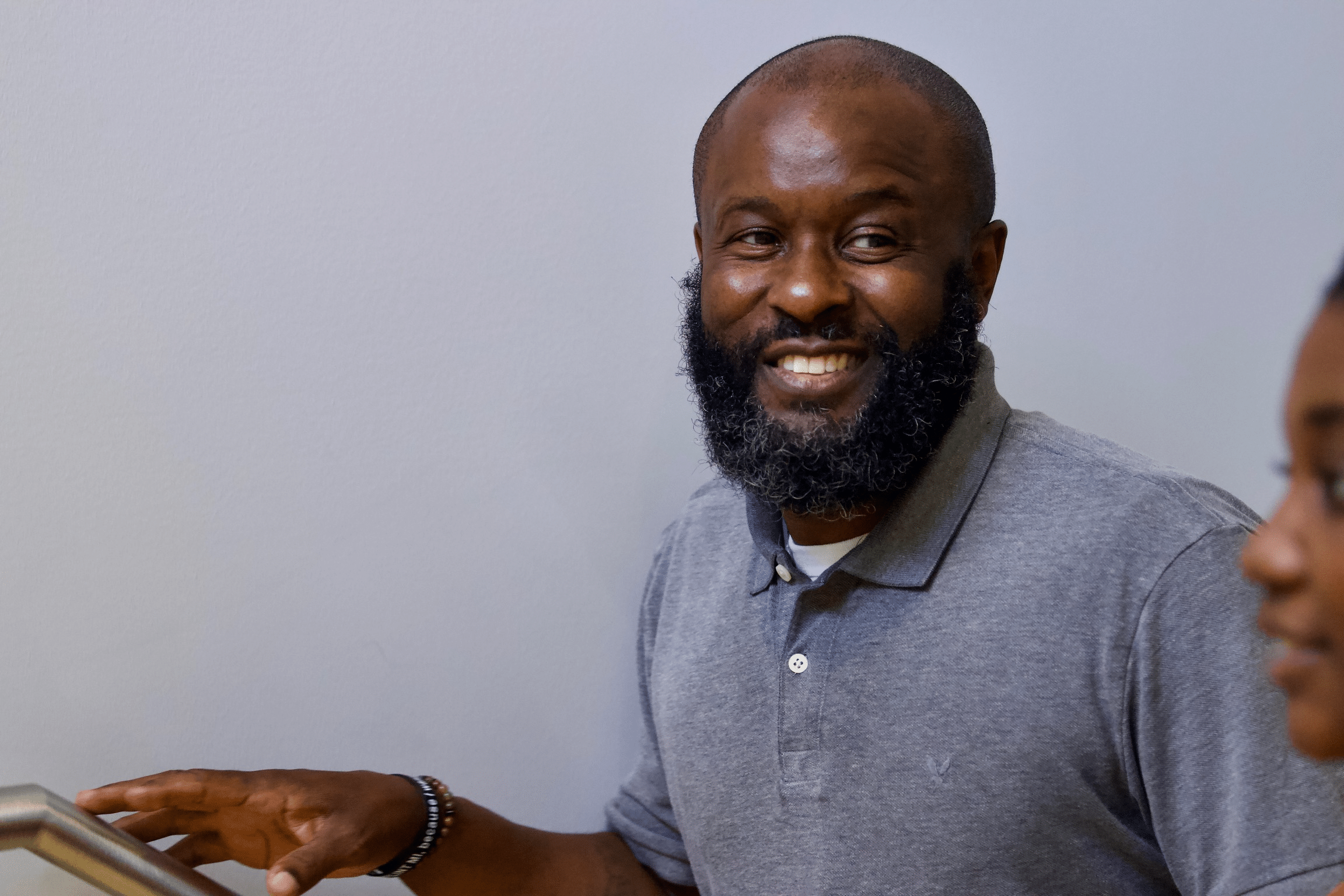
That same openness carries into how London wants to lead the library and engage with Flint more broadly. He’s candid that balancing being accessible to the public with holding on to time for himself is still something he’s working out — part of why he makes a point of carving out time to just be around the city as himself, not as the library’s director.
“I don’t have all the answers, and I don’t act like I do,” he said. “People come to me with questions, and I turn it right back around — so what do you think? I’m not the only one who can think here. We’re all going to have to think for this to work, because nobody has all the answers, for real.”
Off the clock, London says he’s just as likely to be found at a local art walk or community event as behind his desk — still, in his words, a guy from Milwaukee exploring a new city.
Asked about his vision for the library going forward, London kept it simple.
“We’re about to be more outside than people would imagine,” he said. “We need to be outside more. Libraries are without borders. There are places in this community that need to see us, because there are more issues than just what’s happening at the library.”
He’s also focused on accountability to the taxpayers who fund it.
“City taxes aren’t cheap. They’re footing the bill. So I’m super passionate about that — presenting solutions for the city.”
Author

Related Articles
In Pictures: Flint & Genesee Group Women’s Equality Day Luncheon
Photographer Natalia Avery captures Flint & Genesee Group Women’s Equality Day luncheon on Aug. 26.
Flint & Genesee to Host Women’s Equality Day Luncheon Featuring Local Leaders
Flint & Genesee hosts a Women’s Equality Day luncheon Aug. 26 with local women leaders speaking.
Vehicle City Voices: Black Women of Flint — Dr. Karen Weaver
Dr. Karen Weaver reflects on leadership, Flint’s future, and the power of using her voice.